By The Daily Business
Understanding the FIFO meaning in business is essential for anyone dealing with accounting, inventory management, or financial reporting. FIFO is a widely used method that helps businesses track costs, manage stock efficiently, and maintain accurate financial records.
In this guide by The Daily Business, we’ll explain what FIFO means, how it works, its advantages, and real-world examples.
What Is FIFO in Business?
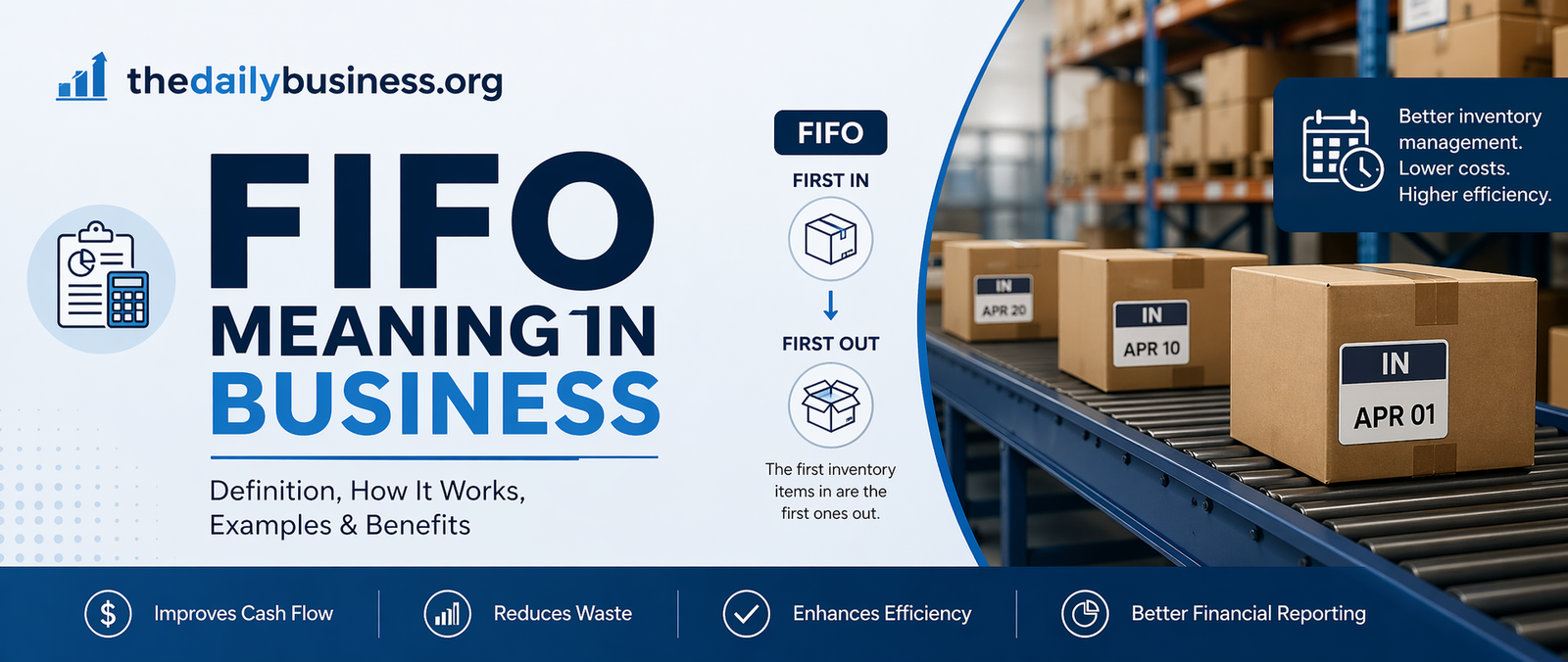
FIFO (First In, First Out) is an accounting and inventory valuation method where the oldest inventory items are sold or used first.
In simple terms, products that are purchased or produced first are the first ones to be sold.
How FIFO Works
The FIFO method assumes that inventory flows in the order it was received. This means:
- Oldest stock is sold first
- New inventory remains in storage
- Costs are assigned based on the earliest purchases
Example of FIFO
Imagine a business purchases inventory as follows:
- 100 units at $10 each
- 100 units at $15 each
If the company sells 100 units, under FIFO:
- The cost will be calculated using the $10 units first
This results in lower cost of goods sold (COGS) when prices are rising.
Why FIFO Is Important in Business
The FIFO method plays a key role in:
1. Accurate Inventory Management
It ensures older stock is used first, reducing waste—especially important for perishable goods.
2. Financial Reporting
FIFO often reflects a more realistic value of inventory on the balance sheet.
3. Profit Calculation
In times of rising prices, FIFO results in:
- Lower COGS
- Higher profits
Advantages of FIFO
Here are the major benefits of using FIFO:
Simple and Easy to Use
FIFO is straightforward and widely accepted.
Better Inventory Flow
Matches natural movement of goods in most businesses.
Higher Reported Profits
Especially during inflation periods.
Accepted Globally
Used under most accounting standards.
Disadvantages of FIFO
While useful, FIFO also has some drawbacks:
Higher Taxes
Higher profits may lead to higher tax payments.
Not Ideal During Price Drops
If prices fall, profits may appear lower.
Can Misrepresent Current Costs
Older costs may not reflect current market prices.
FIFO vs LIFO
| Feature | FIFO | LIFO |
|---|---|---|
| Meaning | First In, First Out | Last In, First Out |
| Inventory Used First | Oldest | Newest |
| Profit (Rising Prices) | Higher | Lower |
| Tax Impact | Higher taxes | Lower taxes |
Real-World Applications of FIFO
FIFO is commonly used in:
- Retail businesses
- Grocery stores
- Pharmaceutical companies
- Manufacturing industries
For example, supermarkets use FIFO to sell older food items first before they expire.
When Should Businesses Use FIFO?
FIFO is best when:
- Inventory is perishable
- Prices are rising
- You want simple accounting
- You need compliance with global standards
Conclusion
Understanding the FIFO meaning in business is crucial for managing inventory and financial reporting effectively. FIFO ensures that older inventory is sold first, providing a logical and efficient approach to cost tracking.
For businesses aiming to maintain accurate records and improve inventory flow, FIFO remains one of the most reliable methods.