Understanding what is FIFO is essential for anyone involved in accounting, inventory management, or business operations. FIFO is a widely used method that helps businesses track costs and manage stock efficiently.
In this guide by The Daily Business, we’ll break down FIFO in simple terms, explain how it works, and show real-world examples.
What Is FIFO?
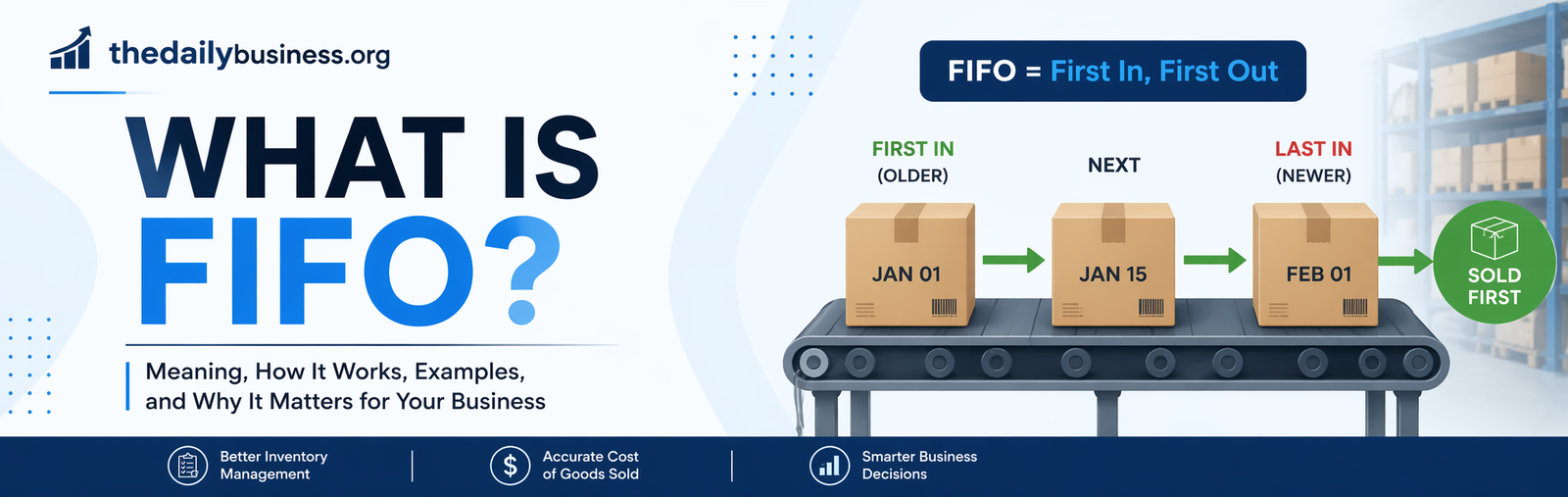
FIFO stands for First In, First Out. It is an accounting and inventory valuation method where the oldest items purchased or produced are sold first.
In simple terms:
The first products you buy are the first ones you sell.
This method is commonly used in industries where products have expiration dates, such as food, retail, and pharmaceuticals.
How FIFO Works
To understand what is FIFO, imagine a grocery store:
- The store buys milk on Monday
- Then buys more milk on Wednesday
- When customers purchase milk, the Monday stock is sold first
This ensures older inventory is used before newer stock.
FIFO in Accounting
In accounting, FIFO determines the cost of goods sold (COGS) and inventory value.
Example:
- Buy 100 units at $10 each
- Buy another 100 units at $12 each
- Sell 150 units
Using FIFO:
- First 100 units = $10 each
- Next 50 units = $12 each
COGS = (100 × $10) + (50 × $12) = $1,600
The remaining inventory will be valued at the most recent purchase price.
Advantages of FIFO
1. Simple and Easy to Use
FIFO is straightforward and widely accepted in accounting practices.
2. Better Inventory Management
It reduces the risk of obsolete or expired stock.
3. Higher Profits (During Inflation)
Older, cheaper inventory is sold first, increasing profit margins.
4. Realistic Inventory Value
Ending inventory reflects current market prices.
Disadvantages of FIFO
1. Higher Taxes
Higher profits can lead to increased tax liability.
2. Not Always Reflective of Actual Flow
Some businesses don’t physically sell items in FIFO order.
FIFO vs LIFO
FIFO is often compared with LIFO (Last In, First Out):
| Method | Description | Profit Impact |
|---|---|---|
| FIFO | Oldest items sold first | Higher profits in inflation |
| LIFO | Newest items sold first | Lower profits in inflation |
Who Uses FIFO?
Businesses that commonly use FIFO include:
- Retail stores
- Supermarkets
- Restaurants
- Manufacturing companies
These industries benefit from selling older inventory first to maintain product quality.
Why FIFO Matters for Your Business
Knowing what is FIFO helps businesses:
- Maintain accurate financial records
- Improve inventory turnover
- Reduce waste and losses
- Make better pricing decisions
Final Thoughts
FIFO is one of the most important concepts in accounting and inventory management. By using this method, businesses can ensure efficient stock handling and more accurate financial reporting.
At The Daily Business, we recommend FIFO for businesses dealing with perishable goods or looking for a simple and reliable inventory system.