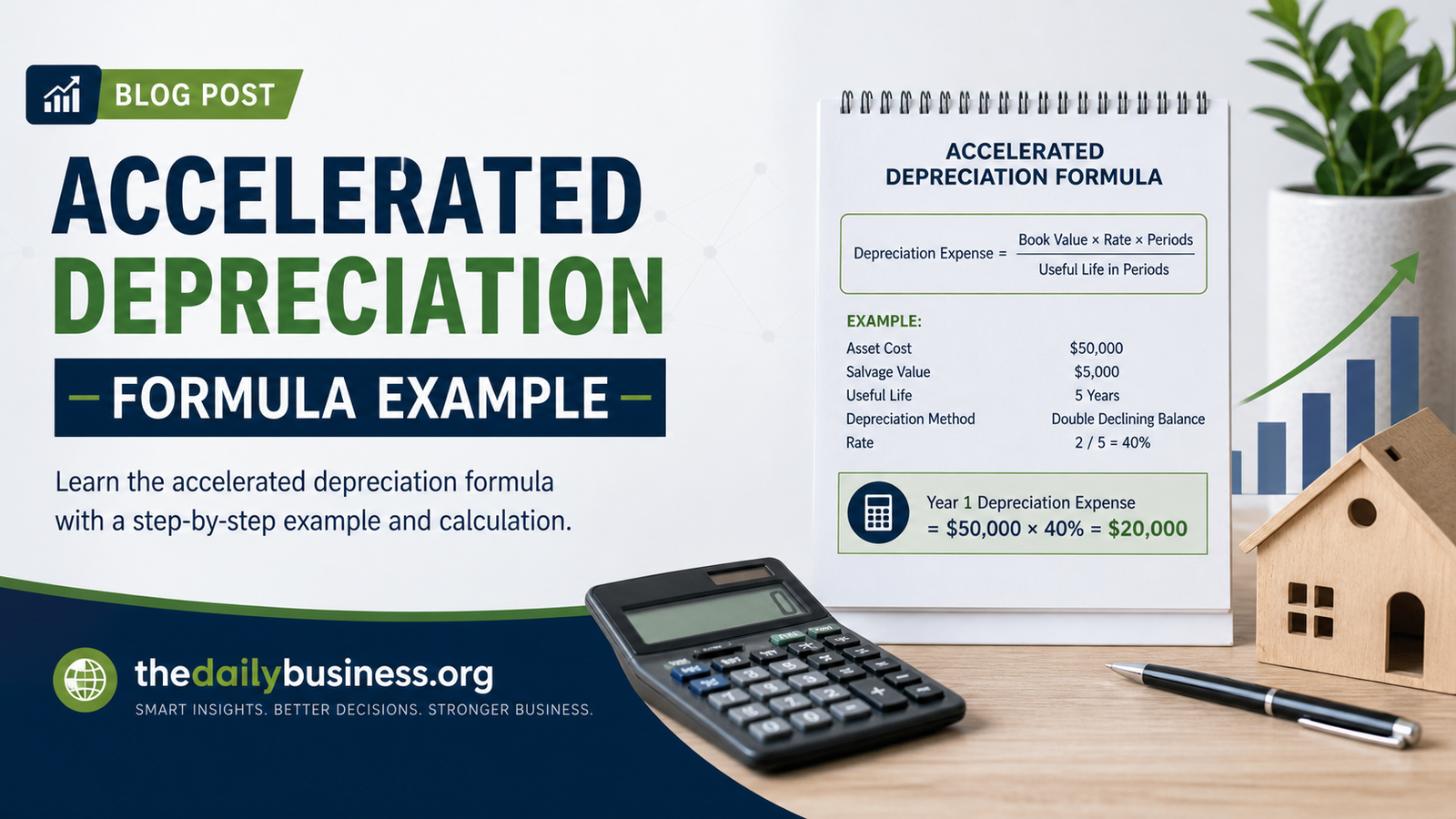
Accelerated depreciation is a powerful accounting method that allows businesses to reduce the value of an asset faster in its early years. In this guide by The Daily Business, we’ll break down the accelerated depreciation formula example, explain how it works, and show you when to use it effectively.
What Is Accelerated Depreciation?
Accelerated depreciation is a method where an asset loses value more quickly during the initial years of its useful life. Unlike straight-line depreciation (which spreads cost evenly), this approach front-loads expenses.
Businesses often use this method to:
- Reduce taxable income early
- Reflect actual usage patterns of assets
- Improve short-term cash flow
Common Accelerated Depreciation Methods
There are two widely used methods:
1. Double Declining Balance (DDB) Method
This is the most common accelerated depreciation approach.
2. Sum-of-the-Years’-Digits (SYD) Method
This method also accelerates depreciation but in a slightly more gradual way.
Accelerated Depreciation Formula (DDB Method)
The basic formula is:
Depreciation Expense = Book Value × (2 / Useful Life)
Where:
- Book Value = Asset cost minus accumulated depreciation
- Useful Life = Number of years the asset is expected to last
Accelerated Depreciation Formula Example
Let’s walk through a simple example:
Scenario:
- Asset Cost: $10,000
- Useful Life: 5 years
- Salvage Value: $0
Step 1: Calculate Depreciation Rate
Rate=52=40%
Step 2: Apply Depreciation Each Year
| Year | Beginning Value | Depreciation (40%) | Ending Value |
|---|---|---|---|
| 1 | $10,000 | $4,000 | $6,000 |
| 2 | $6,000 | $2,400 | $3,600 |
| 3 | $3,600 | $1,440 | $2,160 |
| 4 | $2,160 | $864 | $1,296 |
| 5 | $1,296 | Adjusted | $0 |
This accelerated depreciation formula example shows how expenses are higher in the early years.
Advantages of Accelerated Depreciation
- Tax Benefits: Higher deductions in early years reduce taxable income
- Better Cash Flow: Businesses retain more cash upfront
- Realistic Asset Value: Reflects rapid wear and tear of assets like machinery
Disadvantages to Consider
- Lower profits reported in early years
- More complex calculations than straight-line method
- Not always suitable for all asset types
When Should Businesses Use It?
Accelerated depreciation is ideal for:
- Technology equipment that becomes outdated quickly
- Vehicles and machinery with heavy early usage
- Businesses looking to optimize tax strategies
Final Thoughts
Understanding the accelerated depreciation formula example helps businesses make smarter financial decisions. While it offers strong tax advantages, it’s important to evaluate whether it aligns with your long-term accounting strategy.
For more business finance insights and practical guides, stay connected with The Daily Business.