By The Daily Business
Understanding inventory management is essential for any business dealing with physical goods. In this guide, we provide a clear and practical breakdown of the FIFO inventory method explained, including how it works, its formula, examples, and advantages.
What Is the FIFO Inventory Method?
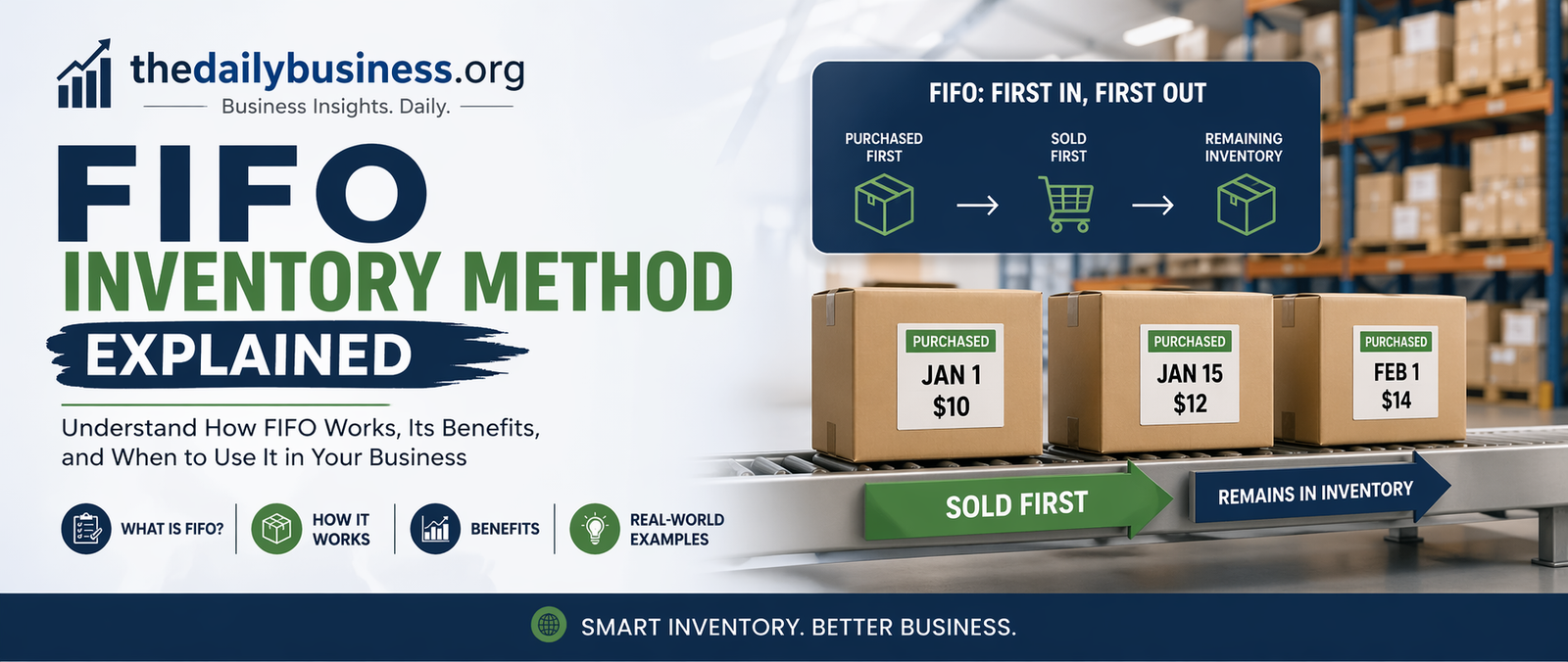
The FIFO (First In, First Out) inventory method assumes that the oldest inventory items are sold first. In other words, the first products purchased or produced are the first ones to leave your inventory.
This method is widely used in industries where products have expiration dates, such as food, beverages, and pharmaceuticals.
How FIFO Works
Under FIFO:
- Older inventory costs are assigned to Cost of Goods Sold (COGS)
- Newer inventory costs remain in ending inventory
This reflects a logical flow of goods, especially for perishable or time-sensitive items.
FIFO Formula
To calculate inventory using FIFO:
COGS = Cost of oldest inventory × Quantity sold
Ending Inventory = Remaining newest inventory costs
Example of FIFO Inventory Method
Let’s simplify the FIFO inventory method explained with an example:
A business purchases:
- 100 units at $10 each
- 100 units at $15 each
If the company sells 120 units:
- First 100 units → $10 each = $1,000
- Next 20 units → $15 each = $300
Total COGS = $1,300
Remaining inventory:
- 80 units at $15 each = $1,200
Advantages of FIFO
1. Realistic Inventory Flow
FIFO matches the natural movement of goods in many businesses.
2. Higher Profit in Inflation
When prices rise, older (cheaper) inventory is sold first, increasing profit margins.
3. Better Inventory Valuation
Ending inventory reflects current market prices.
4. Simple and Easy to Apply
FIFO is straightforward and widely accepted in accounting standards.
Disadvantages of FIFO
1. Higher Taxes
Higher profits can lead to increased tax liabilities.
2. Not Ideal for All Industries
Businesses without natural inventory flow may not benefit as much.
FIFO vs LIFO (Quick Comparison)
| Feature | FIFO | LIFO |
|---|---|---|
| Inventory Flow | Oldest items sold first | Newest items sold first |
| Profit (Inflation) | Higher | Lower |
| Ending Inventory | Closer to current prices | Older costs |
Who Should Use FIFO?
FIFO is best suited for:
- Retail businesses
- Food and beverage companies
- E-commerce stores
- Businesses with perishable goods
Final Thoughts
This guide on the FIFO inventory method explained shows why it remains one of the most popular inventory accounting methods. Its simplicity, logical flow, and alignment with real-world operations make it a reliable choice for many businesses.
For companies aiming to maintain accurate financial records and efficient inventory management, FIFO is often the preferred approach.