Focus Keyphrase: What is FIFO in accounting
Inventory valuation plays a crucial role in financial reporting and decision-making. One of the most commonly used methods is FIFO. But what is FIFO in accounting, and why is it so widely used?
In this guide by The Daily Business, we’ll break down FIFO in simple terms, explain how it works, and show real-world examples to help you understand it clearly.
What Is FIFO in Accounting?
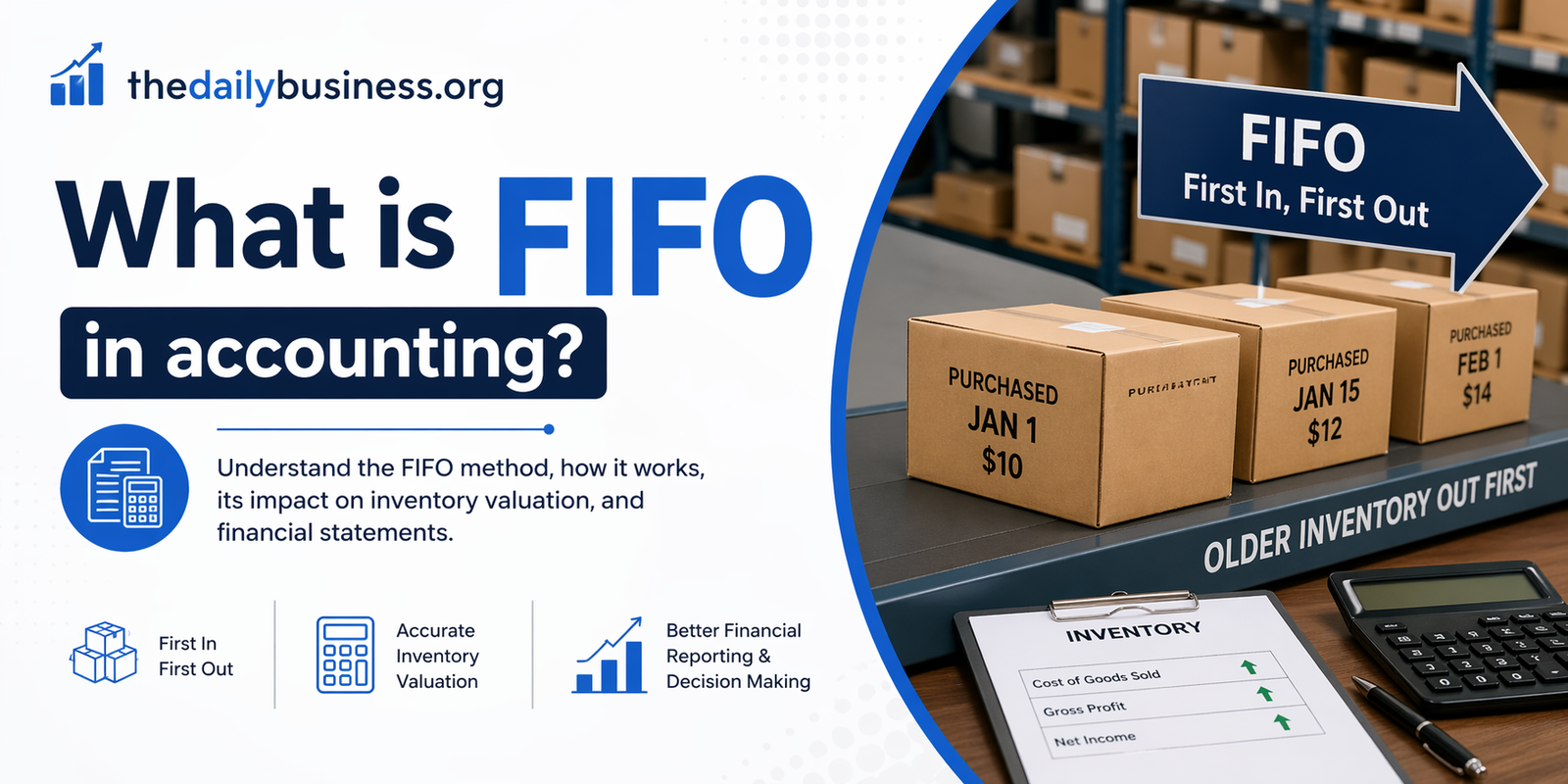
FIFO stands for First In, First Out. It is an inventory valuation method where the oldest inventory items are sold or used first, while the newer inventory remains in stock.
In simple terms:
The first products you buy are the first ones you sell.
This method is commonly used in businesses dealing with perishable goods, such as food and beverages, but it also applies to many other industries.
How FIFO Works
Let’s understand FIFO with a simple example:
Example:
A company purchases inventory as follows:
- 100 units at $10 each
- 100 units at $12 each
If the company sells 150 units:
- First 100 units sold = $10 each
- Next 50 units sold = $12 each
Cost of Goods Sold (COGS):
- (100 × $10) + (50 × $12) = $1,600
Remaining Inventory:
- 50 units at $12 each = $600
This shows how FIFO assigns older costs to sold goods and newer costs to remaining inventory.
Why Businesses Use FIFO
Understanding what is FIFO in accounting also means knowing its advantages. Here’s why companies prefer it:
1. Matches Natural Flow of Inventory
FIFO aligns with how most businesses actually sell products—older stock first.
2. Higher Profits in Rising Prices
When prices increase, FIFO results in lower cost of goods sold and higher profits.
3. Simple and Easy to Understand
It’s straightforward and easy to apply compared to other methods.
4. Better Inventory Valuation
Ending inventory reflects more recent (and realistic) costs.
FIFO vs Other Inventory Methods
FIFO vs LIFO (Last In, First Out)
- FIFO: Old inventory sold first
- LIFO: New inventory sold first
FIFO vs Weighted Average
- FIFO uses actual purchase order
- Weighted average uses average cost of all inventory
FIFO often shows higher profits and inventory value, especially during inflation.
Advantages of FIFO
- Easy to implement and understand
- Better reflects actual inventory flow
- Higher reported profits during inflation
- Accepted under most accounting standards worldwide
Disadvantages of FIFO
- Higher profits can mean higher taxes
- May not match current market costs in profit calculations
- Not always ideal in rapidly changing price environments
When Should You Use FIFO?
FIFO is best suited for:
- Retail businesses
- Food and beverage industries
- Pharmaceutical companies
- Businesses with perishable or time-sensitive goods
Final Thoughts
So, what is FIFO in accounting? It’s a simple yet powerful inventory valuation method that assumes the oldest items are sold first. It helps businesses maintain realistic inventory values and is widely accepted across industries.
For companies looking for a straightforward and reliable accounting approach, FIFO remains one of the best choices.
The Daily Business aims to simplify complex financial concepts so you can make smarter business decisions.