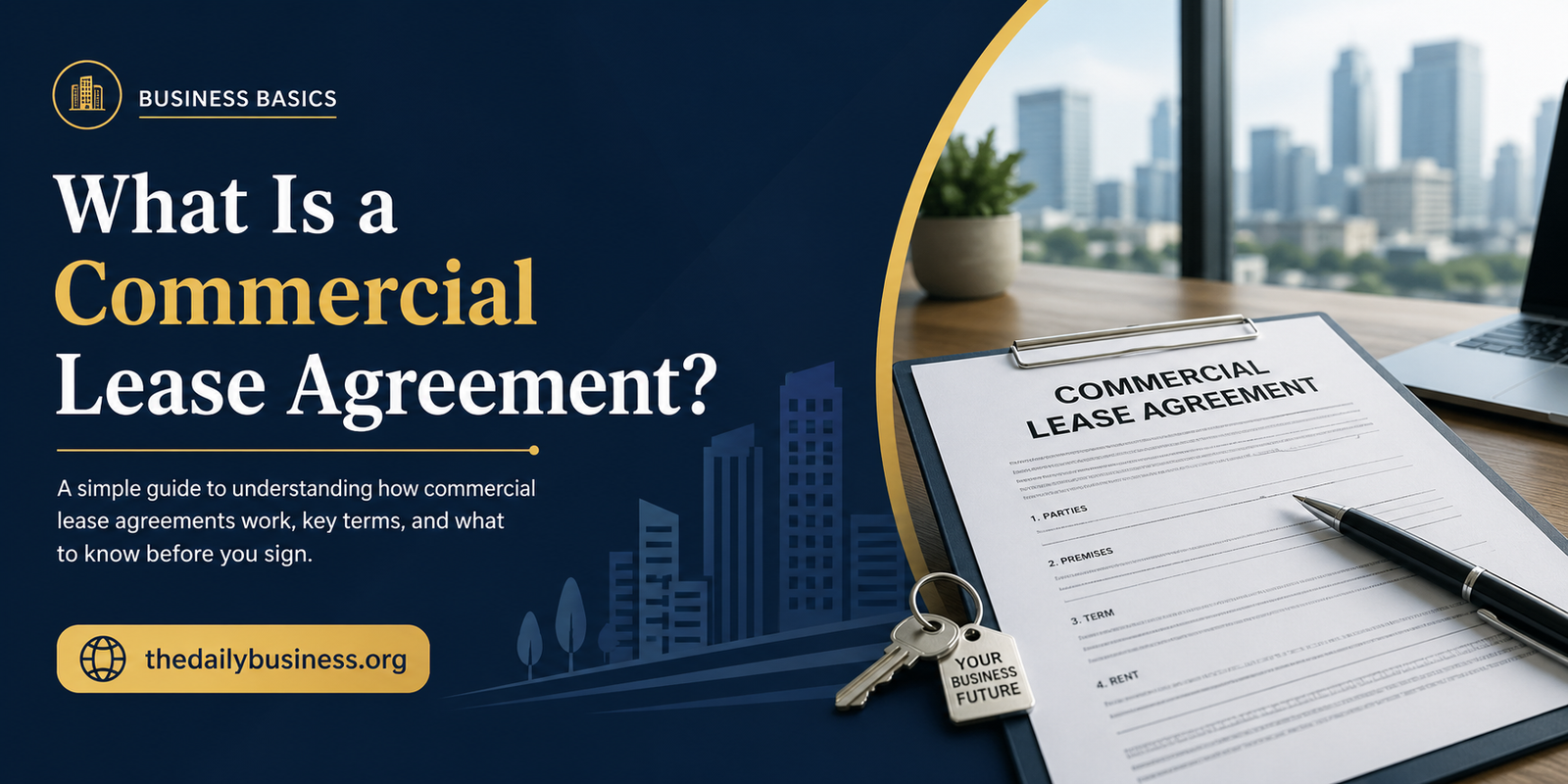
A commercial lease agreement is a legally binding contract between a landlord and a business tenant that allows the tenant to use a property for business purposes. Unlike residential leases, these agreements are specifically designed for commercial activities such as offices, retail stores, warehouses, or industrial operations.
At The Daily Business, we understand that choosing the right lease agreement is a critical step for any business owner. Whether you’re starting a new venture or expanding your operations, understanding how commercial leases work can help you avoid costly mistakes.
How a Commercial Lease Agreement Works
A commercial lease agreement outlines the terms and conditions under which a business can occupy a property. It includes details such as:
- Rent amount and payment schedule
- Lease duration
- Property usage rules
- Maintenance responsibilities
- Renewal or termination clauses
Unlike residential leases, commercial leases are more flexible and negotiable, giving both parties the ability to customize terms.
Types of Commercial Lease Agreements
There are several types of commercial leases, each structured differently:
1. Gross Lease
The tenant pays a fixed rent, and the landlord covers most property expenses like taxes, insurance, and maintenance.
2. Net Lease
The tenant pays rent plus some or all property expenses. Common types include:
- Single Net Lease
- Double Net Lease
- Triple Net Lease (NNN)
3. Percentage Lease
Common in retail, where the tenant pays a base rent plus a percentage of business revenue.
4. Modified Gross Lease
A hybrid lease where costs are shared between landlord and tenant.
Key Components of a Commercial Lease Agreement
Understanding the main sections of a lease agreement is essential:
Lease Term
Defines how long the tenant will occupy the property.
Rent and Additional Costs
Includes base rent, utilities, taxes, and maintenance fees.
Security Deposit
An upfront payment to cover potential damages or unpaid rent.
Use Clause
Specifies how the tenant can use the property.
Maintenance and Repairs
Outlines responsibilities for property upkeep.
Termination Clause
Explains how either party can end the lease.
Benefits of a Commercial Lease Agreement
A well-structured lease offers several advantages:
- Flexibility: Terms can be negotiated to suit business needs
- Stability: Secures a location for a fixed period
- Cost Control: Predictable expenses with clear terms
- Professional Relationships: Establishes clear expectations between landlord and tenant
Common Mistakes to Avoid
Business owners often overlook important details. Avoid these pitfalls:
- Not reading the full agreement
- Ignoring hidden costs
- Failing to negotiate terms
- Overcommitting to long lease periods
- Not consulting a legal expert
Tips Before Signing a Commercial Lease
Before signing, consider the following:
- Review all terms carefully
- Negotiate rent and renewal options
- Understand additional costs
- Inspect the property thoroughly
- Seek professional advice if needed
Conclusion
A commercial lease agreement is a crucial document that defines the relationship between a landlord and a business tenant. Understanding its structure, types, and key terms can help you make informed decisions and protect your business interests.
At The Daily Business, we recommend taking the time to review and negotiate your lease agreement carefully. Doing so ensures long-term success and stability for your business.