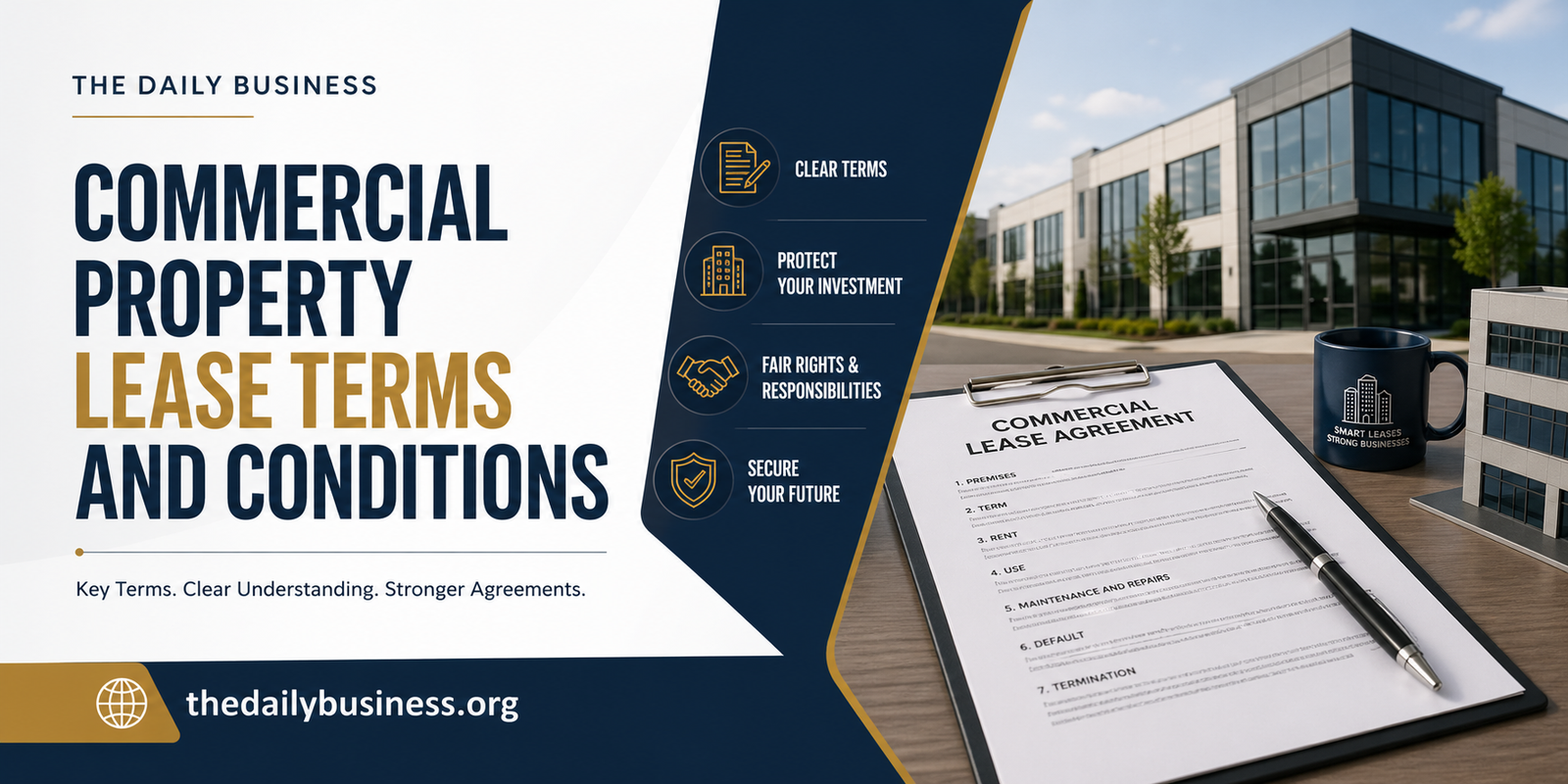
When entering into a business property agreement, understanding commercial property lease terms and conditions is essential. A well-structured lease protects both landlords and tenants while ensuring smooth business operations. At The Daily Business, we break down the most important elements you need to know before signing any commercial lease.
What Is a Commercial Property Lease?
A commercial property lease is a legally binding agreement between a landlord and a business tenant. It allows the tenant to use a property for business purposes under specific terms and conditions. Unlike residential leases, commercial leases are more flexible but also more complex.
Key Commercial Property Lease Terms and Conditions
1. Lease Duration
The lease term specifies how long the tenant can occupy the property. It can range from short-term (1–3 years) to long-term (5–10 years or more). Longer leases often come with better rental rates but less flexibility.
2. Rent and Payment Structure
This section outlines:
- Base rent amount
- Payment schedule (monthly, quarterly)
- Rent escalation clauses (annual increases)
Some leases may include additional rent based on business revenue.
3. Security Deposit
Landlords typically require a security deposit to cover potential damages or unpaid rent. The terms should clearly state:
- Deposit amount
- Conditions for refund
- Deductions allowed
4. Maintenance and Repairs
A critical part of commercial property lease terms and conditions is determining who is responsible for maintenance. Common structures include:
- Tenant responsible for interior maintenance
- Landlord responsible for structural repairs
5. Permitted Use Clause
This clause defines how the tenant can use the property. For example, a retail space may only be used for selling goods, not for manufacturing.
6. Renewal and Termination Options
Leases often include:
- Renewal options (extend lease under agreed terms)
- Early termination clauses (with penalties or conditions)
7. Insurance Requirements
Tenants may need to carry business insurance, such as:
- Liability insurance
- Property insurance
This protects both parties in case of accidents or damages.
8. Subleasing and Assignment
This clause determines whether a tenant can:
- Sublease the space to another business
- Transfer the lease to a new tenant
Landlord approval is usually required.
9. Utilities and Operating Expenses
Commercial leases often include additional costs such as:
- Electricity and water
- Property taxes
- Maintenance fees (CAM charges)
Understanding these costs is crucial for budgeting.
10. Default and Penalties
This section outlines what happens if either party fails to meet their obligations. It may include:
- Late payment penalties
- Lease termination rights
- Legal actions
Types of Commercial Leases
Understanding lease types helps clarify financial responsibilities:
- Gross Lease – Landlord covers most expenses
- Net Lease – Tenant pays rent plus additional costs
- Triple Net Lease (NNN) – Tenant pays rent, taxes, insurance, and maintenance
Why These Terms Matter
Ignoring commercial property lease terms and conditions can lead to:
- Unexpected costs
- Legal disputes
- Business disruption
Carefully reviewing the lease ensures your business remains financially secure and operational.
Tips Before Signing a Commercial Lease
- Review all clauses thoroughly
- Negotiate terms that suit your business
- Consult a legal or real estate expert
- Understand long-term financial commitments
Conclusion
A clear understanding of commercial property lease terms and conditions is vital for any business owner. From rent structure to maintenance responsibilities, each clause plays a significant role in protecting your interests.
At The Daily Business, we recommend taking the time to evaluate every detail before committing to a lease, ensuring a smooth and profitable business journey.