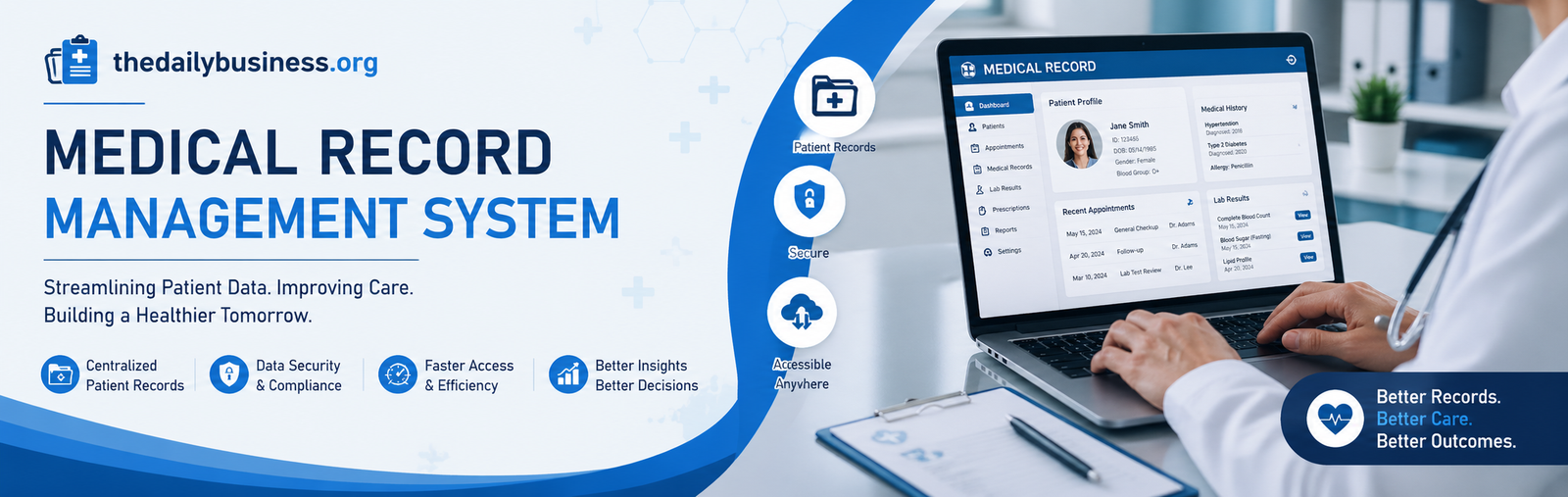
A Medical record management system is a digital solution designed to store, organize, and manage patient health information securely and efficiently. In today’s healthcare environment, hospitals, clinics, and medical professionals rely heavily on accurate and accessible patient records to deliver better treatment outcomes. At The Daily Business, we explore how this system is transforming modern healthcare operations.
What is a Medical Record Management System?
A Medical record management system is software that helps healthcare providers manage patient data such as:
- Medical history
- Diagnosis reports
- Prescriptions
- Lab results
- Treatment plans
Instead of relying on paper files, healthcare organizations now use digital systems that improve speed, accuracy, and accessibility.
Why Medical Record Management Systems Are Important
Healthcare facilities handle large volumes of sensitive patient data daily. Without a proper system, managing this information becomes difficult and error-prone.
Key benefits include:
1. Improved Data Accuracy
Manual record-keeping often leads to mistakes. A digital system reduces errors and ensures accurate patient information.
2. Better Patient Care
Doctors can quickly access complete patient history, allowing for faster and more informed treatment decisions.
3. Enhanced Security
Modern systems include encryption and access control features that protect sensitive medical data from unauthorized access.
4. Time Efficiency
Healthcare staff spend less time searching for records, improving overall productivity.
Key Features of a Medical Record Management System
A high-quality system typically includes:
- Electronic Health Records (EHR) storage
- Cloud-based access
- Automated data backup
- Appointment scheduling integration
- Secure patient portals
- Reporting and analytics tools
These features ensure seamless healthcare operations and better coordination between medical teams.
How It Benefits Healthcare Providers
Hospitals and clinics using a Medical record management system experience:
- Faster patient check-ins
- Improved communication between departments
- Reduced paperwork
- Better compliance with healthcare regulations
- Increased operational efficiency
This leads to a more streamlined and patient-focused healthcare environment.
Future of Medical Record Management Systems
With advancements in technology, these systems are becoming more intelligent. Artificial intelligence, cloud computing, and predictive analytics are shaping the future of healthcare data management.
Soon, systems will not only store records but also help predict patient risks and suggest preventive care measures.
Conclusion
A Medical record management system is no longer optional—it is essential for modern healthcare organizations. It enhances efficiency, improves patient care, and ensures data security. At The Daily Business, we believe that adopting such systems is a crucial step toward a smarter and more reliable healthcare future.