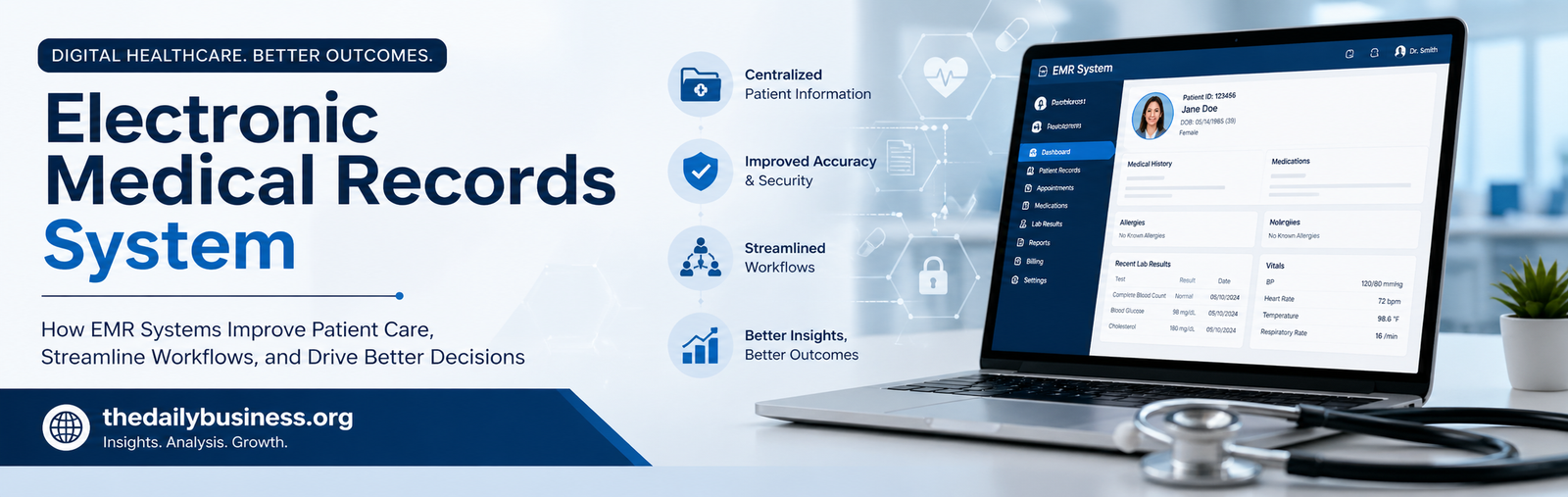
In today’s fast-evolving healthcare landscape, adopting an electronic medical records system is no longer optional—it’s essential. From improving patient care to streamlining administrative workflows, digital records are transforming how healthcare providers operate. At The Daily Business, we explore why this technology is crucial and how organizations can leverage it effectively.
What Is an Electronic Medical Records System?
An electronic medical records system (EMR) is a digital version of a patient’s paper chart. It contains medical history, diagnoses, medications, treatment plans, immunization dates, allergies, and test results—all stored securely in a centralized platform.
Unlike traditional paper records, EMRs allow healthcare professionals to access patient data instantly, enabling faster and more informed decision-making.
Key Features of an EMR System
Modern EMR platforms offer a wide range of features designed to enhance both clinical and administrative efficiency:
- Digital Patient Records: Centralized storage for easy access
- E-Prescriptions: Send prescriptions directly to pharmacies
- Appointment Scheduling: Simplify patient booking and follow-ups
- Billing Integration: Streamline insurance claims and payments
- Data Analytics: Generate insights for better healthcare decisions
These features reduce manual work and minimize errors, making healthcare delivery smoother and more reliable.
Benefits of an Electronic Medical Records System
1. Improved Patient Care
With complete and accurate patient data available in real time, doctors can make better diagnoses and treatment decisions.
2. Increased Efficiency
Automation reduces paperwork, allowing healthcare staff to focus more on patient care instead of administrative tasks.
3. Enhanced Data Security
EMR systems use encryption and secure access controls, protecting sensitive patient information from unauthorized access.
4. Better Coordination
Multiple healthcare providers can access the same patient records, improving collaboration and continuity of care.
5. Cost Savings
Reducing paperwork, storage needs, and manual errors leads to long-term financial savings for healthcare organizations.
Challenges of Implementing EMR Systems
While the benefits are significant, adopting an electronic medical records system comes with challenges:
- High Initial Costs: Software, hardware, and training expenses
- Training Requirements: Staff must learn how to use the system effectively
- Data Migration: Transferring existing records can be complex
- Security Concerns: Requires strong cybersecurity measures
Organizations must plan carefully to overcome these obstacles and ensure successful implementation.
EMR vs. EHR: What’s the Difference?
Many people confuse EMR with EHR (Electronic Health Records), but they are not identical:
- EMR: Used within a single healthcare facility
- EHR: Designed to be shared across multiple healthcare systems
Understanding this distinction helps organizations choose the right solution for their needs.
Future Trends in Electronic Medical Records Systems
The future of EMRs is being shaped by emerging technologies:
- Artificial Intelligence (AI): Assisting in diagnosis and predictive analytics
- Cloud-Based Systems: Offering scalability and remote access
- Telemedicine Integration: Supporting virtual consultations
- Mobile Accessibility: Allowing doctors to access data on the go
These innovations will continue to make healthcare more efficient, personalized, and accessible.
How to Choose the Right EMR System
When selecting an electronic medical records system, consider the following:
- Ease of use and user interface
- Customization options
- Integration with existing systems
- Compliance with healthcare regulations
- Vendor support and training
Choosing the right system ensures long-term success and maximum return on investment.
Conclusion
An electronic medical records system is a cornerstone of modern healthcare. It enhances patient care, boosts efficiency, and supports better decision-making. While implementation may require effort and investment, the long-term benefits far outweigh the challenges.
At The Daily Business, we believe that embracing digital transformation is key for healthcare providers aiming to stay competitive in 2026 and beyond.