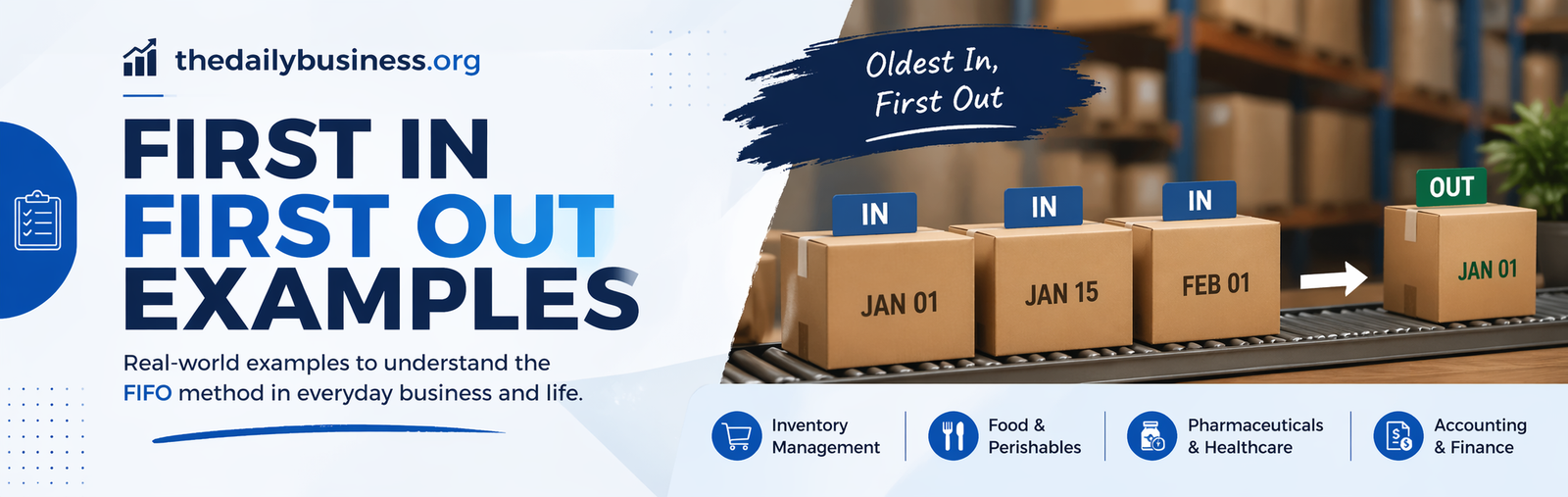
Understanding accounting and inventory methods can feel complicated, but the First In First Out (FIFO) method is one of the easiest to grasp. In this guide by The Daily Business, we’ll break down first in first out examples in a simple, practical way so you can apply them in real life or business.
What Is First In First Out (FIFO)?
FIFO is an inventory or accounting method where the oldest items are sold or used first, and newer items remain in stock.
Think of it like a queue:
- The first item that comes in is the first one to go out.
This method is widely used in:
- Retail businesses
- Warehouses
- Food industries
- Accounting and financial reporting
Why FIFO Matters in Business
Before jumping into first in first out examples, it’s important to understand why FIFO is useful:
- Keeps inventory fresh (important for perishable goods)
- Matches real-world flow of goods
- Often results in higher profits during inflation
- Easy to understand and implement
Simple First In First Out Examples
Example 1: Grocery Store Inventory
A store buys milk in batches:
- 100 units at $1 each (Day 1)
- 100 units at $1.20 each (Day 5)
If the store sells 120 units, FIFO means:
- First 100 units sold at $1
- Next 20 units sold at $1.20
Result:
Older stock is sold first, ensuring freshness.
Example 2: Warehouse Stock Management
A warehouse receives products:
- Batch A: 50 units (January)
- Batch B: 70 units (February)
If 60 units are shipped:
- 50 units come from Batch A
- 10 units come from Batch B
This is a clear FIFO process in action.
Example 3: Restaurant Food Usage
Restaurants rely heavily on FIFO:
- Vegetables bought on Monday
- New vegetables bought on Wednesday
Chefs will always use Monday’s stock first to avoid spoilage.
Example 4: Accounting Cost Calculation
A company buys inventory:
- 10 items at $5
- 10 items at $7
If 12 items are sold:
- 10 items cost = $5
- 2 items cost = $7
Cost of Goods Sold (COGS):
(10 × 5) + (2 × 7) = $64
Advantages of FIFO
Using FIFO offers several benefits:
- Simple and logical system
- Reduces waste (especially in food businesses)
- Better inventory tracking
- Reflects actual product flow
Disadvantages of FIFO
While useful, FIFO also has some downsides:
- Higher taxes during inflation (due to higher profits)
- Not always suitable for non-perishable goods
- Requires proper inventory tracking system
When Should You Use FIFO?
FIFO works best when:
- You deal with perishable goods
- Inventory prices are rising
- You want a simple accounting method
- Stock rotation is important
Final Thoughts
These first in first out examples show how simple and practical the FIFO method really is. Whether you run a small shop, manage inventory, or study accounting, FIFO helps you keep things organized and efficient.
At The Daily Business, we recommend FIFO for businesses that want clarity, accuracy, and better stock management without complexity.