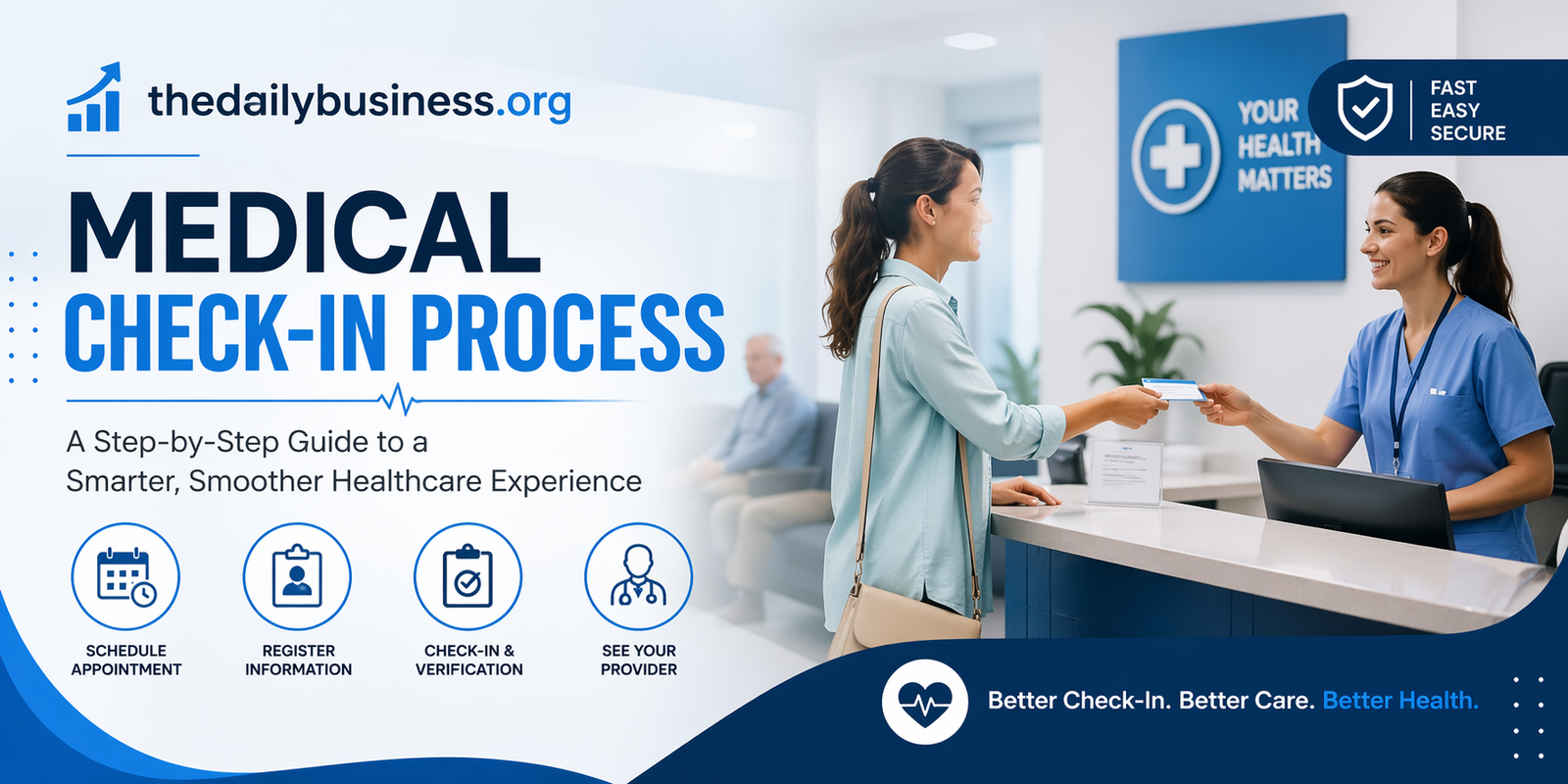
The medical check in process is the first and one of the most important steps in any healthcare facility. It sets the tone for patient experience, ensures accurate data collection, and helps medical staff deliver efficient care. At The Daily Business, we explore how optimizing this process can improve both patient satisfaction and operational workflow.
What Is the Medical Check In Process?
The medical check in process refers to the procedure patients go through when they arrive at a healthcare facility. This includes verifying personal information, updating medical history, confirming insurance details, and preparing for consultation.
A smooth check-in process reduces wait times and ensures that healthcare providers have accurate information before treatment begins.
Key Steps in the Medical Check In Process
1. Patient Arrival and Greeting
Patients are welcomed at the reception desk or kiosk. A friendly greeting creates a positive first impression.
2. Appointment Verification
Staff confirm the patient’s appointment details, including date, time, and doctor.
3. Personal Information Update
Patients review and update details such as:
- Name and contact information
- Emergency contacts
- Address
4. Insurance Verification
Insurance details are checked to ensure coverage and avoid billing issues later.
5. Medical History Review
Patients may be asked to update:
- Current medications
- Allergies
- Past medical conditions
6. Consent Forms and Documentation
Patients sign necessary forms, including consent for treatment and privacy policies.
7. Waiting Room or Direct Room Assignment
After check-in, patients either wait or are directed to an examination room.
Benefits of an Efficient Medical Check In Process
1. Reduced Waiting Time
Streamlined check-in minimizes delays and improves patient flow.
2. Improved Patient Satisfaction
A quick and smooth experience leaves patients feeling valued and respected.
3. Accurate Data Collection
Updated and verified information helps avoid medical errors.
4. Better Staff Productivity
Less time spent on paperwork allows staff to focus on patient care.
Challenges in the Medical Check In Process
Despite its importance, many healthcare facilities face challenges such as:
- Long queues during peak hours
- Manual paperwork errors
- Inefficient communication between departments
- Outdated systems
Best Practices to Improve the Medical Check In Process
1. Implement Digital Check-In Systems
Use tablets or self-service kiosks to reduce manual work and speed up the process.
2. Offer Online Pre-Registration
Allow patients to fill out forms before arriving.
3. Train Front Desk Staff
Professional and well-trained staff can handle check-ins more efficiently.
4. Use Automated Reminders
Send appointment reminders to reduce no-shows and confusion.
5. Ensure Data Security
Protect patient information using secure systems and compliance standards.
Future Trends in Medical Check In Process
The healthcare industry is rapidly evolving, and the medical check in process is no exception. Some emerging trends include:
- Mobile app-based check-ins
- Biometric verification systems
- AI-powered patient management tools
- Contactless check-in solutions
Conclusion
The medical check in process plays a critical role in delivering quality healthcare services. By improving efficiency, reducing errors, and enhancing patient experience, healthcare providers can create a more effective system overall.
At The Daily Business, we believe that adopting modern technologies and best practices can transform traditional check-in systems into seamless, patient-friendly experiences.