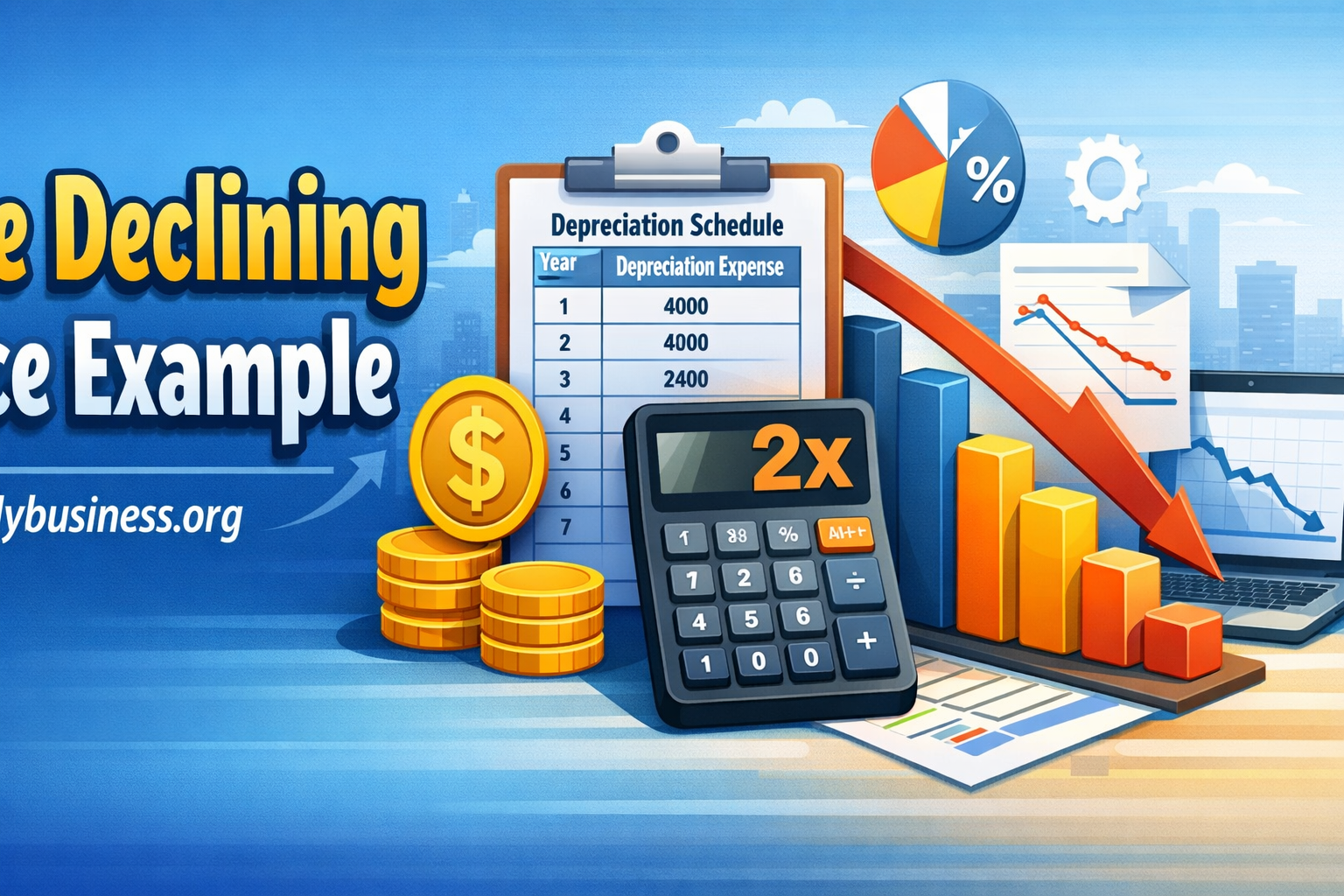
Depreciation is an important accounting method that helps businesses spread the cost of an asset over its useful life. One of the fastest depreciation methods is the double declining balance method. In this guide, The Daily Business explains a simple double declining balance example so you can understand how it works and when to use it.
What Is Double Declining Balance?
The double declining balance (DDB) method is an accelerated depreciation technique. It records higher depreciation expenses in the first years of an asset’s life and lower expenses in later years.
This method is often used for assets that lose value quickly, such as:
- Computers
- Vehicles
- Machinery
- Office equipment
Double Declining Balance Formula
The formula is:
Depreciation Expense = Book Value at Beginning of Year × (2 ÷ Useful Life)
Where:
- Book Value = Asset cost minus accumulated depreciation
- Useful Life = Number of years the asset is expected to be used
Double Declining Balance Example
Let’s say a company buys a machine for $10,000. The machine has:
- Useful life: 5 years
- Salvage value: $1,000
Step 1: Find the Straight-Line Rate
Straight-line depreciation rate:
1 ÷ 5 = 20%
Step 2: Double the Rate
20% × 2 = 40%
Now apply 40% each year to the remaining book value.
Depreciation Schedule
| Year | Beginning Book Value | Depreciation (40%) | Ending Book Value |
|---|---|---|---|
| 1 | $10,000 | $4,000 | $6,000 |
| 2 | $6,000 | $2,400 | $3,600 |
| 3 | $3,600 | $1,440 | $2,160 |
| 4 | $2,160 | $864 | $1,296 |
| 5 | Adjusted Amount | $296 | $1,000 |
In the final year, depreciation is adjusted so the asset reaches its salvage value of $1,000.
Why Use Double Declining Balance?
Businesses choose this method because it:
- Matches higher early usage of assets
- Reduces taxable income sooner
- Reflects faster loss in value
- Helps with better financial planning
When to Use It
The DDB method works best when assets become outdated quickly or need more repairs later in life. It is common in technology and transportation industries.
Common Mistakes to Avoid
When using a double declining balance example, watch out for these mistakes:
- Forgetting to double the straight-line rate
- Ignoring salvage value
- Using original cost every year instead of book value
- Over-depreciating the asset below salvage value
Double Declining Balance vs Straight-Line
| Method | Expense Pattern | Best For |
|---|---|---|
| Straight-Line | Equal every year | Buildings, furniture |
| Double Declining Balance | Higher early years | Tech, vehicles, machinery |
Final Thoughts
Understanding a double declining balance example helps business owners and accountants make smarter decisions about asset costs. This method gives larger deductions early and reflects real asset usage.
At The Daily Business, we simplify accounting topics so your business can grow with confidence.