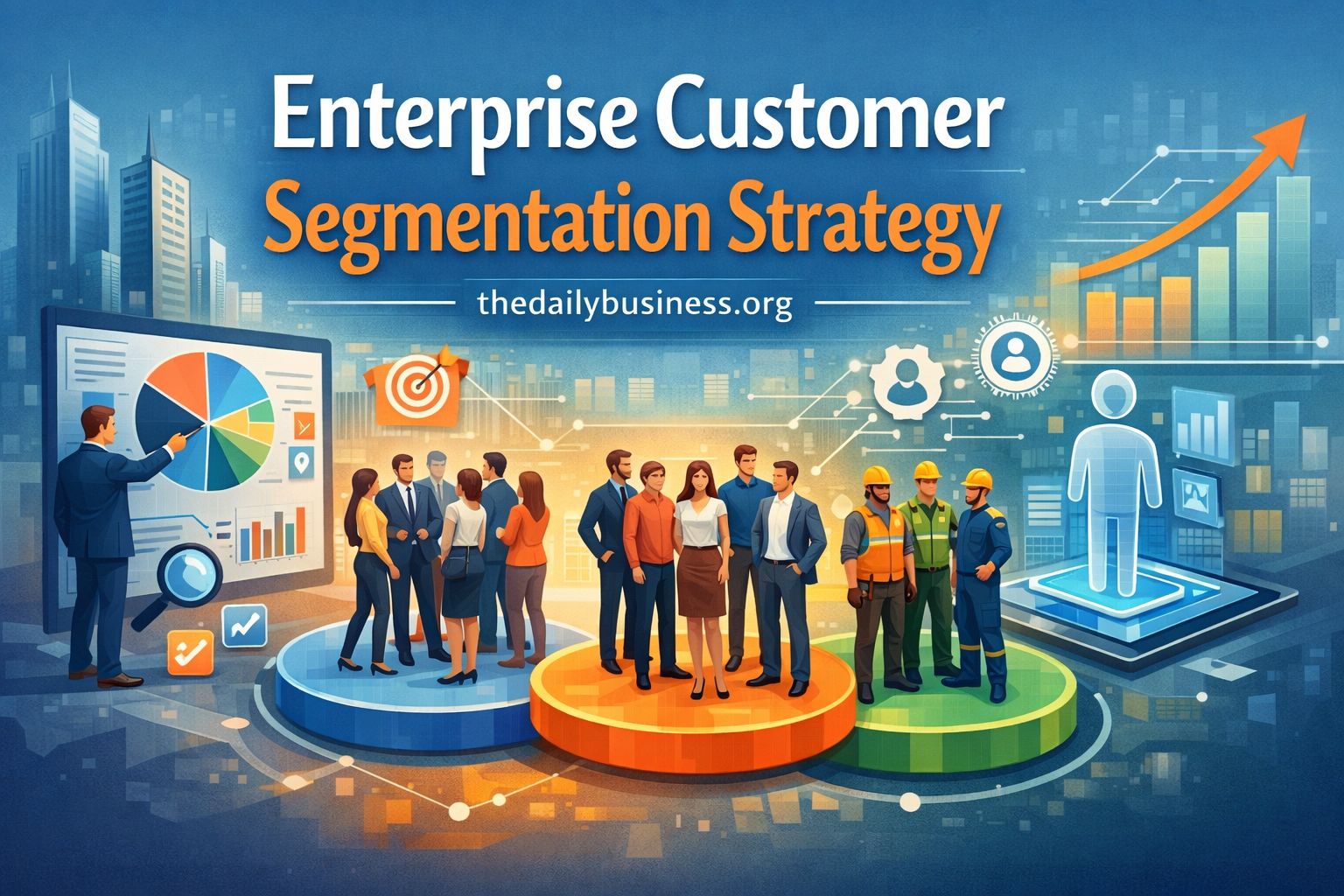
In today’s competitive market, understanding your customers is no longer optional. Businesses that know who their customers are, what they need, and how they behave can create stronger marketing campaigns and improve sales. This is where an enterprise customer segmentation strategy becomes essential. At The Daily Business, we believe smart segmentation is one of the most powerful ways to drive long-term success.
What Is an Enterprise Customer Segmentation Strategy?
An enterprise customer segmentation strategy is the process of dividing a large customer base into smaller groups based on shared characteristics. These groups may be based on demographics, industry, company size, purchasing behavior, location, or customer needs.
Instead of treating all customers the same, businesses can tailor their products, messaging, and services to each segment. This creates more relevant experiences and increases customer satisfaction.
Why Customer Segmentation Matters for Enterprises
Large businesses often manage thousands of customers across multiple industries and markets. Without segmentation, marketing efforts can become too broad and ineffective.
Here are some major benefits of using an enterprise customer segmentation strategy:
1. Better Targeted Marketing
Segmentation allows companies to create campaigns for specific customer groups. Personalized marketing performs better than generic messaging.
2. Higher Customer Retention
When customers receive offers and services that match their needs, they are more likely to stay loyal.
3. Improved Product Development
By understanding different customer segments, businesses can build products that solve real problems.
4. Efficient Resource Allocation
Companies can focus time and budget on high-value segments rather than wasting resources on low-performing markets.
5. Increased Revenue
Targeted upselling, cross-selling, and better engagement often lead to higher profits.
Types of Customer Segmentation for Enterprises
An effective enterprise customer segmentation strategy often includes multiple segmentation models.
Demographic Segmentation
Groups customers by age, gender, income, education, or job role.
Geographic Segmentation
Divides customers based on country, city, region, or climate.
Behavioral Segmentation
Focuses on buying habits, product usage, loyalty, and customer activity.
Firmographic Segmentation
Common in B2B markets, this groups businesses by industry, company size, annual revenue, or number of employees.
Psychographic Segmentation
Looks at values, interests, lifestyles, and preferences.
Steps to Build an Enterprise Customer Segmentation Strategy
Step 1: Collect Customer Data
Gather data from CRM systems, website analytics, surveys, social media, and purchase history.
Step 2: Identify Patterns
Analyze the data to find trends and common characteristics among customers.
Step 3: Create Customer Segments
Build clear customer groups based on your findings.
Step 4: Develop Personalized Campaigns
Create offers, messages, and products for each segment.
Step 5: Measure Results
Track engagement, conversions, retention, and revenue to see what works best.
Common Challenges in Customer Segmentation
Even the best strategies can face obstacles. Some common issues include:
- Poor quality data
- Too many customer segments
- Lack of internal alignment
- Outdated customer profiles
- Limited technology tools
The key is to keep your segmentation model simple, data-driven, and regularly updated.
Best Tools for Enterprise Segmentation
Businesses often use advanced platforms such as:
- CRM software
- Customer Data Platforms (CDPs)
- Marketing automation tools
- Business intelligence dashboards
- AI analytics tools
These tools help companies process large amounts of customer data quickly and accurately.
Future Trends in Customer Segmentation
The future of the enterprise customer segmentation strategy will rely heavily on artificial intelligence and predictive analytics. Businesses will be able to anticipate customer needs before they arise and deliver hyper-personalized experiences in real time.
Final Thoughts
A strong enterprise customer segmentation strategy helps businesses understand their audience, improve customer relationships, and grow revenue. Instead of using one-size-fits-all marketing, companies can create smarter and more profitable strategies.
At The Daily Business, we encourage organizations to invest in segmentation because better customer understanding always leads to better business results.