Introduction
Understanding the medical check in meaning is essential for both patients and healthcare providers. Whether you’re visiting a hospital, clinic, or diagnostic center, the check-in process is the first step in receiving proper medical care. At The Daily Business, we aim to simplify healthcare-related concepts so you can feel confident and prepared.
What is Medical Check In?
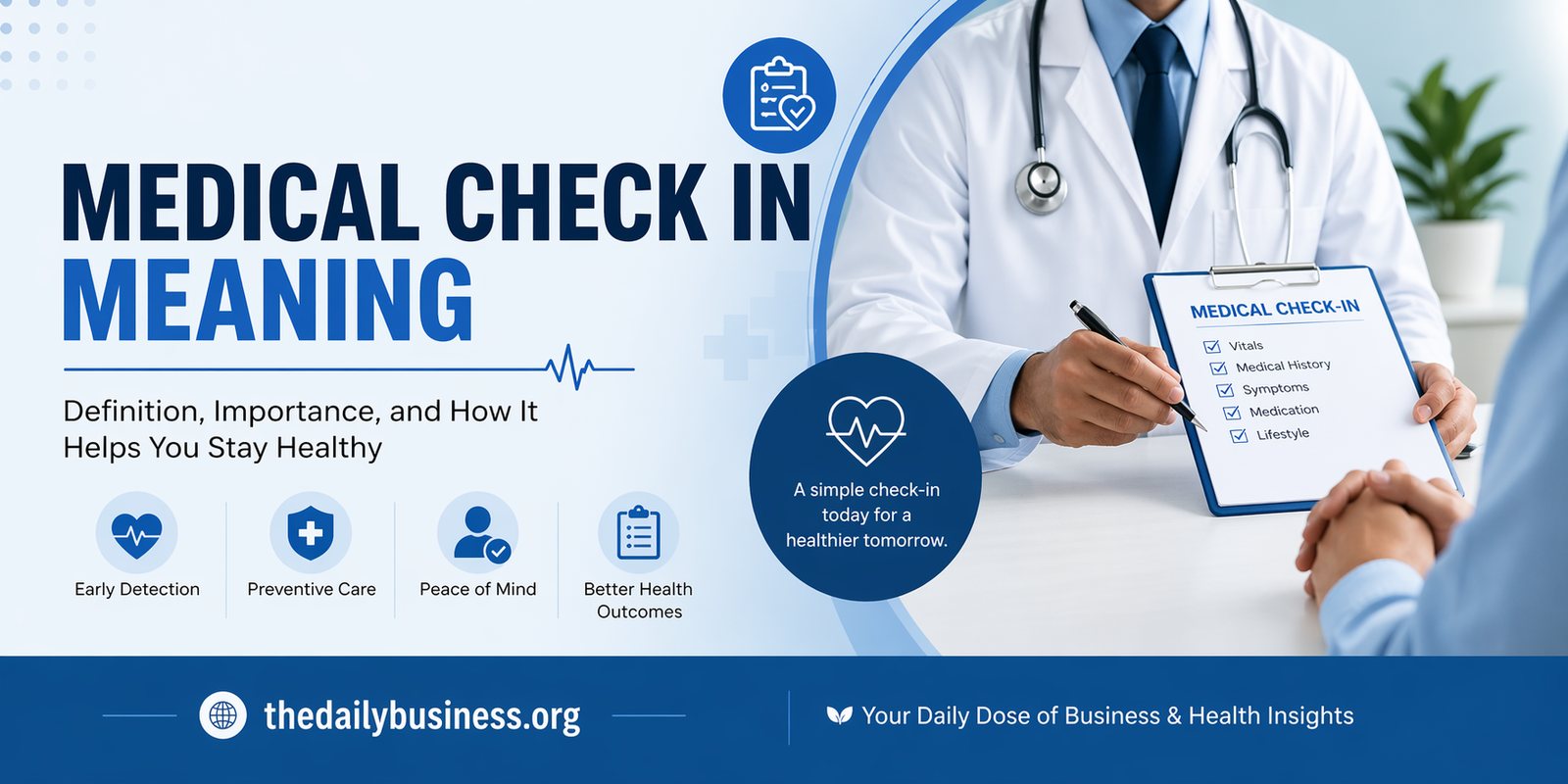
The term medical check in refers to the process a patient goes through when they arrive at a healthcare facility and register their presence before receiving treatment. This step ensures that the healthcare staff has all necessary patient information and can manage appointments efficiently.
In simple words, medical check-in is like “signing in” before seeing a doctor.
Why is Medical Check In Important?
Medical check-in plays a critical role in healthcare operations. Here’s why it matters:
1. Patient Identification
It confirms the patient’s identity and ensures records are accurate.
2. Appointment Management
Helps healthcare providers keep track of scheduled visits and reduce waiting times.
3. Medical History Access
Allows staff to retrieve your previous medical records for better diagnosis.
4. Billing and Insurance Processing
Ensures insurance details and payment information are verified before treatment.
Steps Involved in Medical Check In
The medical check-in process may vary slightly between facilities, but generally includes:
1. Arrival at Facility
Patients arrive at the hospital or clinic reception desk.
2. Registration
Providing personal details such as name, age, contact information, and ID.
3. Appointment Confirmation
Verifying the scheduled appointment or booking a new one.
4. Insurance Verification
Submitting insurance details if applicable.
5. Waiting Area Assignment
Patients are directed to wait until their name is called.
Types of Medical Check In
1. In-Person Check In
Traditional method where patients register at the front desk.
2. Online Check In
Patients fill out forms digitally before arriving.
3. Self-Service Kiosks
Automated machines in hospitals for quick check-in.
4. Mobile App Check In
Using healthcare apps to check in remotely.
Benefits of Efficient Medical Check In
- Reduces waiting time
- Improves patient experience
- Enhances data accuracy
- Streamlines hospital workflow
- Minimizes administrative errors
Common Challenges in Medical Check In
Despite its importance, the process may face issues such as:
- Long queues at reception
- Data entry errors
- Delays in insurance verification
- Lack of digital systems
Healthcare facilities are increasingly adopting technology to overcome these challenges.
Tips for a Smooth Medical Check In
- Arrive at least 15 minutes early
- Carry valid ID and insurance documents
- Keep previous medical records handy
- Use online check-in if available
- Double-check your personal information
Conclusion
The medical check in meaning goes beyond just registering your arrival—it is a vital process that ensures smooth communication between patients and healthcare providers. A well-organized check-in system improves efficiency, reduces stress, and enhances the overall healthcare experience.
At The Daily Business, we believe that understanding such essential processes empowers individuals to make better decisions about their health and time.