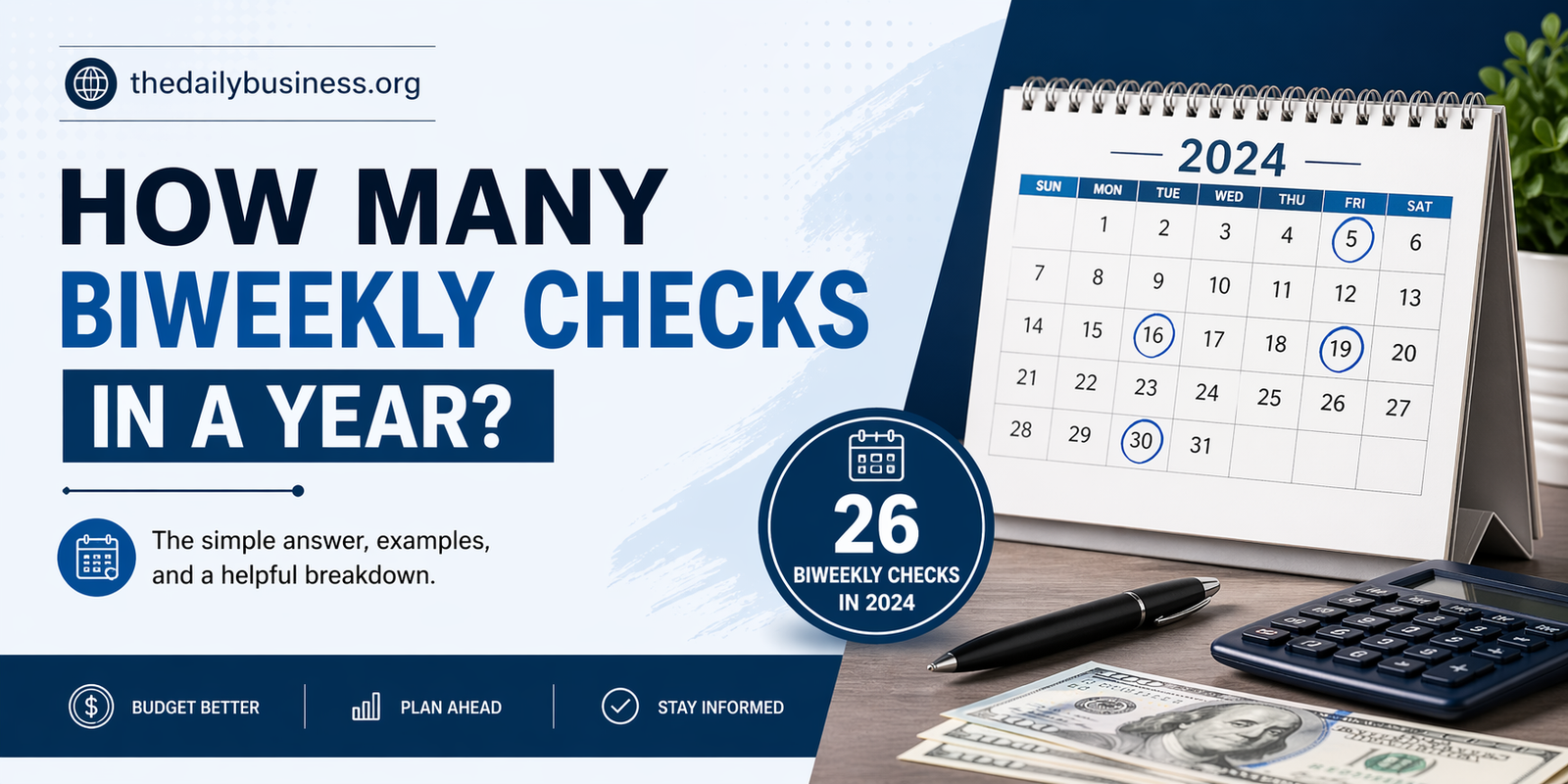
When managing payroll or personal finances, one common question is: how many biweekly checks in a year? Understanding this helps both employers and employees plan budgets, expenses, and savings effectively.
In this guide by The Daily Business, we’ll break it down in a simple and practical way.
What Is a Biweekly Pay Schedule?
A biweekly pay schedule means employees are paid once every two weeks. This results in consistent paydays, typically on the same day of the week (like every Friday).
How Many Biweekly Checks in a Year?
In most cases:
- There are 26 biweekly checks in a year
Why 26 Paychecks?
A year has:
- 52 weeks
Since employees are paid every 2 weeks:
- 52 ÷ 2 = 26 pay periods
So, the standard number of biweekly checks in a year is 26.
Why Do Some Years Have 27 Biweekly Checks?
Occasionally, you may receive 27 biweekly paychecks instead of 26.
How Does This Happen?
This occurs because:
- A standard year has 365 days (or 366 in a leap year)
- 52 weeks only account for 364 days
That extra day (or two in leap years) builds up over time. Every 5 to 6 years, it can create an extra pay period, resulting in 27 checks.
Impact of 26 vs 27 Paychecks
For Employees
- A year with 27 paychecks can feel like a “bonus” paycheck
- Great opportunity for:
- Saving money
- Paying off debt
- Investing
For Employers
- Payroll budgeting needs adjustment
- Salaried employees’ annual pay may be split differently
- Systems must account for the extra pay cycle
Biweekly Pay vs Other Pay Schedules
Here’s how biweekly compares to other pay structures:
| Pay Schedule | Paychecks per Year |
|---|---|
| Weekly | 52 |
| Biweekly | 26 (sometimes 27) |
| Semi-monthly | 24 |
| Monthly | 12 |
Biweekly pay is popular because it balances frequency and administrative ease.
How to Plan Your Finances with Biweekly Pay
If you’re paid biweekly, consider these tips:
- Base your monthly budget on 2 paychecks per month
- Treat any “extra” paycheck (from a 27-paycheck year) as bonus income
- Automate savings to make the most of consistent income
Key Takeaways
- The answer to how many biweekly checks in a year is typically 26
- Some years include 27 paychecks due to calendar alignment
- Understanding this helps with better financial and payroll planning
Final Thoughts
Whether you’re an employer managing payroll or an employee planning your finances, knowing how many biweekly checks in a year gives you a clear advantage. Smart planning around your pay schedule can improve savings, reduce stress, and help you stay financially organized.
For more business and finance insights, stay connected with The Daily Business.