By The Daily Business
Understanding how payroll works is essential for both employees and business owners. One of the most common payroll schedules used by companies is the bi weekly pay structure. But a frequently asked question remains: how many bi weekly pay periods per year are there?
This guide from The Daily Business breaks it down clearly and explains why it matters for budgeting, payroll management, and financial planning.
What Does Bi Weekly Pay Mean?
A bi weekly pay schedule means employees are paid once every two weeks. This results in paychecks being issued on the same day of the week, typically Friday.
Unlike semi-monthly pay (twice a month), bi weekly pay is based on a consistent 14-day cycle.
How Many Bi Weekly Pay Periods Per Year?
In most years, there are:
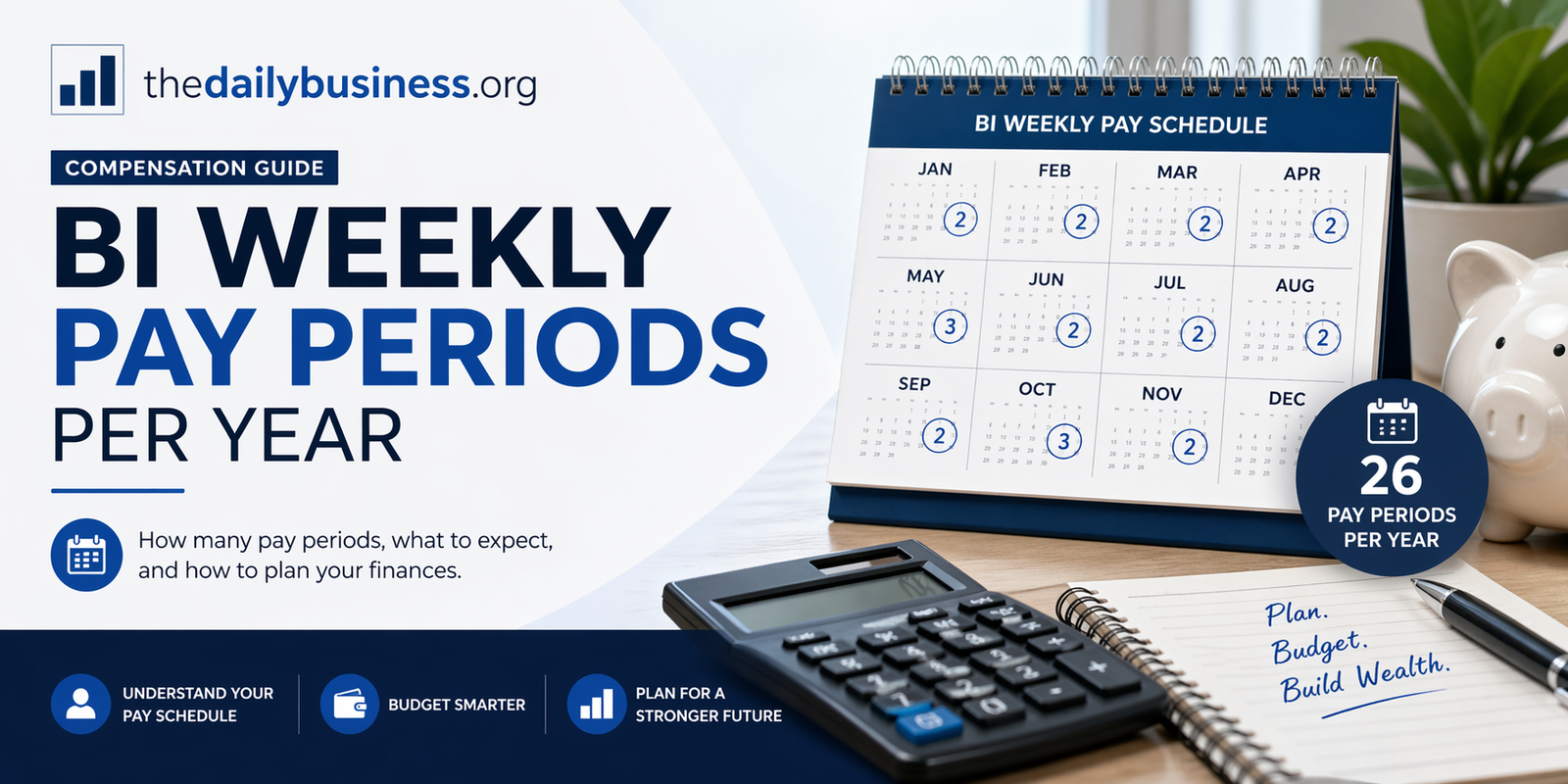
26 bi weekly pay periods per year
This is because:
- A year has 52 weeks
- Employees are paid every 2 weeks
- 52 ÷ 2 = 26 pay periods
Why Some Years Have 27 Pay Periods
Occasionally, a calendar year includes:
27 bi weekly pay periods
This happens because:
- A year is actually 365 days (or 366 in a leap year)
- The extra day(s) accumulate over time
- Eventually, an additional pay period is created
This typically occurs every 11 years, though it can vary depending on the calendar.
Bi Weekly vs Other Pay Schedules
Here’s how bi weekly compares to other payroll schedules:
| Pay Schedule | Pay Periods Per Year |
|---|---|
| Weekly | 52 |
| Bi Weekly | 26 (sometimes 27) |
| Semi-Monthly | 24 |
| Monthly | 12 |
Bi weekly payroll strikes a balance between frequent payments and administrative efficiency.
Benefits of Bi Weekly Pay
1. Consistent Paydays
Employees know exactly when they will be paid, making budgeting easier.
2. Extra Paychecks
In 3-paycheck months, employees receive an additional paycheck, which can help with savings or large expenses.
3. Easier Overtime Calculations
Since pay periods align with weeks, calculating overtime is simpler for employers.
Challenges of Bi Weekly Payroll
1. Payroll Planning for 27 Periods
Businesses must adjust salaries and budgets in years with an extra pay period.
2. Monthly Budgeting Complexity
Since months don’t align perfectly with pay periods, financial planning can be slightly tricky.
How Businesses Handle 27 Pay Period Years
Companies typically manage this in two ways:
- Adjust Employee Salaries
Divide annual salaries by 27 instead of 26 - Absorb the Extra Cost
Pay the extra period without adjusting salary (less common)
Planning ahead is critical to avoid financial strain.
Tips for Employees
- Use “extra paycheck” months to save or pay off debt
- Budget based on 2 paychecks per month, not 3
- Track annual income instead of monthly income
Conclusion
So, how many bi weekly pay periods per year are there?
Usually 26, but occasionally 27 depending on the calendar year.
Understanding this system helps both employers and employees plan better, manage cash flow, and avoid surprises.
For more business insights and payroll tips, stay connected with The Daily Business.