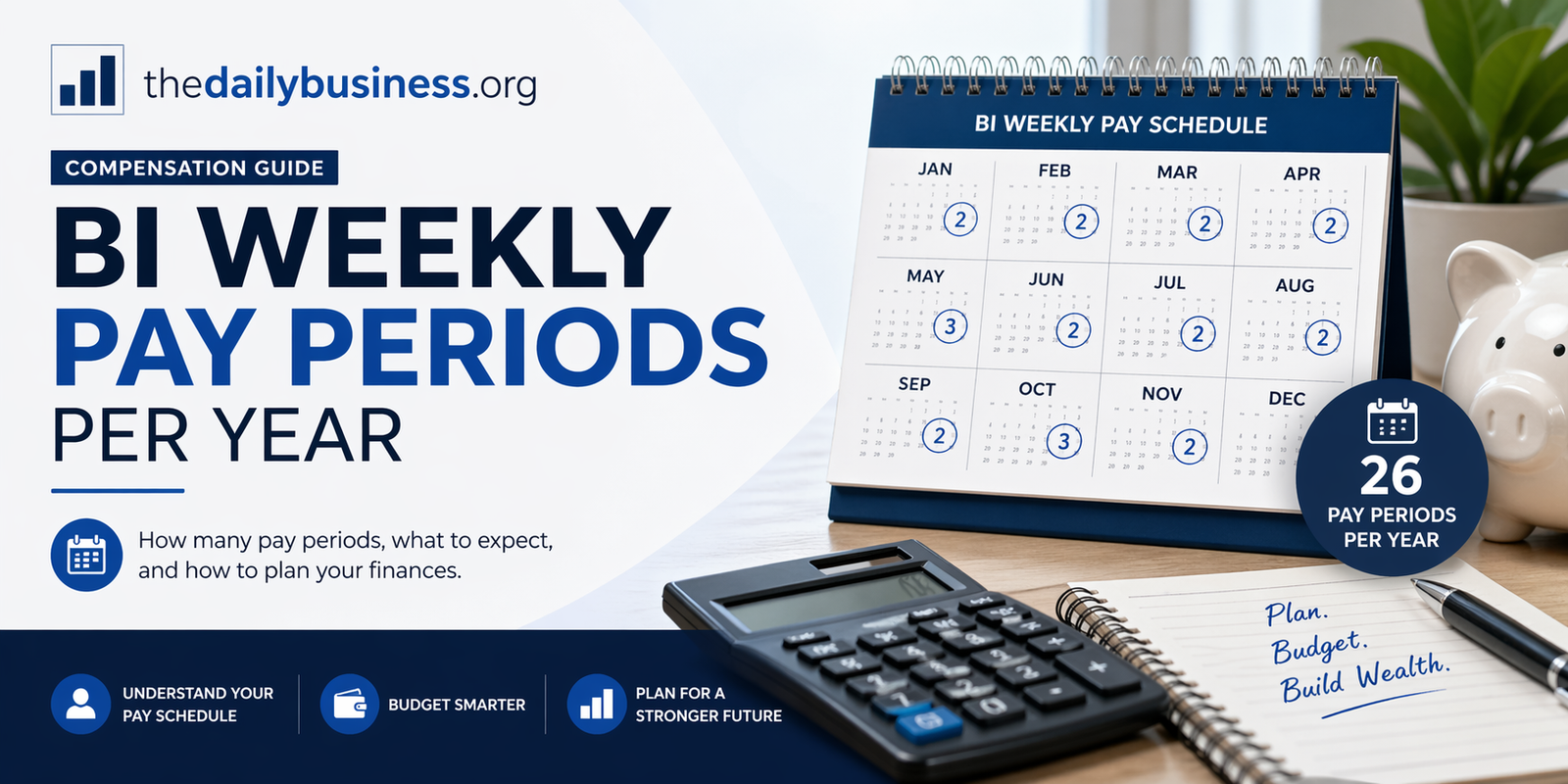
Managing payroll is a critical part of running any business, and understanding pay schedules is essential for both employers and employees. One of the most common payroll structures is the biweekly pay schedule, which results in 26 pay periods in a year biweekly. In this guide by The Daily Business, we’ll break down how this system works and why it matters.
What Does Biweekly Pay Mean?
Biweekly pay means employees are paid once every two weeks. Instead of receiving a paycheck twice a month, workers are paid every 14 days.
Since there are 52 weeks in a year, dividing that by 2 results in:
52 weeks ÷ 2 = 26 pay periods
This is why companies following this schedule have 26 pay periods in a year biweekly.
How the 26 Pay Periods Work
A biweekly pay schedule typically results in employees receiving paychecks on the same day every two weeks—such as every Friday.
Key Characteristics:
- 26 total paychecks per year
- Paydays remain consistent (e.g., every other Friday)
- Two months in the year will have three paychecks instead of two
Those “extra paycheck” months often occur twice a year and can be beneficial for employees budgeting their finances.
Why Businesses Choose Biweekly Payroll
Many companies prefer the biweekly system for its balance between administrative ease and employee satisfaction.
Advantages for Employers:
- Easier to calculate overtime (weekly tracking)
- More consistent scheduling
- Aligns well with hourly wage structures
Advantages for Employees:
- More frequent paychecks compared to monthly schedules
- Easier budgeting due to predictable paydays
- Occasional “bonus” months with three paychecks
Biweekly vs Semi-Monthly Pay
It’s easy to confuse biweekly pay with semi-monthly pay, but they are different.
| Pay Type | Pay Periods Per Year | Key Difference |
|---|---|---|
| Biweekly | 26 | Paid every 2 weeks |
| Semi-Monthly | 24 | Paid twice a month (fixed dates) |
With 26 pay periods in a year biweekly, employees receive two extra paychecks compared to semi-monthly schedules.
Impact on Salary Calculations
For salaried employees, annual income is divided across 26 pay periods.
Example:
If an employee earns $52,000 annually:
$52,000 ÷ 26 = $2,000 per paycheck
This makes payroll predictable and easy to manage for both employers and employees.
Challenges of Biweekly Pay
While the system is widely used, it does come with a few considerations:
- Payroll processing occurs more frequently than monthly systems
- Budgeting for months with three pay periods can require planning
- Benefit deductions may need adjustments across extra pay periods
However, these challenges are generally manageable with proper payroll systems.
Tips for Managing 26 Pay Periods
For Employers:
- Use payroll software to automate calculations
- Plan ahead for three-paycheck months
- Ensure compliance with labor laws
For Employees:
- Treat extra paychecks as savings opportunities
- Plan monthly budgets carefully
- Track deductions and benefits
Conclusion
Understanding why there are 26 pay periods in a year biweekly is essential for efficient payroll management. This system offers consistency, flexibility, and financial predictability for both businesses and employees.
For organizations looking to streamline payroll and improve employee satisfaction, the biweekly pay schedule remains one of the most practical choices.