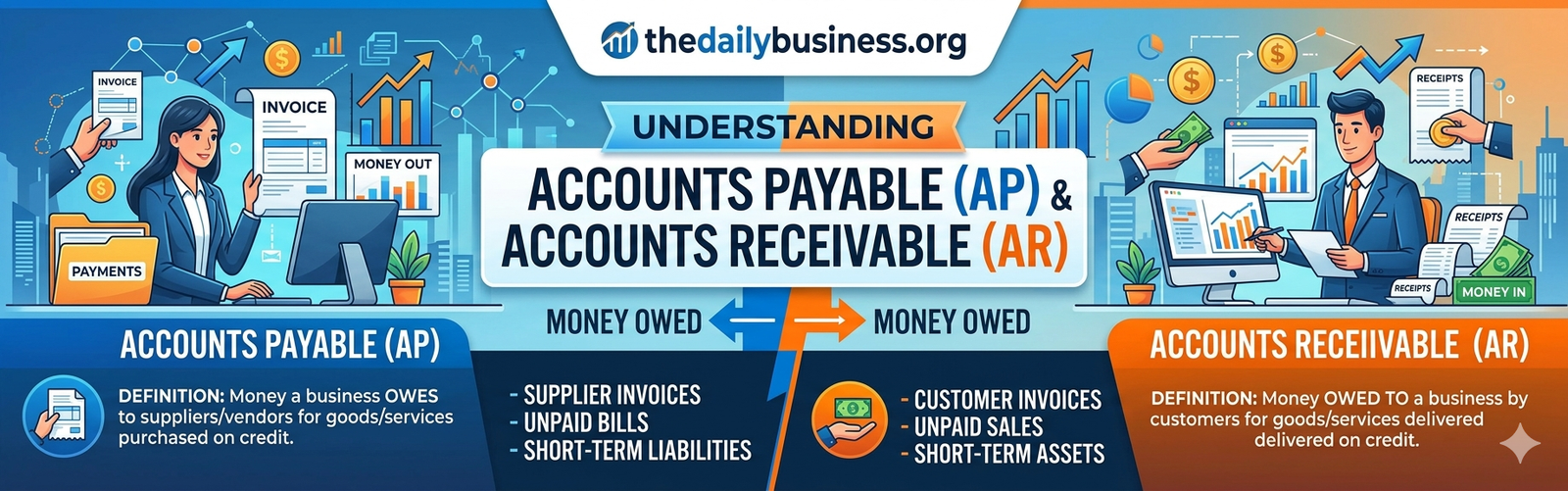
Managing finances effectively is critical for any business, and understanding the difference between accounts payable AP and accounts receivable AR is a key part of that process. At The Daily Business, we break down these essential accounting concepts to help you run your business more efficiently.
What Is Accounts Payable?
Accounts payable (AP) refers to the money a business owes to its suppliers or vendors for goods and services received but not yet paid for. It is recorded as a liability on the balance sheet.
Key Features of Accounts Payable:
- Represents short-term debts
- Includes supplier invoices, utility bills, and service fees
- Typically comes with payment terms (e.g., Net 30, Net 60)
- Requires timely payment to maintain good vendor relationships
Example:
If your company purchases office supplies on credit, the amount owed is recorded under accounts payable until it is paid.
What Is Accounts Receivable?
Accounts receivable (AR) is the money owed to a business by its customers for products or services delivered but not yet paid for. It is recorded as an asset on the balance sheet.
Key Features of Accounts Receivable:
- Represents incoming payments
- Includes unpaid customer invoices
- Impacts cash flow positively when collected
- Requires efficient tracking and follow-ups
Example:
If your business sells products to a customer on credit, the outstanding amount is recorded as accounts receivable until payment is received.
Key Differences Between Accounts Payable and Accounts Receivable
| Feature | Accounts Payable (AP) | Accounts Receivable (AR) |
|---|---|---|
| Nature | Liability | Asset |
| Cash Flow Impact | Outgoing payments | Incoming payments |
| Who Owes Money | Business owes suppliers | Customers owe business |
| Purpose | Manage debts | Track incoming revenue |
Why AP and AR Matter for Businesses
Understanding what is accounts payable and accounts receivable helps businesses:
- Maintain healthy cash flow
- Avoid late payment penalties
- Strengthen vendor and customer relationships
- Improve financial forecasting
- Ensure accurate financial reporting
Efficient management of AP and AR can mean the difference between financial stability and cash shortages.
Best Practices for Managing AP and AR
For Accounts Payable:
- Automate invoice processing
- Track due dates carefully
- Take advantage of early payment discounts
For Accounts Receivable:
- Send invoices promptly
- Offer multiple payment options
- Follow up on overdue accounts regularly
Final Thoughts
Both accounts payable and accounts receivable are essential components of a company’s financial system. Knowing what is accounts payable and accounts receivable allows businesses to better manage obligations and income, ensuring smoother operations and long-term growth.
At The Daily Business, we recommend implementing clear systems and using digital tools to streamline both processes for maximum efficiency.