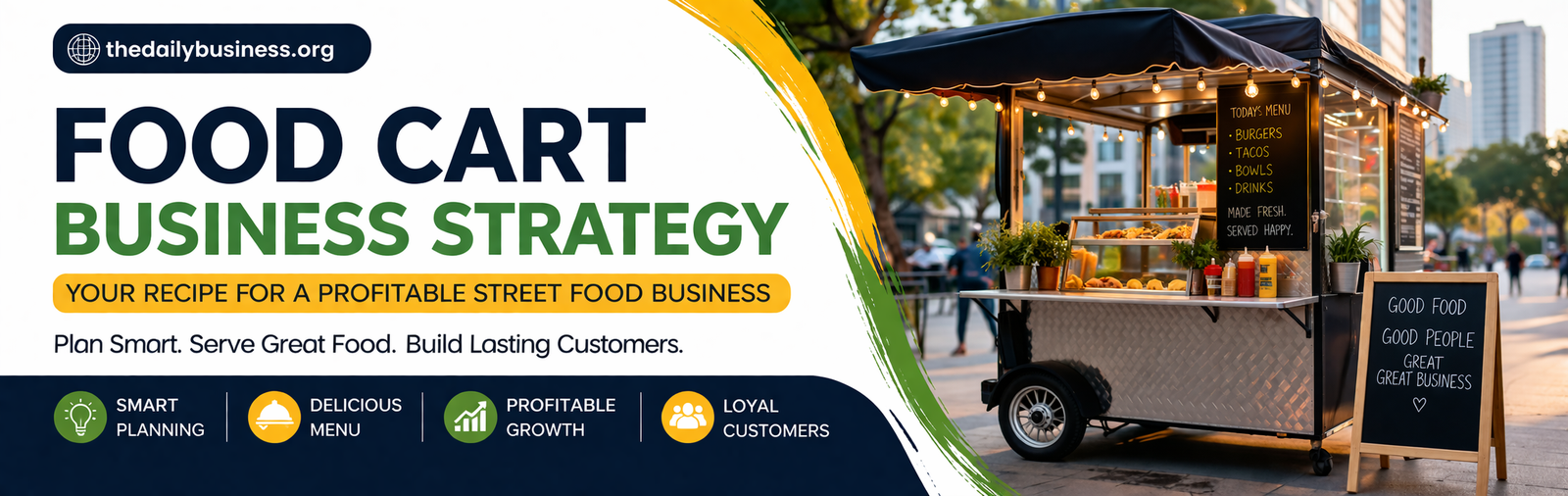
Starting a food cart can be a highly profitable venture if you apply the right food cart business strategy. With low startup costs and high demand for quick, affordable meals, food carts are becoming a popular choice for entrepreneurs. In this guide by The Daily Business, you’ll learn how to build, grow, and sustain a successful food cart business.
1. Understand Your Target Market
The foundation of any successful food cart business strategy is knowing your customers. Identify:
- Your ideal audience (students, office workers, tourists)
- Peak hours and locations
- Customer preferences and spending habits
For example, placing your cart near offices may require quick lunch options, while parks may favor snacks and beverages.
2. Choose the Right Location
Location is everything in the food cart business. A strong strategy includes:
- High foot traffic areas
- Near schools, offices, or markets
- Easy accessibility and visibility
Always check local regulations and permits before setting up your cart.
3. Create a Unique Menu
Your menu should stand out while staying simple. A smart food cart business strategy focuses on:
- Limited but high-quality items
- Fast preparation time
- Unique flavors or fusion dishes
Specializing in one signature dish can help build brand identity and customer loyalty.
4. Focus on Branding and Presentation
Even a small food cart needs strong branding. Consider:
- A catchy business name
- Attractive cart design
- Clean and professional appearance
Consistency in branding helps customers remember your business and recommend it to others.
5. Maintain High Hygiene Standards
Cleanliness is critical for success. Your food cart business strategy should include:
- Proper food handling practices
- Regular cleaning routines
- Use of gloves and hygiene gear
Good hygiene builds trust and ensures repeat customers.
6. Set Competitive Pricing
Pricing can make or break your business. Ensure:
- Affordable rates for your target audience
- Competitive pricing compared to nearby vendors
- Profit margins that sustain your business
Offer combo deals or discounts to attract more customers.
7. Leverage Social Media Marketing
Digital presence is essential today. Promote your food cart by:
- Sharing photos and videos of your food
- Posting your location daily
- Engaging with customers online
Platforms like Instagram and Facebook can significantly boost visibility.
8. Provide Excellent Customer Service
Customer experience plays a huge role in your food cart business strategy. Always:
- Be friendly and polite
- Serve quickly
- Handle feedback positively
Happy customers are more likely to return and recommend your cart.
9. Manage Costs Efficiently
Track your expenses carefully, including:
- Ingredients
- Supplies
- Permits and maintenance
Reducing waste and buying in bulk can improve your profit margins.
10. Plan for Growth
Once your cart is successful, consider expanding:
- Add more carts in different locations
- Introduce new menu items
- Partner with delivery platforms
A scalable food cart business strategy ensures long-term success.
Conclusion
A well-planned food cart business strategy can turn a simple street food idea into a thriving business. By focusing on location, quality, customer service, and marketing, you can build a profitable and sustainable venture.
The Daily Business encourages aspiring entrepreneurs to start small, stay consistent, and continuously improve their strategies for long-term success.