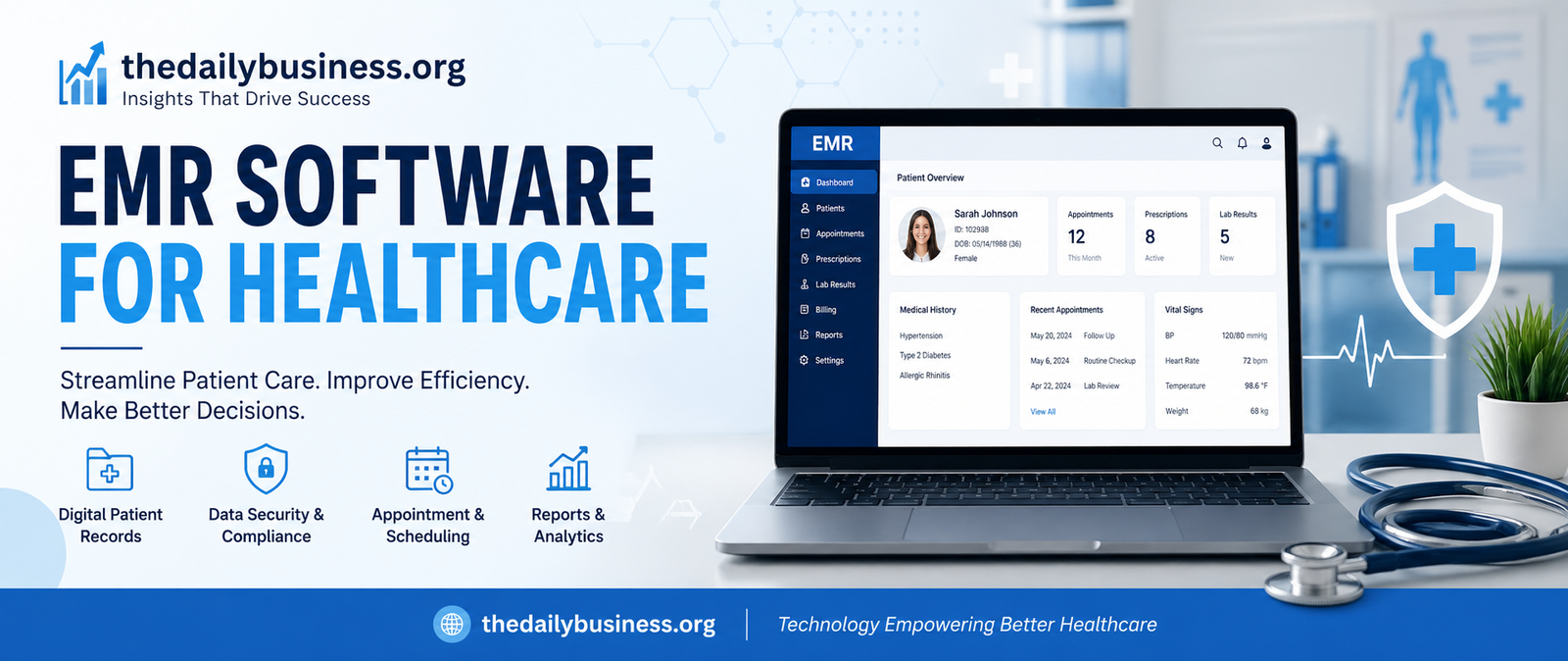
In today’s rapidly evolving medical landscape, EMR software for healthcare has become a cornerstone of efficient and high-quality patient care. From small clinics to large hospitals, healthcare providers are increasingly relying on digital systems to manage patient records, streamline workflows, and improve outcomes.
In this guide by The Daily Business, we’ll explore what EMR software is, its benefits, essential features, and how to choose the right solution for your practice.
What Is EMR Software for Healthcare?
Electronic Medical Record (EMR) software is a digital version of a patient’s paper chart. It contains medical history, diagnoses, medications, treatment plans, immunization dates, and test results.
Unlike traditional paper records, EMR systems allow healthcare providers to access patient information instantly, improving coordination and decision-making.
Why EMR Software Is Important in Healthcare
The adoption of EMR software for healthcare is driven by the need for efficiency, accuracy, and better patient care.
Key Benefits
- Improved Patient Care: Quick access to accurate patient data enables better diagnosis and treatment.
- Enhanced Efficiency: Reduces paperwork and administrative burden.
- Better Coordination: Facilitates communication between different healthcare providers.
- Data Security: Protects sensitive patient information with encryption and access controls.
- Regulatory Compliance: Helps meet healthcare regulations and standards.
Core Features of EMR Software
When choosing EMR software, healthcare providers should look for essential features that support daily operations.
1. Patient Records Management
Centralized storage of patient data, including medical history and lab results.
2. E-Prescribing
Allows doctors to send prescriptions directly to pharmacies, reducing errors.
3. Appointment Scheduling
Streamlines booking and reduces no-shows with reminders.
4. Billing and Coding
Automates medical billing processes and ensures accurate coding.
5. Reporting and Analytics
Provides insights into patient trends and operational performance.
6. Integration Capabilities
Connects with other healthcare systems such as labs and imaging centers.
Advantages of EMR Software for Healthcare Providers
Implementing EMR software for healthcare offers multiple advantages:
- Time Savings: Automates repetitive tasks
- Reduced Errors: Minimizes manual entry mistakes
- Cost Efficiency: Cuts down on paper and storage costs
- Better Patient Engagement: Patients can access their records through portals
Challenges of EMR Implementation
Despite its benefits, EMR adoption comes with challenges:
- High Initial Costs
- Training Requirements
- Data Migration Issues
- Resistance to Change
However, with proper planning and training, these challenges can be effectively managed.
How to Choose the Right EMR Software
Selecting the best EMR system depends on your practice’s size, budget, and needs.
Consider the Following:
- Ease of Use: User-friendly interface for staff
- Customization: Ability to tailor features to your workflow
- Scalability: Can grow with your organization
- Support & Training: Reliable customer support
- Compliance: Meets healthcare regulations
Future Trends in EMR Software
The future of EMR software for healthcare is promising, with innovations such as:
- Artificial Intelligence (AI): Assisting in diagnosis and predictive analytics
- Cloud-Based Systems: Offering flexibility and remote access
- Mobile Integration: Accessing records on smartphones and tablets
- Interoperability: Seamless data sharing across platforms
Conclusion
EMR software is transforming the healthcare industry by improving efficiency, accuracy, and patient outcomes. As technology continues to evolve, adopting the right EMR system is no longer optional—it’s essential for modern healthcare providers.
Businesses and medical institutions that invest in EMR software for healthcare today will be better equipped to deliver high-quality care and stay competitive in the future.