By The Daily Business
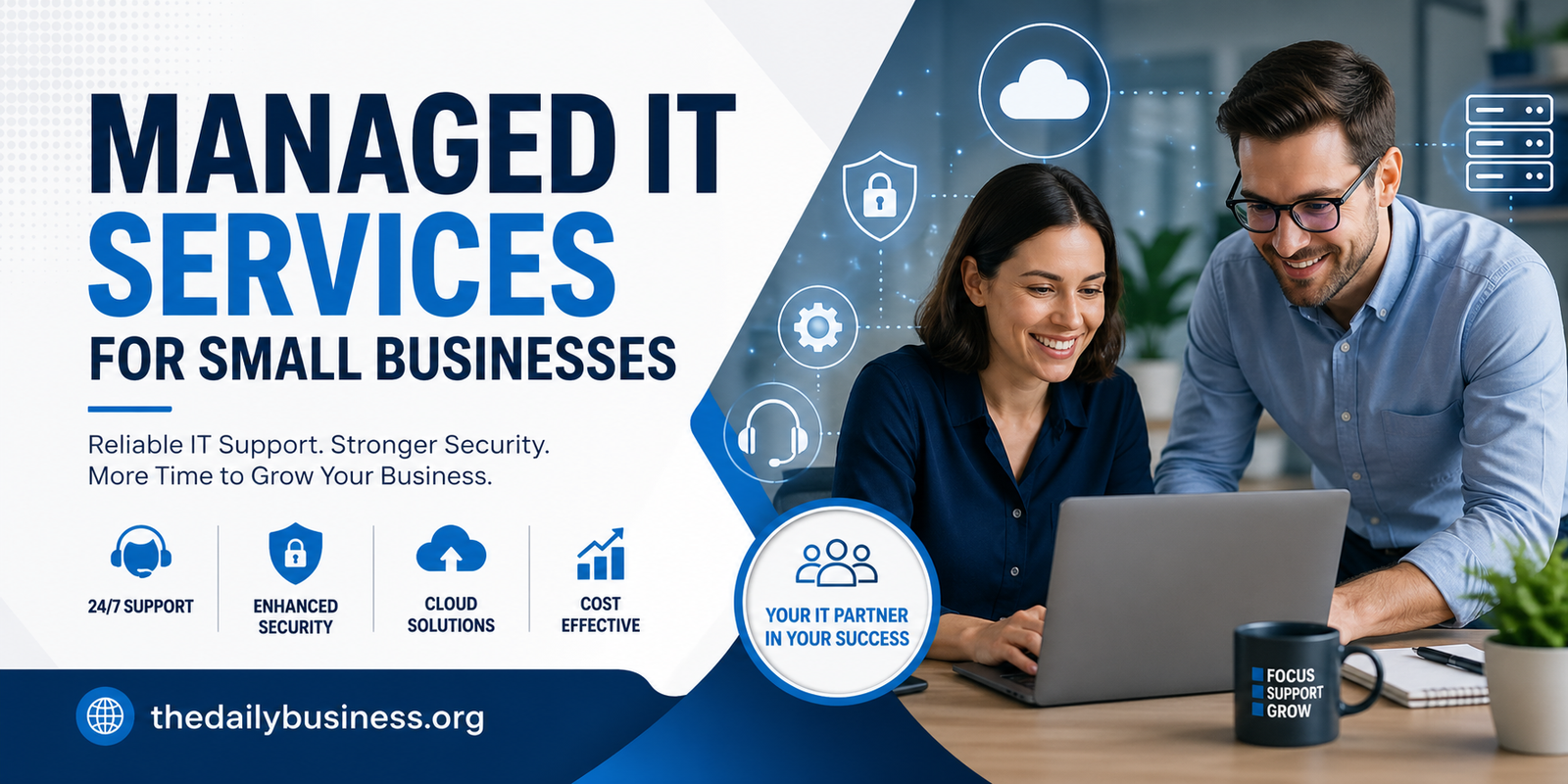
In today’s fast-paced digital environment, small businesses must stay competitive, secure, and efficient. However, managing IT infrastructure can be overwhelming without dedicated expertise. That’s where managed IT services for small businesses come in—offering professional support, cost savings, and peace of mind.
What Are Managed IT Services?
Managed IT services refer to outsourcing your company’s IT operations to a third-party provider, often called a Managed Service Provider (MSP). These providers handle everything from network monitoring and cybersecurity to data backup and technical support.
Instead of reacting to problems, MSPs take a proactive approach, ensuring your systems run smoothly 24/7.
Why Small Businesses Need Managed IT Services
1. Cost Efficiency
Hiring an in-house IT team can be expensive. Managed IT services offer predictable monthly pricing, helping businesses control costs while accessing expert support.
2. Enhanced Cybersecurity
Cyber threats are increasing every year, and small businesses are often prime targets. Managed IT providers implement advanced security measures such as firewalls, antivirus software, and real-time monitoring to protect sensitive data.
3. Focus on Core Business
By outsourcing IT tasks, business owners can focus on growth, customer service, and operations instead of dealing with technical issues.
4. Access to Expertise
Managed IT providers bring a team of specialists with diverse skills, ensuring your business benefits from the latest technology and best practices.
5. Scalability
As your business grows, your IT needs will change. Managed services can scale easily, allowing you to add or remove services as needed.
Key Services Offered
Network Monitoring and Maintenance
Continuous monitoring helps detect and resolve issues before they disrupt operations.
Data Backup and Recovery
Regular backups ensure your business data is safe and can be quickly restored in case of emergencies.
Cloud Services
MSPs help migrate and manage cloud platforms, improving flexibility and remote work capabilities.
Help Desk Support
Employees get immediate assistance for technical problems, minimizing downtime.
Cybersecurity Solutions
Includes threat detection, vulnerability assessments, and compliance management.
Benefits of Managed IT Services for Small Businesses
- Reduced downtime and improved productivity
- Stronger data protection and compliance
- Predictable IT budgeting
- Access to modern technologies
- 24/7 monitoring and support
How to Choose the Right Managed IT Provider
Evaluate Experience
Look for providers with a proven track record in supporting small businesses.
Check Service Offerings
Ensure the provider offers services aligned with your business needs.
Review Security Measures
Security should be a top priority. Ask about their cybersecurity protocols.
Consider Support Availability
Choose a provider that offers round-the-clock support.
Read Client Reviews
Feedback from other businesses can provide insights into reliability and service quality.
Common Challenges Solved by Managed IT Services
- Frequent system downtime
- Data breaches and cyberattacks
- Inefficient IT processes
- Lack of technical expertise
- High operational costs
Future of Managed IT Services
With advancements in artificial intelligence, automation, and cloud computing, managed IT services are becoming even more powerful. Small businesses can now leverage enterprise-level technology without the heavy investment.
Final Thoughts
Adopting managed IT services for small businesses is no longer a luxury—it’s a necessity. From improving security to enhancing efficiency, these services provide a strong foundation for growth in a digital-first world.
For small businesses looking to stay competitive and secure, partnering with a reliable IT service provider can be one of the smartest investments they make.