Understanding payroll schedules is essential for both employees and employers. One of the most common questions people ask is: how many bi-weekly pay periods in a year? In this guide by The Daily Business, we’ll break it down clearly and explain why the number can sometimes change.
What Is a Bi-Weekly Pay Period?
A bi-weekly pay period means employees are paid once every two weeks. This results in consistent paydays, often falling on the same day of the week (such as every Friday).
This system is widely used because it simplifies payroll processing and aligns well with standard work schedules.
How Many Bi-Weekly Pay Periods in a Year?
In most cases, there are:
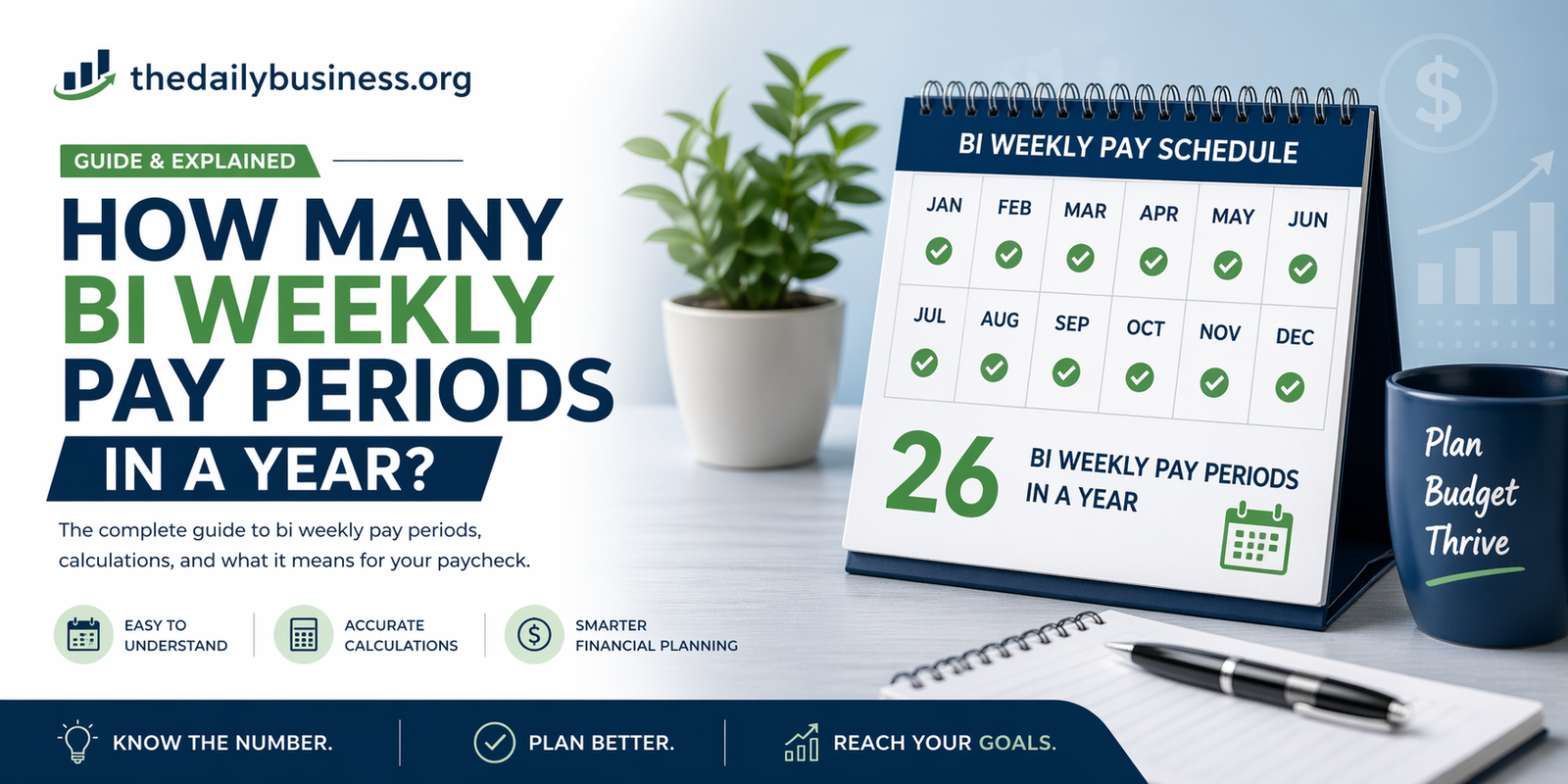
26 bi-weekly pay periods in a year
Here’s why:
- A year has 52 weeks
- Employees are paid every 2 weeks
52 ÷ 2 = 26 pay periods
Why Do Some Years Have 27 Pay Periods?
Occasionally, a calendar year will have:
27 bi-weekly pay periods
This happens because:
- A standard year has 365 days (or 366 in a leap year)
- That extra day (or two) shifts the payroll cycle slightly each year
- Over time, the extra days accumulate and create an additional pay period
Example:
If your first paycheck of the year falls early in January, you may fit in a 27th paycheck before December ends.
How Often Does a 27-Pay-Period Year Occur?
A year with 27 bi-weekly pay periods typically happens every 11 years, though it can vary depending on:
- Leap years
- Your company’s payroll start date
- Pay schedule alignment
Impact on Employees and Employers
For Employees:
- A 27-pay-period year may feel like a “bonus” paycheck
- However, annual salary may be divided differently depending on employer policy
For Employers:
- Payroll budgets need adjustment
- Salary calculations may need to be redistributed across pay periods
Bi-Weekly vs Other Pay Schedules
Here’s a quick comparison:
| Pay Schedule | Pay Periods per Year |
|---|---|
| Weekly | 52 |
| Bi-Weekly | 26 (sometimes 27) |
| Semi-Monthly | 24 |
| Monthly | 12 |
Bi-weekly payroll strikes a balance between frequent payments and manageable processing.
How to Calculate Your Pay Periods
To determine your specific number of pay periods:
- Check your first payday of the year
- Count every two weeks until year-end
- See if a 27th paycheck fits within the calendar year
Final Thoughts
So, how many bi-weekly pay periods in a year? The standard answer is 26, but occasionally, you may experience 27 pay periods due to calendar alignment.
Understanding this helps both employees and businesses plan finances more effectively. At The Daily Business, we recommend reviewing your payroll schedule annually to avoid surprises.