By The Daily Business
Understanding employment terms is essential, especially during uncertain economic times. Many people confuse furlough meaning vs layoff meaning, but these terms have important differences that can affect your income, benefits, and job security.
In this guide by The Daily Business, we break down both concepts clearly so you know exactly what they mean and how they impact you.
What Is a Furlough?
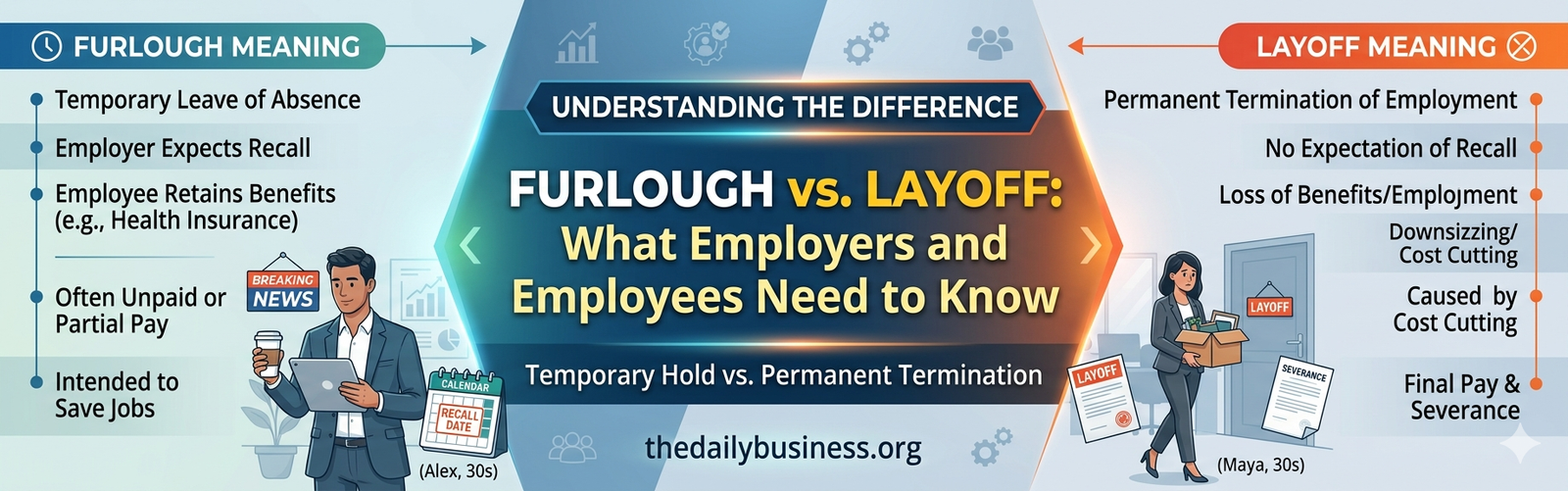
A furlough is a temporary leave of absence from work. Employers place employees on unpaid leave but expect them to return once conditions improve.
Key Features of a Furlough
- Temporary and short-term
- Employees remain officially employed
- Often retain benefits (like health insurance)
- No salary during the furlough period
Furloughs are commonly used during economic downturns, seasonal slowdowns, or emergencies.
What Is a Layoff?
A layoff is when an employer permanently or indefinitely terminates an employee due to business reasons such as cost-cutting or restructuring.
Key Features of a Layoff
- Can be permanent or long-term
- Employment is terminated
- Benefits may end (depending on company policy)
- Employees may receive severance pay
Layoffs often happen when companies need to reduce workforce size significantly.
Furlough Meaning vs Layoff Meaning: Main Differences
Understanding furlough meaning vs layoff meaning becomes easier when you compare them side by side:
| Feature | Furlough | Layoff |
|---|---|---|
| Employment Status | Still employed | Employment terminated |
| Duration | Temporary | Often permanent |
| Pay | Unpaid during leave | No pay after termination |
| Benefits | Usually continue | Often discontinued |
| Job Return | Expected | Not guaranteed |
When Do Companies Use Furloughs vs Layoffs?
Companies choose between furloughs and layoffs based on their situation:
- Furloughs are used when a company expects recovery and wants to keep trained employees.
- Layoffs happen when the business needs long-term cost reduction or restructuring.
Impact on Employees
During a Furlough
- You may qualify for unemployment benefits
- You maintain a relationship with your employer
- You can return to your job once the furlough ends
During a Layoff
- You need to search for new employment
- You may receive severance
- You may lose workplace benefits
Which Is Better: Furlough or Layoff?
Neither is ideal, but a furlough is generally less severe because:
- Your job is still waiting for you
- Benefits may continue
- You avoid a full job search
However, layoffs can sometimes offer clarity and severance support, helping you move on faster.
Final Thoughts
Understanding furlough meaning vs layoff meaning is crucial for making informed career decisions. While both situations involve loss of income, they differ significantly in terms of job security and long-term impact.
If you face either situation, review your company policies, check your legal rights, and explore financial assistance options.
Stay informed with The Daily Business for more practical workplace insights and career guidance.