By The Daily Business
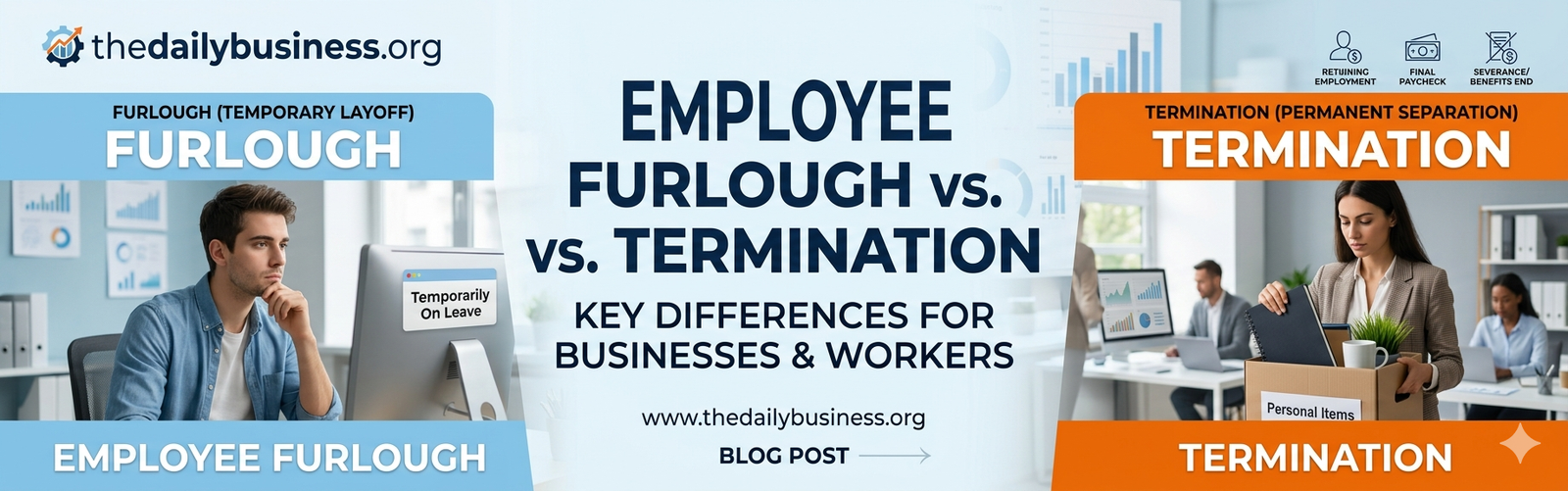
Understanding the difference between employee furlough vs termination is essential for both employers and employees. These two workforce strategies may seem similar at first, but they carry very different implications for job security, benefits, and future employment.
In this guide, The Daily Business breaks down everything you need to know in simple terms.
What Is an Employee Furlough?
An employee furlough is a temporary unpaid leave of absence. Employers use furloughs during financial difficulties, seasonal slowdowns, or unexpected crises.
Key Features of Furloughs:
- Temporary status (employees are expected to return)
- No salary during the furlough period
- Employees often retain benefits (like health insurance)
- Employment relationship remains intact
Furloughs became widely known during events like the COVID-19 pandemic, when many businesses paused operations but planned to reopen.
What Is Termination?
Termination means the end of employment. It can happen for various reasons, including layoffs, poor performance, or company restructuring.
Types of Termination:
- Voluntary (resignation)
- Involuntary (firing or layoffs)
Key Features of Termination:
- Permanent separation from the company
- Salary and benefits stop (unless severance is offered)
- Employee must seek new employment
Employee Furlough vs Termination: Key Differences
Here’s a clear comparison to help you understand:
| Factor | Furlough | Termination |
|---|---|---|
| Employment Status | Still employed | Employment ends |
| Duration | Temporary | Permanent |
| Pay | Unpaid during furlough | No pay after termination |
| Benefits | Often continue | Usually stop |
| Job Security | Job may return | No guarantee |
| Reason | Financial or operational pause | Performance or restructuring |
When Do Companies Choose Furlough Instead of Termination?
Companies often prefer furloughs when they:
- Expect business to recover soon
- Want to retain skilled employees
- Aim to reduce hiring/training costs later
Termination is usually chosen when:
- The role is no longer needed
- Long-term cost reduction is required
- Performance issues cannot be resolved
Pros and Cons of Furlough
Advantages:
- Employees keep their jobs
- Employers retain trained staff
- Benefits may continue
Disadvantages:
- No income during furlough
- Uncertainty about return date
- Financial stress for employees
Pros and Cons of Termination
Advantages:
- Clear break allows employees to seek new jobs
- Employers can restructure fully
Disadvantages:
- Loss of income and benefits
- Emotional and financial impact
- Hiring costs for employers later
Legal Considerations
Employment laws regarding furloughs and termination vary by country and region. Employers must:
- Provide proper notice (in some cases)
- Follow labor laws
- Respect contracts and agreements
Employees should review their contracts to understand their rights during either situation.
Which Is Better: Furlough or Termination?
There’s no one-size-fits-all answer.
- Furlough is better if the job is likely to return soon.
- Termination may be better if you want to move on quickly and find new opportunities.
The right option depends on the company’s situation and the employee’s personal needs.
Final Thoughts
The debate of employee furlough vs termination comes down to temporary pause vs permanent separation. While furloughs offer hope of returning to work, terminations provide a clean slate.
For businesses, choosing the right option can impact long-term success. For employees, understanding the difference helps in making informed financial and career decisions.
Stay informed with The Daily Business for more practical workplace insights.