By The Daily Business
Understanding company revenue scale criteria is essential for businesses aiming to measure growth, attract investors, and define their market position. Whether you’re a startup or an established enterprise, revenue classification helps you benchmark success and plan strategic expansion.
In this guide, The Daily Business explains how company revenue is categorized, why it matters, and how to use it effectively.
What Is Company Revenue Scale Criteria?
Company revenue scale criteria refers to the classification of businesses based on their annual revenue. These categories are commonly used by governments, investors, and financial institutions to evaluate company size and performance.
Revenue-based scaling allows organizations to:
- Compare themselves with competitors
- Identify growth stages
- Qualify for funding or tax benefits
- Align business strategies with financial goals
Common Revenue Scale Categories
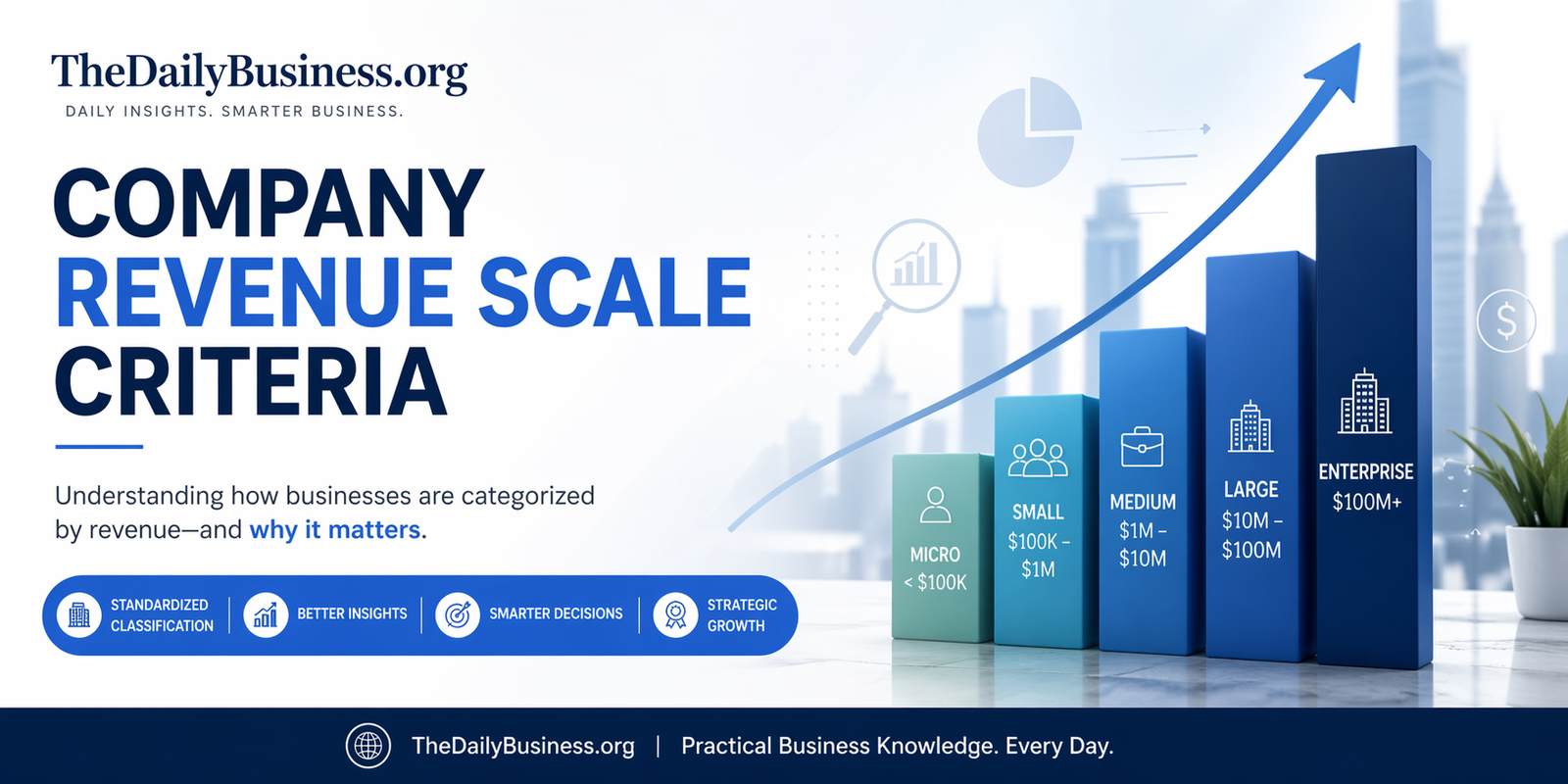
Although classifications may vary by country or industry, businesses are typically grouped into the following categories:
1. Micro Businesses
- Revenue: Up to $100,000 annually
- Usually startups or solo entrepreneurs
- Limited employees and small market reach
2. Small Businesses
- Revenue: $100,000 to $10 million
- Growing customer base
- Structured operations but limited scalability
3. Medium-Sized Enterprises (SMEs)
- Revenue: $10 million to $1 billion
- Established presence in the market
- Strong workforce and operational systems
4. Large Enterprises
- Revenue: Over $1 billion
- Global or national dominance
- Complex organizational structure
These company revenue scale criteria provide a clear framework for identifying where a business stands in its lifecycle.
Why Revenue Scale Criteria Matters
1. Strategic Planning
Knowing your revenue category helps you set realistic goals and growth targets.
2. Investor Attraction
Investors often use revenue benchmarks to evaluate risk and return potential.
3. Regulatory Compliance
Many government policies, tax rules, and incentives depend on business size classification.
4. Competitive Analysis
Businesses can compare themselves with similar-sized competitors for better positioning.
Factors That Influence Revenue Classification
While revenue is the primary factor, several other elements may influence classification:
- Industry standards
- Geographic location
- Number of employees
- Market share
- Profit margins
For example, a tech company and a manufacturing firm may fall into different categories despite having similar revenues.
How to Use Revenue Scale Criteria for Growth
To make the most of company revenue scale criteria, businesses should:
1. Track Financial Performance
Regularly monitor revenue trends to understand growth patterns.
2. Set Milestones
Define clear revenue targets to move from one category to the next.
3. Optimize Operations
Improve efficiency to increase profitability and scalability.
4. Explore Funding Opportunities
Different revenue levels open doors to specific grants, loans, and investors.
Challenges in Revenue-Based Classification
Despite its usefulness, revenue scaling has limitations:
- It doesn’t always reflect profitability
- Industry variations can distort comparisons
- Rapidly growing startups may outpace traditional categories
Therefore, businesses should combine revenue criteria with other performance metrics.
Final Thoughts
Company revenue scale criteria is a powerful tool for understanding business growth and positioning. By knowing where your company stands, you can make informed decisions, attract investors, and plan for long-term success.
For entrepreneurs and business leaders, mastering revenue classification isn’t just about numbers—it’s about building a roadmap for sustainable growth.