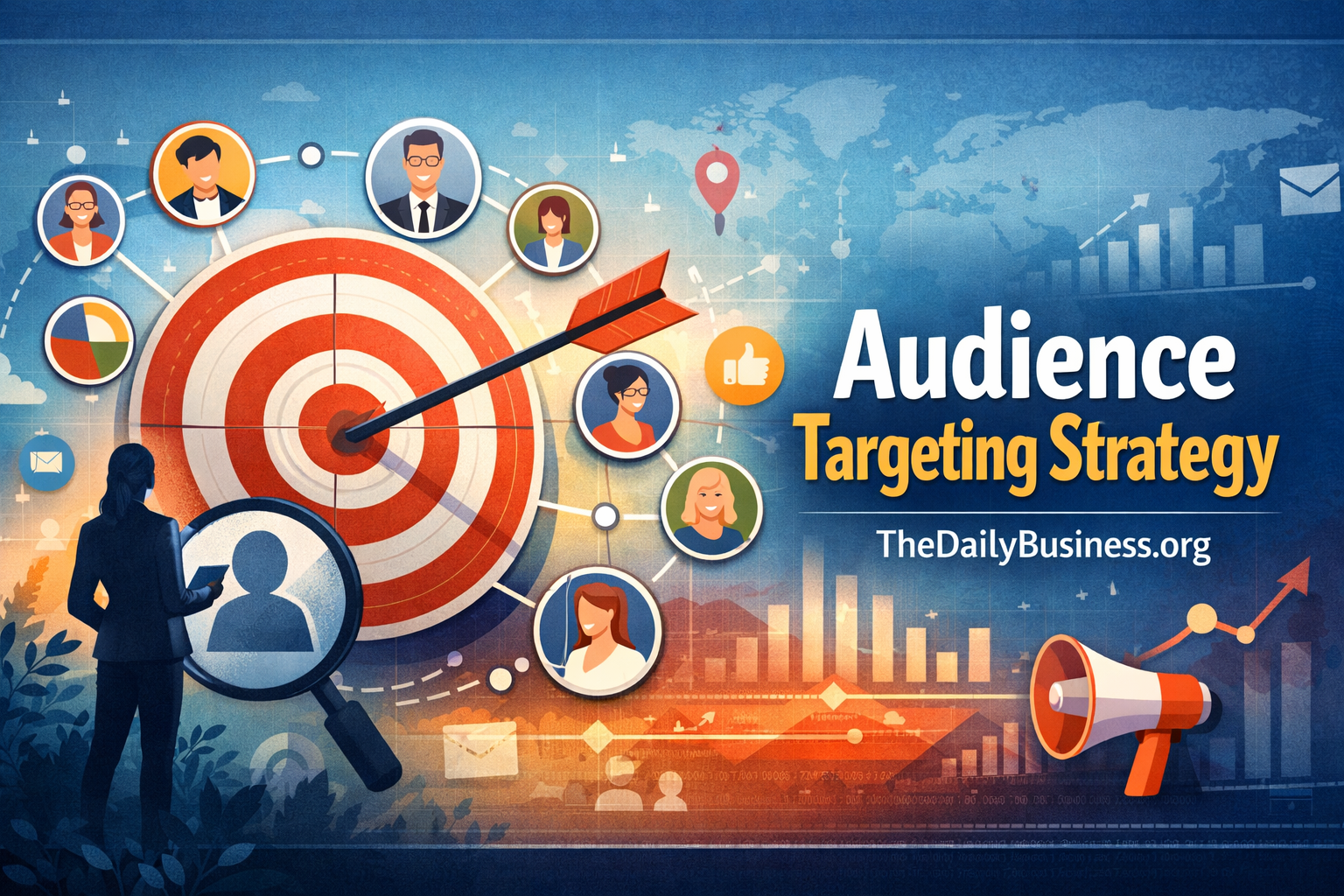
In today’s competitive digital landscape, having a strong audience targeting strategy is no longer optional—it’s essential. Businesses that understand their audience deeply are more likely to create meaningful connections, increase conversions, and build long-term loyalty.
At The Daily Business, we believe that mastering your audience targeting approach can be the difference between wasted marketing spend and scalable growth.
What Is an Audience Targeting Strategy?
An audience targeting strategy is the process of identifying, segmenting, and reaching specific groups of people who are most likely to be interested in your product or service. Instead of marketing to everyone, you focus your efforts on the right audience.
This strategy ensures:
- Higher engagement rates
- Better ROI on marketing campaigns
- More personalized customer experiences
Why Audience Targeting Strategy Matters
A well-defined audience targeting strategy helps businesses:
1. Improve Marketing Efficiency
Targeting the right audience reduces wasted ad spend and improves campaign performance.
2. Increase Conversion Rates
When your message resonates with the right people, they are more likely to take action.
3. Enhance Customer Experience
Personalized content builds trust and long-term relationships.
4. Gain Competitive Advantage
Businesses that understand their audience outperform those that don’t.
Key Elements of an Effective Audience Targeting Strategy
1. Define Your Ideal Customer
Start by creating a detailed customer profile including:
- Age, gender, location
- Interests and behaviors
- Pain points and needs
2. Segment Your Audience
Divide your audience into smaller groups based on:
- Demographics
- Psychographics
- Buying behavior
3. Use Data and Analytics
Leverage tools like:
- Website analytics
- Social media insights
- Customer feedback
Data-driven decisions strengthen your audience targeting strategy.
4. Choose the Right Channels
Not every platform works for every audience. Focus on:
- Social media platforms
- Email marketing
- Search engines
5. Personalize Your Messaging
Tailor your content to each segment. Personalized messages:
- Increase engagement
- Build trust
- Drive conversions
Types of Audience Targeting Strategies
Demographic Targeting
Focuses on basic characteristics like age, gender, and income.
Behavioral Targeting
Targets users based on their actions, such as browsing history or purchase behavior.
Geographic Targeting
Useful for local businesses targeting specific regions.
Psychographic Targeting
Focuses on interests, values, and lifestyle.
Common Mistakes to Avoid
Even the best strategies can fail if you:
- Target too broad an audience
- Ignore data insights
- Use generic messaging
- Fail to update your strategy regularly
Avoiding these mistakes will strengthen your audience targeting strategy.
How to Improve Your Audience Targeting Strategy
- Continuously analyze performance data
- Test different audience segments
- Refine your messaging
- Stay updated with market trends
At The Daily Business, we recommend regularly revisiting your strategy to ensure it aligns with changing customer behavior.
Final Thoughts
A powerful audience targeting strategy is the foundation of successful marketing. By understanding your audience, segmenting effectively, and delivering personalized messages, your business can achieve sustainable growth.
Whether you’re a startup or an established brand, investing in the right targeting approach will help you connect with the people who matter most.