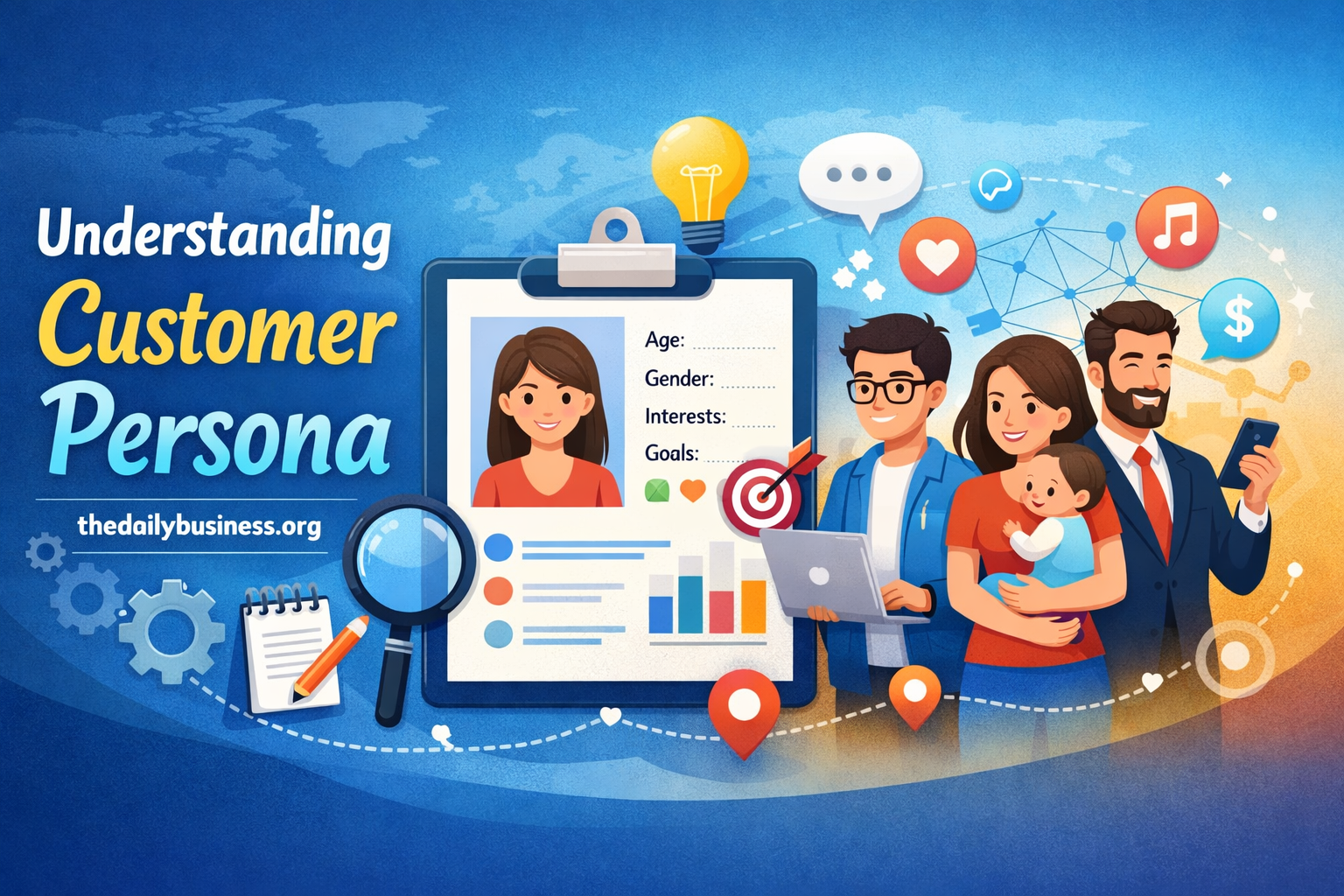
In today’s competitive market, understanding your audience is more important than ever. A well-defined customer persona helps businesses connect with their target market, create personalized experiences, and improve overall marketing performance. At the daily business, we believe that mastering customer personas is a key step toward sustainable growth.
What is a Customer Persona?
A customer persona is a semi-fictional representation of your ideal customer based on real data, research, and insights. It includes details such as demographics, behavior patterns, goals, challenges, and purchasing habits.
Instead of marketing to a broad audience, businesses can use customer personas to target specific segments more effectively.
Why Customer Personas Matter
Creating a strong customer persona offers several benefits:
1. Better Targeting
You can tailor your marketing campaigns to reach the right audience with precision.
2. Improved Customer Experience
Understanding customer needs allows you to deliver more relevant products and services.
3. Higher Conversion Rates
Personalized messaging resonates better, leading to increased engagement and sales.
4. Smarter Product Development
You can design products that directly address customer pain points.
Key Elements of a Customer Persona
A detailed customer persona typically includes:
- Basic Information: Age, gender, location, occupation
- Goals and Objectives: What the customer wants to achieve
- Challenges/Pain Points: Problems they are trying to solve
- Buying Behavior: How they make purchasing decisions
- Preferred Channels: Social media, email, search engines
- Interests and Lifestyle: Hobbies, preferences, habits
How to Create a Customer Persona
Step 1: Conduct Research
Gather data from sources like:
- Customer surveys
- Website analytics
- Social media insights
- Sales team feedback
Step 2: Identify Patterns
Look for common trends in customer behavior, preferences, and needs.
Step 3: Segment Your Audience
Divide your audience into groups based on similarities.
Step 4: Build Persona Profiles
Create detailed profiles for each segment, including a name and background story.
Step 5: Validate and Update
Continuously refine your personas based on new data and changing trends.
Example of a Customer Persona
Name: Sarah, the Small Business Owner
- Age: 35
- Goal: Grow her online store
- Challenge: Limited marketing budget
- Behavior: Actively searches for digital marketing tips
- Preferred Channel: Instagram and Google
This example helps businesses tailor their messaging specifically to Sarah’s needs.
Best Practices for Using Customer Personas
- Keep personas data-driven, not assumption-based
- Update them regularly to reflect market changes
- Use them across all departments (marketing, sales, product)
- Avoid creating too many personas—focus on key segments
Common Mistakes to Avoid
- Relying on guesswork instead of data
- Creating overly broad personas
- Ignoring behavioral insights
- Not updating personas over time
Conclusion
A well-crafted customer persona is a powerful tool that helps businesses understand their audience, improve marketing strategies, and drive growth. By investing time in building accurate personas, companies can deliver more personalized and effective experiences.
At the daily business, we recommend making customer personas a core part of your business strategy in 2026 and beyond.