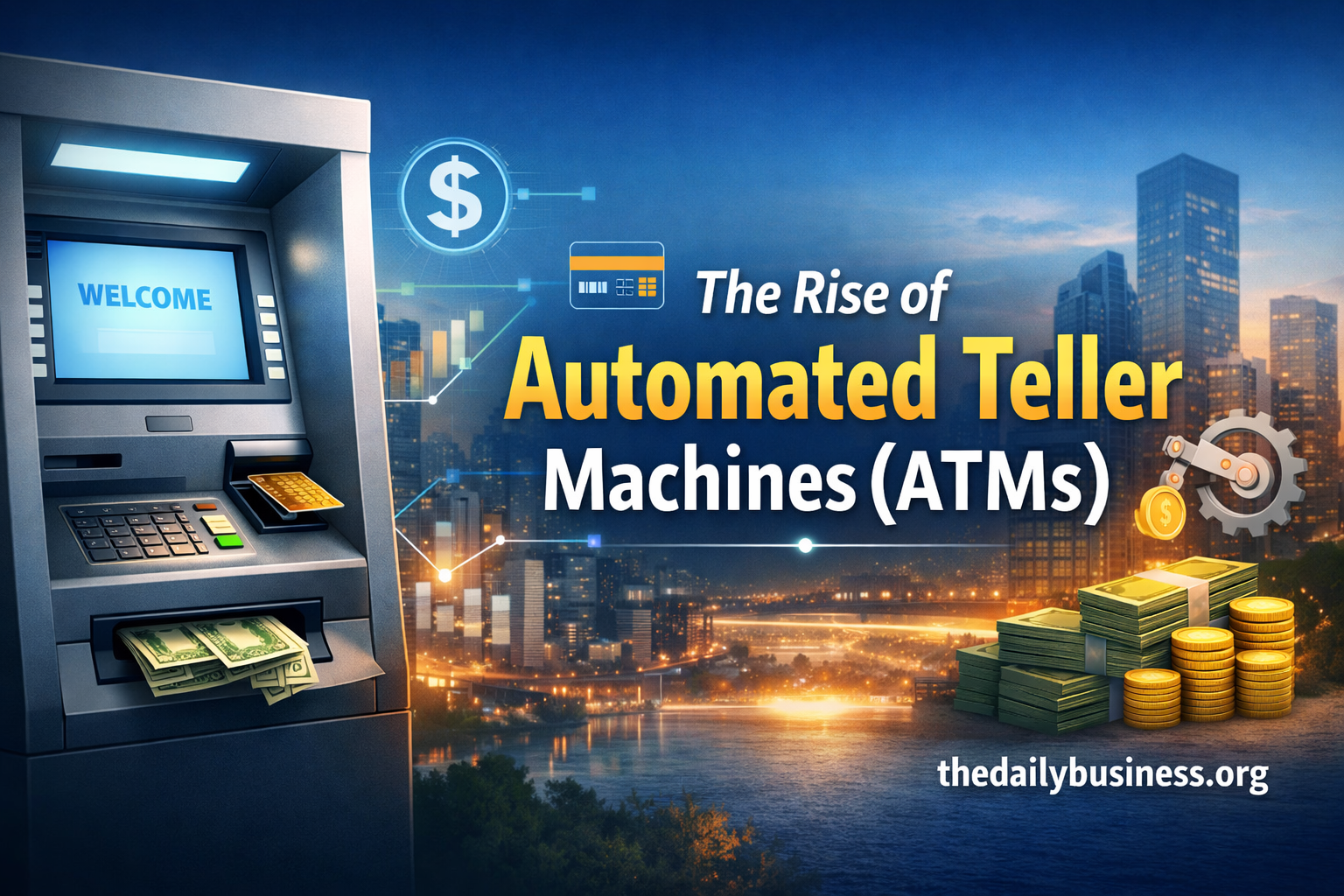
In today’s fast-paced financial world, the automated teller machine (ATM) has become an essential part of everyday banking. From withdrawing cash to checking account balances, ATMs provide convenient, secure, and quick access to financial services without the need to visit a bank branch. In this article, The Daily Business explores how automated teller machines work, their benefits, types, and their role in modern banking.
What is an Automated Teller Machine?
An automated teller machine is an electronic banking outlet that allows customers to perform financial transactions without the assistance of a human teller. These machines are typically available 24/7, making banking more accessible and efficient for users around the world.
How Does an Automated Teller Machine Work?
An ATM operates through a secure network connection between the machine and the bank’s server. When a user inserts their debit or credit card and enters a PIN (Personal Identification Number), the system verifies the information and processes the requested transaction.
Key components include:
- Card reader
- Keypad
- Display screen
- Cash dispenser
- Receipt printer
These elements work together to ensure smooth and secure transactions.
Types of Automated Teller Machines
There are several types of automated teller machines designed to meet different customer needs:
1. On-site ATMs
Located within or near bank branches, these are maintained by the bank itself.
2. Off-site ATMs
Installed in public places like malls, airports, and gas stations for wider accessibility.
3. White-label ATMs
Operated by non-banking entities, providing basic banking services.
4. Smart ATMs
Advanced machines that allow deposits, bill payments, and even video banking.
Benefits of Automated Teller Machines
The widespread use of automated teller machines offers numerous advantages:
- 24/7 Availability: Access banking services anytime
- Convenience: No need to visit a bank branch
- Speed: Quick transactions in minutes
- Accessibility: Available in remote and urban areas
- Reduced Workload: Less pressure on bank staff
According to The Daily Business, these benefits have made ATMs a cornerstone of modern banking infrastructure.
Security Features of Automated Teller Machines
Security is a major concern in ATM usage. Modern machines are equipped with:
- PIN encryption
- Anti-skimming devices
- Surveillance cameras
- Transaction alerts
Users are also advised to follow safety practices such as shielding their PIN and avoiding suspicious machines.
Future of Automated Teller Machines
With the rise of digital banking, some may think ATMs are becoming obsolete. However, they are evolving rather than disappearing. Innovations such as biometric authentication, contactless transactions, and AI integration are shaping the next generation of automated teller machines.
The Daily Business highlights that ATMs will continue to play a vital role, especially in regions where digital banking adoption is still growing.
Conclusion
The automated teller machine remains a crucial component of the global banking system. Its convenience, efficiency, and continuous technological advancements ensure its relevance in the years to come. As highlighted by The Daily Business, ATMs are not just machines—they are a bridge between traditional and digital banking.