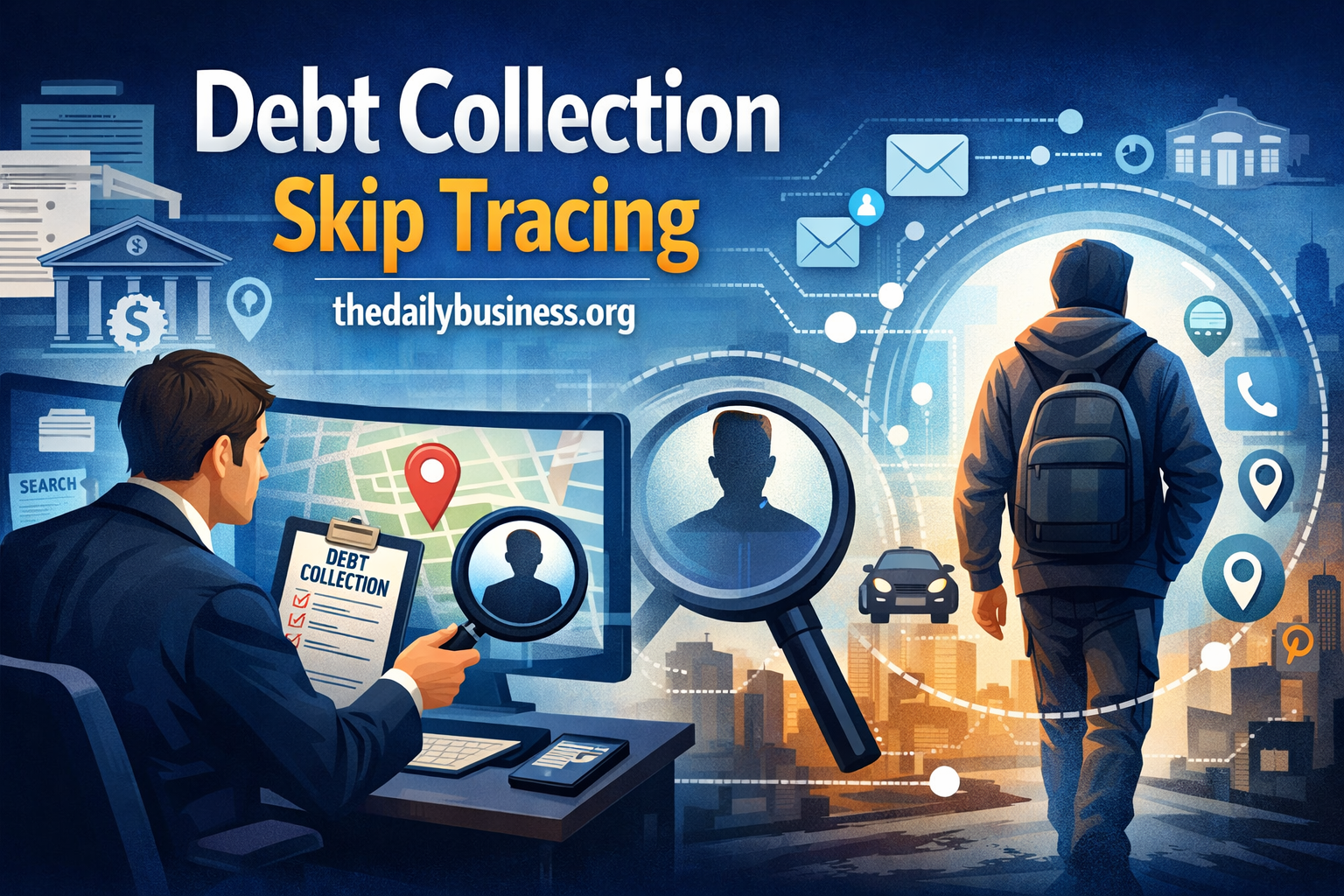
In today’s fast-paced financial world, recovering unpaid debts can be a challenge—especially when debtors become difficult to locate. This is where Debt collection skip tracing comes into play. It is a powerful process that helps businesses and collection agencies find individuals who have “skipped” town or gone off the grid.
At The Daily Business, we explore how skip tracing works, why it’s essential, and how companies can use it effectively to improve debt recovery.
What Is Debt Collection Skip Tracing?
Debt collection skip tracing is the process of locating a debtor who has intentionally or unintentionally become unreachable. The term “skip” refers to the person being searched, while “tracing” involves tracking them down using various tools and data sources.
This technique is widely used by:
- Debt collection agencies
- Financial institutions
- Private investigators
- Legal professionals
Why Skip Tracing Is Important in Debt Collection
When borrowers fail to repay and disappear, businesses risk financial losses. Skip tracing helps:
- Recover outstanding debts
- Reduce write-offs
- Improve cash flow
- Maintain accurate customer records
Without effective skip tracing, many debts would remain unpaid indefinitely.
How Debt Collection Skip Tracing Works
Skip tracing combines data analysis, technology, and investigative techniques. The process typically involves:
1. Collecting Initial Information
This includes:
- Full name
- Last known address
- Phone numbers
- Email addresses
- Social media profiles
2. Using Databases and Public Records
Professionals access:
- Credit reports
- Utility records
- Employment data
- Property ownership records
3. Digital Footprint Analysis
Online activity can reveal valuable clues, such as:
- Social media updates
- Online purchases
- Professional profiles
4. Verification and Contact
Once a potential location is found, the information is verified before initiating contact.
Tools Used in Debt Collection Skip Tracing
Modern skip tracing relies heavily on technology. Common tools include:
- Skip tracing software platforms
- Public records databases
- Credit bureau data
- Social media monitoring tools
- Reverse phone lookup services
These tools make the process faster and more accurate.
Best Practices for Effective Skip Tracing
To maximize results, businesses should follow these best practices:
1. Keep Accurate Records
Up-to-date customer information reduces the need for extensive tracing.
2. Use Multiple Data Sources
Relying on one source can lead to outdated or incorrect results.
3. Stay Compliant with Laws
Ensure compliance with data protection and privacy regulations.
4. Invest in Technology
Advanced tools improve efficiency and success rates.
5. Train Your Team
Skilled professionals can analyze data more effectively and avoid errors.
Legal and Ethical Considerations
While Debt collection skip tracing is legal, it must be conducted responsibly. Businesses must:
- Respect privacy laws
- Avoid harassment or unethical practices
- Follow debt collection regulations
Failure to comply can lead to legal penalties and reputational damage.
Challenges in Skip Tracing
Despite its effectiveness, skip tracing comes with challenges:
- Outdated or inaccurate data
- Debtors using false information
- Limited access to certain databases
- Legal restrictions in some regions
Overcoming these challenges requires expertise and the right tools.
Future of Debt Collection Skip Tracing
The future of skip tracing is driven by innovation. Emerging trends include:
- Artificial intelligence for data analysis
- Machine learning for predictive tracking
- Enhanced data integration systems
These advancements will make Debt collection skip tracing faster, smarter, and more precise.
Conclusion
Debt collection skip tracing is an essential strategy for businesses looking to recover unpaid debts efficiently. By combining data, technology, and skilled investigation, companies can locate hard-to-find debtors and improve recovery rates.
At The Daily Business, we believe that mastering skip tracing techniques can significantly enhance your debt collection success while ensuring compliance and professionalism.