Introduction
In today’s fast-paced business environment, locating individuals who have become difficult to find is more important than ever. Whether it’s for debt recovery, legal purposes, or customer verification, skip tracing services play a critical role in helping businesses reconnect with missing individuals.
At The Daily Business, we explore how skip tracing works, its benefits, and how organizations can use it effectively in 2026 and beyond.
What Are Skip Tracing Services?
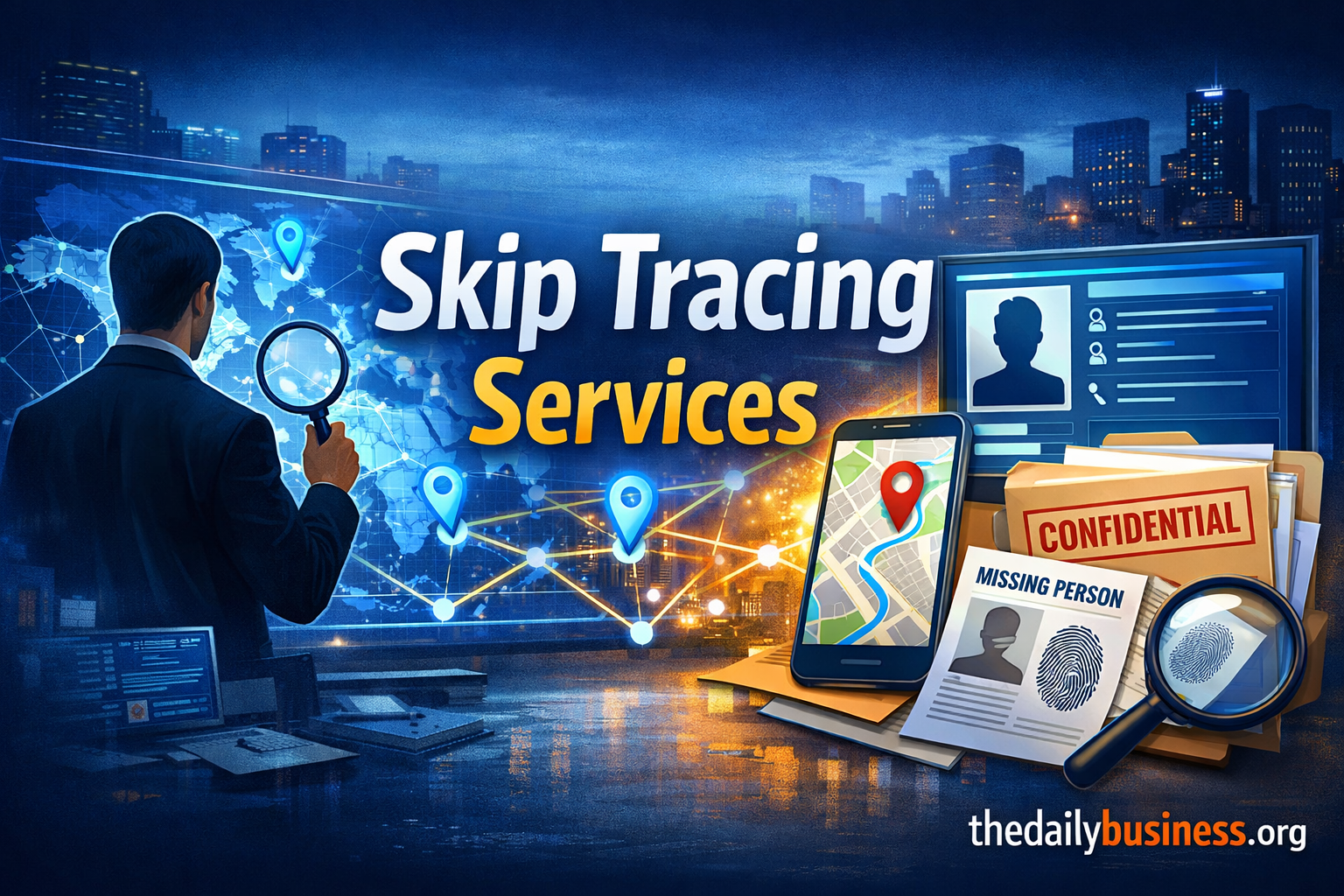
Skip tracing services refer to the process of locating a person’s whereabouts when they are intentionally or unintentionally difficult to find. The term “skip” comes from the phrase “to skip town,” meaning someone has left without leaving updated contact details.
Professionals who perform this task, known as skip tracers, use a variety of tools and data sources to track individuals down efficiently.
How Skip Tracing Services Work
Skip tracing combines data analysis, technology, and investigative techniques. Here’s how the process typically works:
1. Data Collection
Skip tracers gather all available information, including:
- Full name
- Last known address
- Phone numbers
- Email addresses
- Employment details
2. Database Search
They use specialized databases to cross-reference information from:
- Public records
- Credit reports
- Social media platforms
- Utility and phone records
3. Verification
Collected data is verified to ensure accuracy before taking further steps.
4. Contact or Location Identification
Finally, the tracer identifies the individual’s current location or valid contact details.
Who Uses Skip Tracing Services?
Skip tracing services are widely used across multiple industries:
Debt Collection Agencies
To locate individuals who have defaulted on payments.
Real Estate Professionals
To find property owners or motivated sellers.
Legal Firms
For serving legal notices or locating witnesses.
Financial Institutions
To track clients who have lost contact or relocated.
Benefits of Skip Tracing Services
1. Saves Time and Resources
Instead of manual searching, businesses can quickly locate individuals using advanced tools.
2. Improves Recovery Rates
For debt collectors, accurate tracing increases the chances of recovering outstanding payments.
3. Enhances Decision-Making
Reliable data helps businesses make informed decisions.
4. Cost-Effective Solution
Outsourcing skip tracing services can reduce operational costs compared to in-house efforts.
Tools Used in Skip Tracing
Modern skip tracing services rely heavily on technology. Some common tools include:
- Public record databases
- Credit bureaus
- Social media analysis tools
- AI-powered search platforms
- Phone and email lookup services
These tools allow skip tracers to gather accurate and up-to-date information quickly.
Legal and Ethical Considerations
While skip tracing services are highly effective, businesses must follow legal and ethical guidelines:
- Comply with data protection laws
- Avoid harassment or misuse of information
- Ensure transparency in operations
Failure to follow regulations can result in legal penalties and damage to reputation.
Best Practices for Using Skip Tracing Services
Choose a Reliable Provider
Work with experienced professionals who use compliant and ethical methods.
Maintain Accurate Records
Keep customer data updated to reduce the need for tracing.
Use Technology Wisely
Leverage AI and automation tools for better results.
Stay Compliant
Always adhere to local and international data privacy regulations.
Future of Skip Tracing Services in 2026
The future of skip tracing services is driven by innovation. With advancements in artificial intelligence, big data, and machine learning, tracing individuals is becoming faster and more accurate.
Businesses that adopt these technologies will gain a competitive edge while ensuring compliance and efficiency.
Conclusion
Skip tracing services are an essential tool for businesses that need to locate individuals quickly and efficiently. From debt recovery to legal processes, these services provide valuable support across industries.