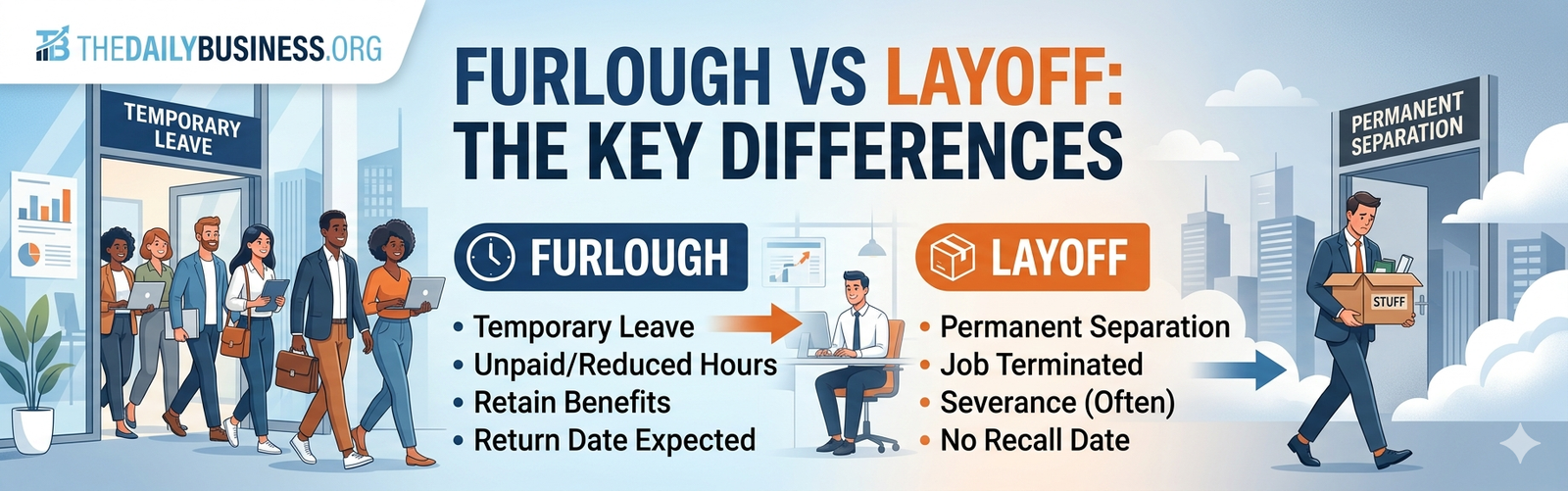
By The Daily Business
Understanding furlough vs layoff differences is essential for employees and employers alike, especially during uncertain economic times. While both terms relate to job disruptions, they have distinct meanings, implications, and outcomes.
In this guide by The Daily Business, we break down everything you need to know in simple terms.
What Is a Furlough?
A furlough is a temporary unpaid leave of absence where employees remain officially employed but are not working or receiving pay for a specific period.
Key Features of a Furlough:
- Temporary work suspension
- Employees retain their job status
- Benefits (like health insurance) may continue
- Employers may call employees back anytime
Furloughs are often used when companies face short-term financial challenges and expect to recover.
What Is a Layoff?
A layoff occurs when an employee is permanently or indefinitely terminated due to business reasons such as cost-cutting, restructuring, or downturns.
Key Features of a Layoff:
- Employment is ended
- No guarantee of rehire
- Benefits typically stop
- Employees may receive severance pay (depending on company policy)
Layoffs are usually more serious and reflect long-term organizational changes.
Furlough vs Layoff Differences: Key Comparison
1. Employment Status
- Furlough: Still employed
- Layoff: Employment terminated
2. Duration
- Furlough: Temporary
- Layoff: Permanent or indefinite
3. Pay
- Furlough: No pay during leave
- Layoff: No pay after termination
4. Benefits
- Furlough: Often continue
- Layoff: Usually end
5. Job Security
- Furlough: Higher chance of returning
- Layoff: No guarantee of rehire
Why Companies Choose Furloughs Instead of Layoffs
Businesses often prefer furloughs when they:
- Expect a quick recovery
- Want to retain skilled employees
- Aim to reduce rehiring and training costs
Furloughs act as a cost-saving strategy without losing talent.
Why Layoffs Happen
Layoffs are typically unavoidable when:
- Revenue declines significantly
- Company restructuring occurs
- Automation or downsizing is required
They help organizations cut long-term expenses.
Which Is Better for Employees?
When comparing furlough vs layoff differences, furloughs are generally less severe because:
- You keep your job
- Benefits may remain intact
- There’s a clear path to return
However, layoffs may provide:
- Severance packages
- Eligibility for unemployment benefits
Each situation depends on company policy and local labor laws.
How to Handle Either Situation
If You’re Furloughed:
- Stay updated with your employer
- Use the time to upskill
- Manage finances carefully
If You’re Laid Off:
- Apply for unemployment benefits
- Update your resume
- Start job searching immediately
Final Thoughts
Knowing the furlough vs layoff differences can help you make informed career and financial decisions. While both situations can be stressful, understanding your rights and options can ease the impact.
For more business insights and practical workplace guides, stay connected with The Daily Business.