Understanding B2B vs B2C differences is essential for any business aiming to succeed in today’s competitive market. Whether you’re selling products or services, your approach changes significantly depending on whether your audience is another business or an individual consumer.
At The Daily Business, we break down these differences to help you create better strategies and drive growth.
What is B2B?
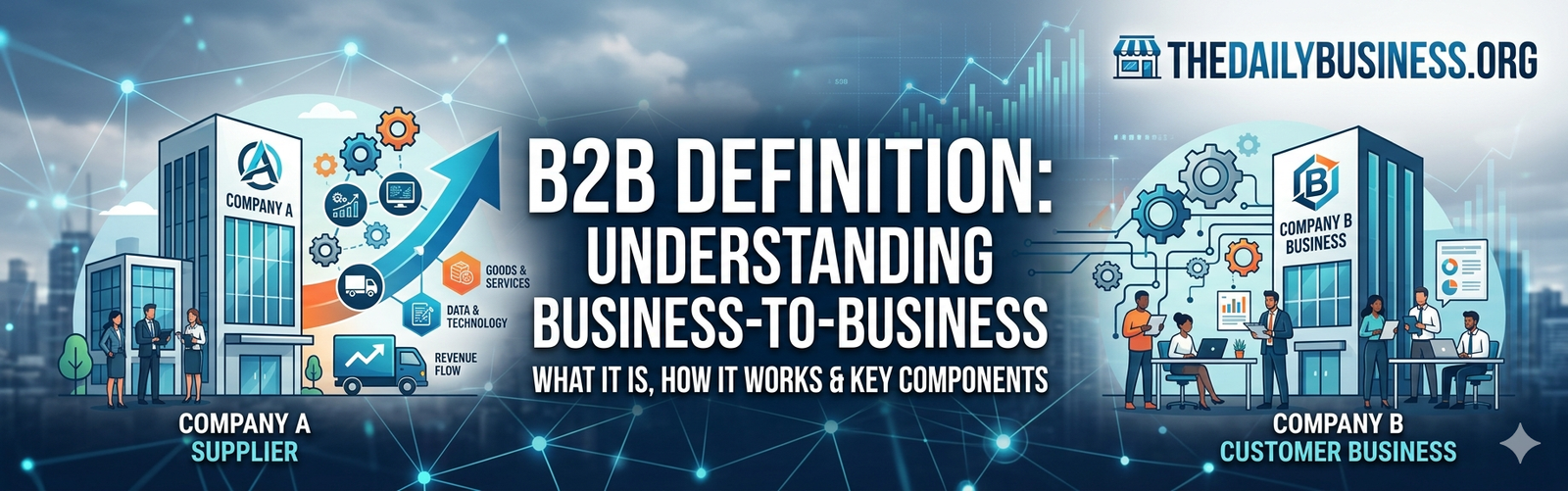
B2B (Business-to-Business) refers to transactions where one business sells products or services to another business.
Examples:
- A software company selling tools to corporations
- A wholesaler supplying goods to retailers
B2B focuses on long-term relationships, efficiency, and return on investment (ROI).
What is B2C?
B2C (Business-to-Consumer) involves businesses selling directly to individual customers.
Examples:
- Online clothing stores
- Food delivery services
B2C focuses on quick decisions, emotional appeal, and customer experience.
Key B2B vs B2C Differences
1. Target Audience
- B2B: Businesses, professionals, decision-makers
- B2C: Individual consumers
B2B audiences are more analytical, while B2C customers often make emotional decisions.
2. Buying Process
- B2B: Longer, involves multiple stakeholders
- B2C: Shorter, often impulsive
In B2B, decisions require research and approvals, while B2C purchases can happen instantly.
3. Marketing Strategy
- B2B: Focus on logic, value, and ROI
- B2C: Focus on emotions, branding, and storytelling
Content marketing and LinkedIn work well for B2B, while social media and ads dominate B2C.
4. Relationship Building
- B2B: Long-term partnerships
- B2C: Short-term engagement
B2B businesses invest heavily in relationship management, while B2C focuses on customer satisfaction and loyalty.
5. Pricing Structure
- B2B: Negotiable, bulk pricing
- B2C: Fixed pricing
B2B deals often involve contracts and customized pricing, while B2C pricing is straightforward.
6. Decision-Making Factors
- B2B: Logic, ROI, efficiency
- B2C: Emotions, convenience, price
Understanding these motivations helps businesses tailor their messaging effectively.
Why Understanding B2B vs B2C Differences Matters
Recognizing the difference between B2B and B2C allows businesses to:
- Create targeted marketing campaigns
- Improve customer engagement
- Increase conversion rates
- Build stronger brand positioning
A one-size-fits-all approach rarely works. Customizing your strategy based on your audience leads to better results.
Which Model is Better?
There is no “better” model—only what suits your business goals.
- Choose B2B if you prefer long-term contracts and higher transaction values
- Choose B2C if you want faster sales and a broader audience
Some companies successfully operate in both markets using hybrid strategies.
Final Thoughts
Understanding B2B vs B2C differences is key to building an effective business strategy. Each model has its own strengths, challenges, and opportunities.
By aligning your marketing, sales, and communication strategies with your target audience, you can maximize growth and success.
For more business insights and practical guides, stay connected with The Daily Business.