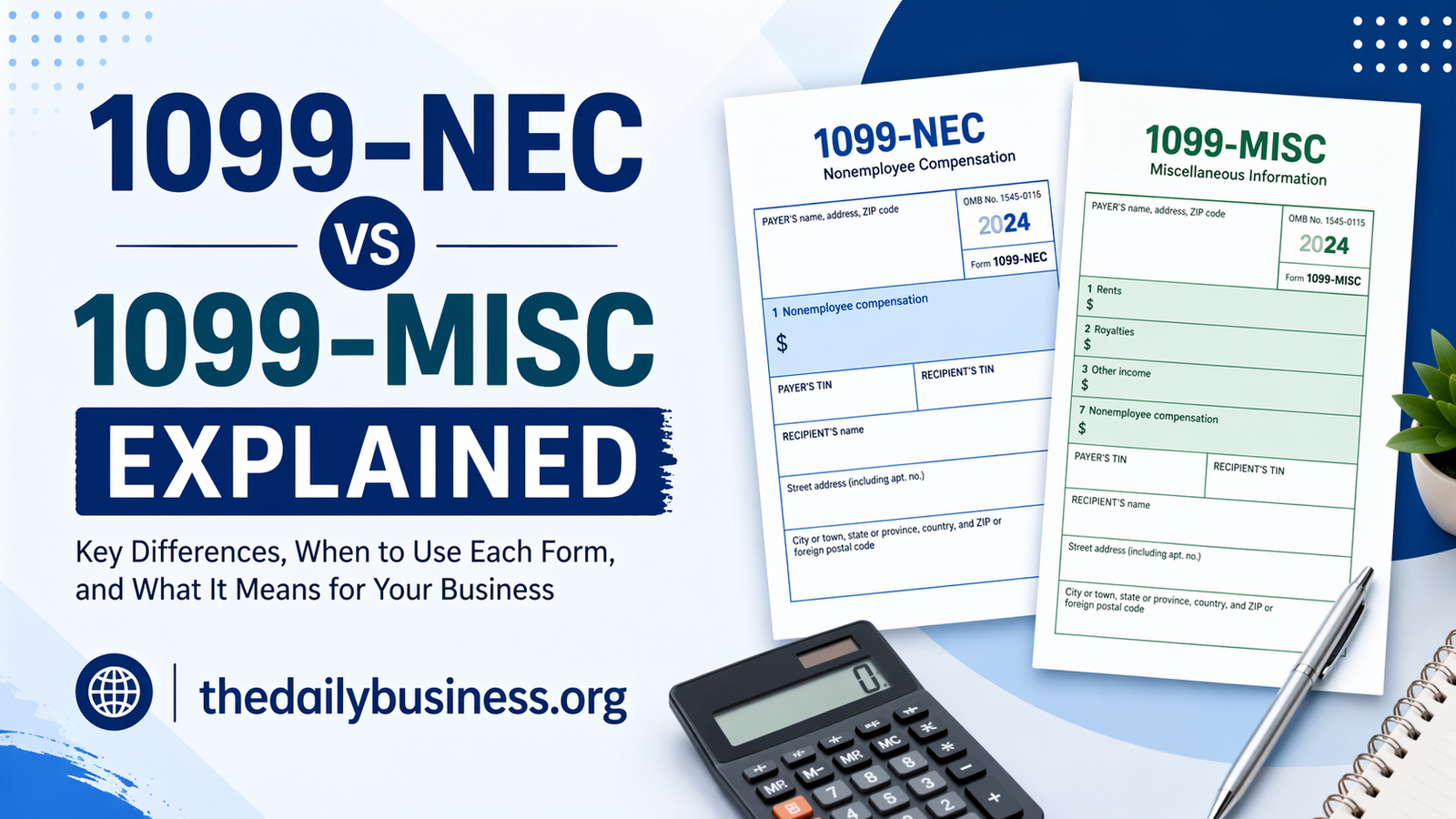
Handling tax forms correctly is an important part of running a business. Many business owners and freelancers often ask about 1099-NEC vs 1099-MISC explained because these forms are commonly used to report payments made during the year. While both are IRS information returns, they serve different purposes.
In this guide by The Daily Business, we will break down the differences between these forms, who needs them, and how to file them correctly.
What Is Form 1099-NEC?
Form 1099-NEC stands for Nonemployee Compensation. It is used to report payments made to independent contractors, freelancers, and self-employed individuals.
If your business paid a nonemployee $600 or more during the tax year for services, you usually need to issue a 1099-NEC.
Common Examples of 1099-NEC Payments:
- Freelance graphic design work
- Website development services
- Consulting fees
- Contract labor
- Professional services
This form was reintroduced by the IRS to separate contractor payments from other miscellaneous income.
What Is Form 1099-MISC?
Form 1099-MISC is used for miscellaneous payments that are not considered nonemployee compensation.
Common Examples of 1099-MISC Payments:
- Rent payments
- Royalties
- Prizes and awards
- Attorney settlements
- Medical payments
- Other income payments
This form is still widely used, but not for contractor wages.
1099-NEC vs 1099-MISC Explained: Main Differences
Understanding the key differences helps avoid filing mistakes.
| Feature | 1099-NEC | 1099-MISC |
|---|---|---|
| Main Purpose | Report contractor payments | Report miscellaneous income |
| Common Recipients | Freelancers, contractors | Landlords, prize winners, attorneys |
| Minimum Threshold | $600 | Usually $600 (varies by payment type) |
| Due Date to Recipient | January 31 | January 31 |
| IRS Filing Deadline | January 31 | Usually later than 1099-NEC |
Why Two Separate Forms Exist
The IRS separated these forms to make tax reporting easier and reduce confusion. Previously, contractor payments were reported on Form 1099-MISC. Now, those payments belong on Form 1099-NEC.
This change helps the IRS track self-employment income more accurately.
Who Should File These Forms?
You may need to file these forms if you are:
- Small business owners
- LLC owners
- Sole proprietors
- Corporations making reportable payments
- Startups hiring freelancers
Even online businesses often need to issue these forms when working with contractors.
Common Filing Mistakes to Avoid
When learning 1099-NEC vs 1099-MISC explained, avoid these common errors:
1. Using the Wrong Form
Do not report contractor payments on 1099-MISC.
2. Missing Deadlines
Late filing can lead to IRS penalties.
3. Wrong Taxpayer Information
Always collect a completed W-9 form before paying vendors.
4. Incorrect Payment Totals
Keep accurate records throughout the year.
Tips for Easier 1099 Filing
- Use accounting software to track vendor payments
- Request W-9 forms before first payment
- Review totals before year-end
- File electronically for speed and accuracy
- Keep copies for your records
Which Form Do Freelancers Receive?
Freelancers and independent contractors usually receive 1099-NEC when paid for services. They typically do not receive a 1099-MISC for standard freelance work.
Final Thoughts
Understanding 1099-NEC vs 1099-MISC explained is essential for staying compliant and avoiding tax penalties. The biggest rule to remember is simple:
- Use 1099-NEC for contractor payments
- Use 1099-MISC for miscellaneous income
By using the correct form, your business can manage taxes more efficiently and stay organized.
For more business finance and tax guides, follow The Daily Business.