By The Daily Business
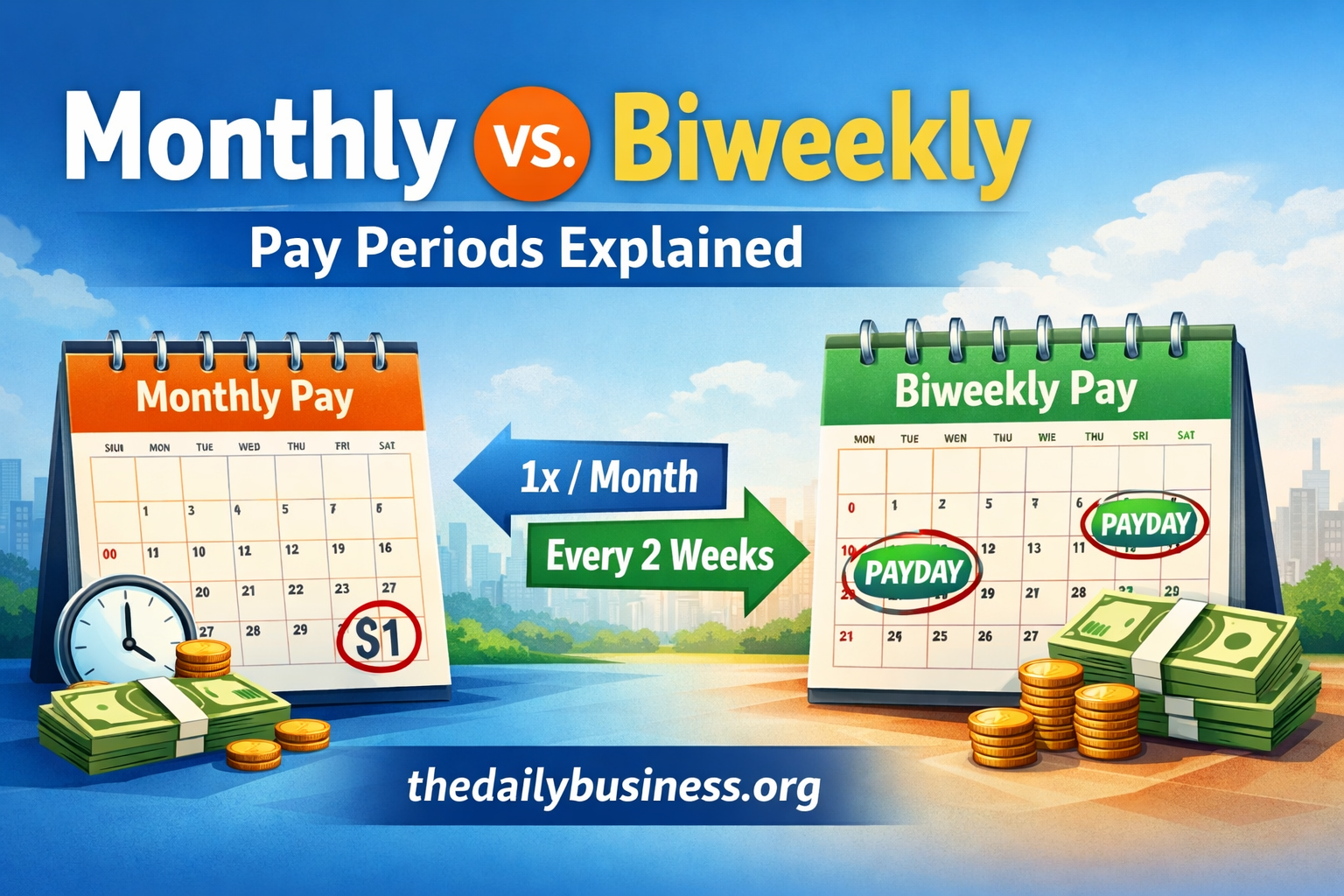
Understanding payroll schedules is essential for both employers and employees. In this guide, we break down monthly vs biweekly pay periods explained in simple terms, helping you decide which structure works best for your organization or personal finances.
What Is a Monthly Pay Period?
A monthly pay period means employees are paid once per month, typically on a fixed date such as the last working day or the 30th.
Key Features:
- 12 paychecks per year
- Easier payroll processing
- Common for salaried roles
Advantages:
- Lower administrative workload
- Reduced payroll processing costs
- Simpler accounting and reporting
Disadvantages:
- Longer wait between paychecks
- Harder for employees to budget monthly expenses
- Can impact employee satisfaction
What Is a Biweekly Pay Period?
A biweekly pay period means employees are paid every two weeks, usually on a specific weekday like Friday.
Key Features:
- 26 paychecks per year
- Consistent pay schedule
- Widely used across industries
Advantages:
- More frequent payments improve cash flow for employees
- Easier personal budgeting
- Higher employee satisfaction
Disadvantages:
- More payroll runs (26 vs 12)
- Increased administrative effort
- Slightly higher processing costs
Monthly vs Biweekly Pay Periods Explained: Key Differences
| Feature | Monthly Pay | Biweekly Pay |
|---|---|---|
| Pay Frequency | Once per month | Every 2 weeks |
| Paychecks per Year | 12 | 26 |
| Admin Effort | Low | Moderate |
| Employee Cash Flow | Less frequent | More consistent |
| Budgeting Ease | Harder | Easier |
Which Pay Schedule Is Better?
The answer depends on your priorities:
Choose Monthly Pay If:
- You want to reduce payroll costs
- Your workforce is mostly salaried
- Administrative simplicity is important
Choose Biweekly Pay If:
- Employee satisfaction is a priority
- Workers rely on steady cash flow
- You want a widely accepted payroll system
Final Thoughts
When it comes to monthly vs biweekly pay periods explained, there’s no one-size-fits-all solution. Businesses must balance operational efficiency with employee needs. While monthly pay is simpler, biweekly pay often leads to happier and more financially stable employees.
At The Daily Business, we recommend evaluating your workforce, industry standards, and administrative capacity before making a decision.