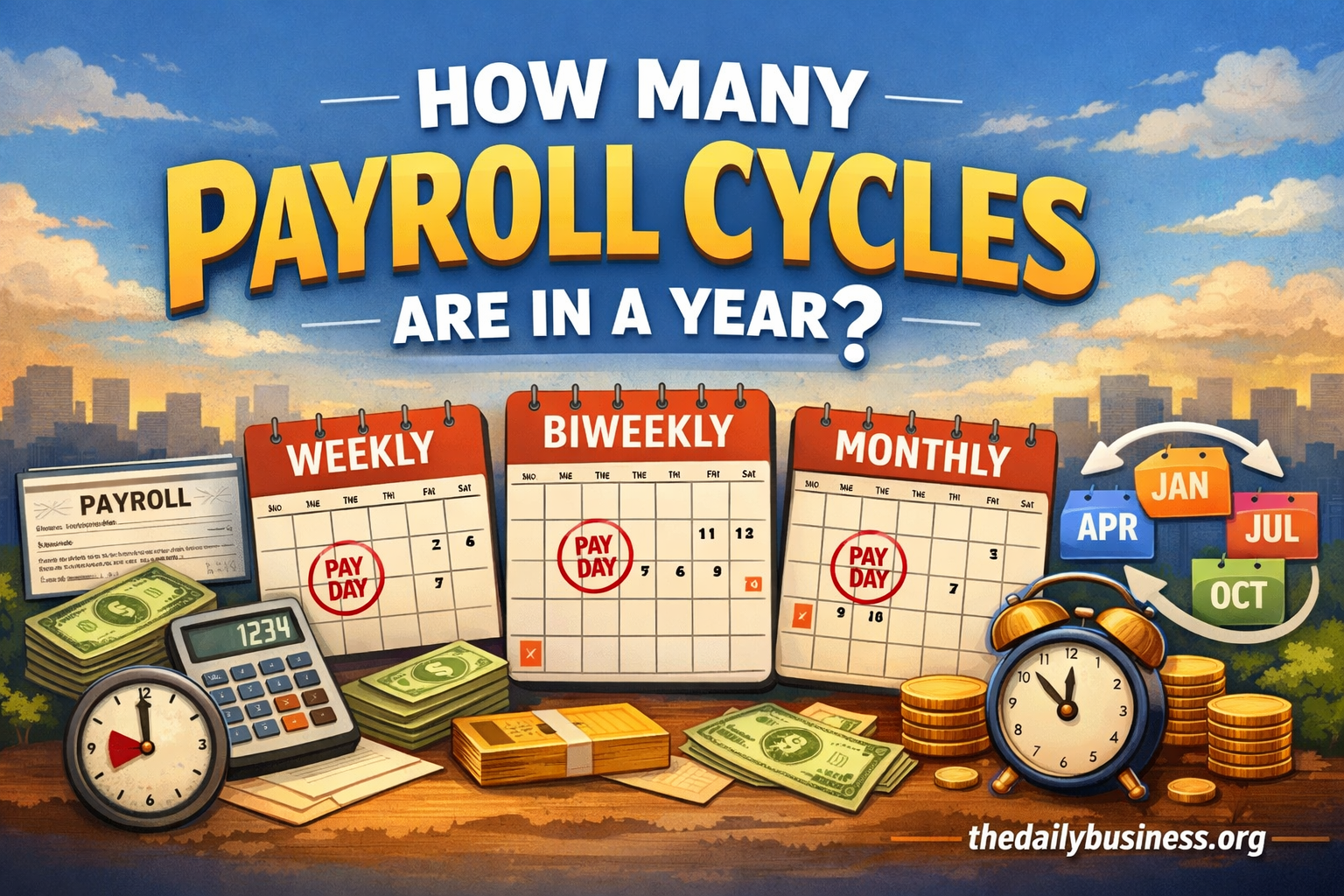
Understanding how many paychecks you receive each year is essential for managing your finances effectively. Whether you’re planning your monthly budget, saving for the future, or evaluating a job offer, knowing your pay schedule can make a significant difference. In this guide by The Daily Business, we break down everything you need to know about the number of paychecks per year and how it impacts your financial planning.
What Determines the Number of Paychecks Per Year?
The number of paychecks you receive annually depends on your employer’s payroll schedule. Different companies follow different pay frequencies, which directly affect how often you get paid.
Here are the most common pay schedules:
- Weekly
- Biweekly
- Semi-monthly
- Monthly
Each of these schedules results in a different total number of paychecks per year.
Common Pay Schedules Explained
1. Weekly Pay (52 Paychecks per Year)
Employees paid weekly receive a paycheck every week, usually on the same day. Since there are 52 weeks in a year, this results in:
- 52 paychecks annually
This schedule is common in industries like construction, retail, and hospitality.
2. Biweekly Pay (26 Paychecks per Year)
Biweekly pay means you are paid every two weeks. This is one of the most popular pay schedules.
- 26 paychecks annually
In some years, you may receive 27 paychecks due to how the calendar falls—this is often called an “extra paycheck year.”
3. Semi-Monthly Pay (24 Paychecks per Year)
With a semi-monthly schedule, employees are paid twice a month, often on fixed dates like the 15th and the last day of the month.
- 24 paychecks annually
This schedule is common for salaried employees.
4. Monthly Pay (12 Paychecks per Year)
Some employers pay once per month, typically at the end of the month.
- 12 paychecks annually
While less common, this schedule is sometimes used in executive or contract roles.
Why the Number of Paychecks Matters
Understanding your pay frequency helps you:
1. Budget More Effectively
Knowing when and how often you get paid allows you to plan your expenses, bills, and savings accurately.
2. Plan for “Extra Paychecks”
If you’re on a biweekly schedule, those occasional 27-paycheck years can be a great opportunity to boost savings or pay off debt.
3. Align Bills With Income
Matching your bill due dates with your pay schedule can help avoid late fees and financial stress.
Biweekly vs Semi-Monthly: Key Differences
Although biweekly and semi-monthly pay may seem similar, they differ in important ways:
| Feature | Biweekly | Semi-Monthly |
|---|---|---|
| Paychecks/year | 26 (sometimes 27) | 24 |
| Pay dates | Every 2 weeks | Fixed dates |
| Budgeting ease | Moderate | Easier monthly planning |
How to Make the Most of Your Pay Schedule
No matter your pay frequency, you can optimize your finances by:
- Creating a monthly budget
- Automating savings
- Tracking expenses
- Planning ahead for irregular months
Final Thoughts
The number of paychecks per year explained in this guide shows how your pay schedule affects more than just your income—it influences your entire financial strategy. By understanding whether you’re paid weekly, biweekly, semi-monthly, or monthly, you can make smarter decisions with your money.
For more insights like this, stay connected with The Daily Business, your trusted source for practical financial knowledge.