Introduction
In today’s competitive market, understanding your customers is more important than ever. One of the most effective ways to achieve this is through target audience segmentation. By dividing your audience into specific groups, businesses can create personalized strategies that improve engagement, conversions, and customer satisfaction.
At The Daily Business, we believe that mastering target audience segmentation is essential for sustainable growth and long-term success.
What is Target Audience Segmentation?
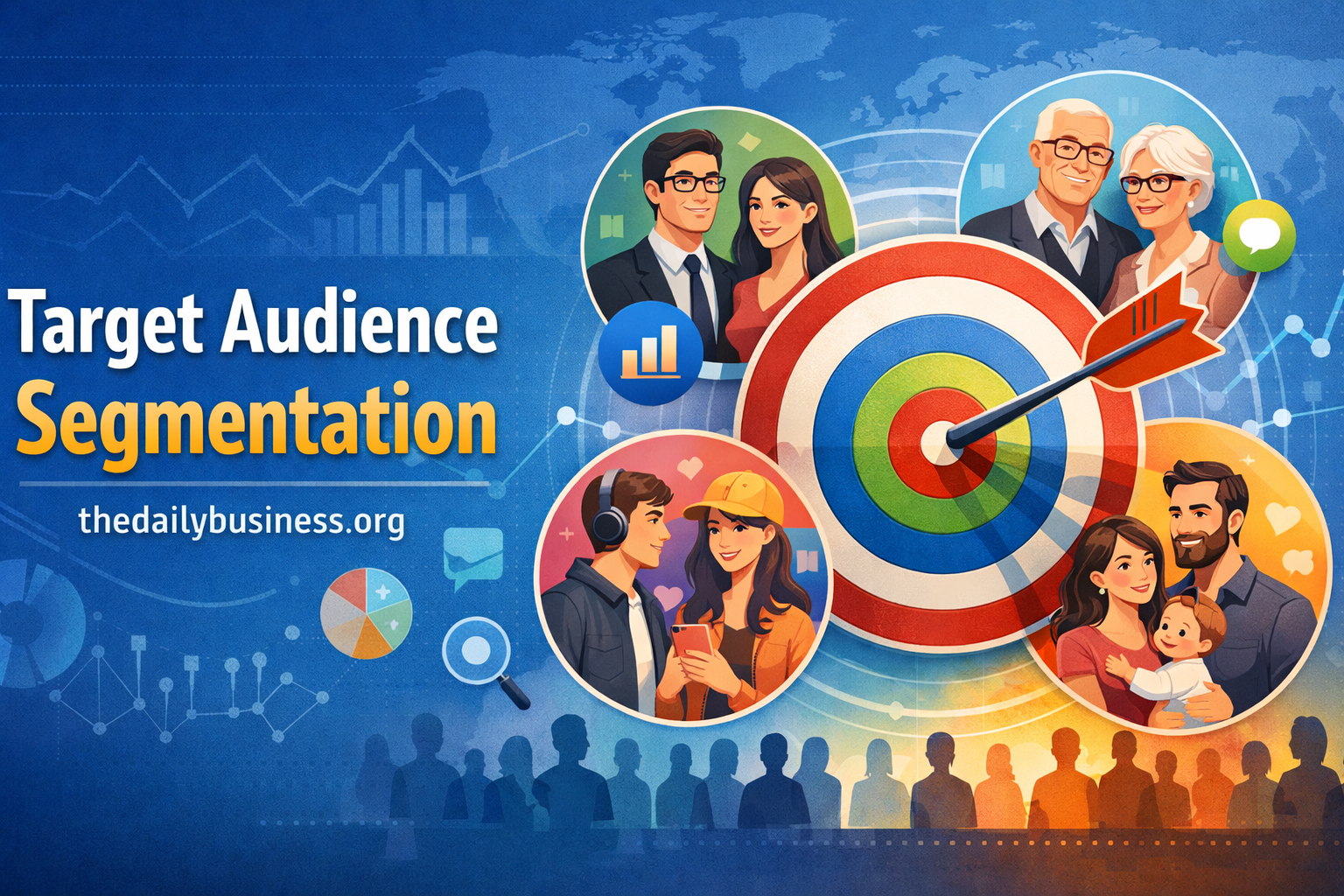
Target audience segmentation is the process of dividing a broad customer base into smaller, more defined groups based on shared characteristics. These characteristics can include demographics, behavior, interests, or purchasing habits.
Instead of using a one-size-fits-all approach, segmentation allows businesses to tailor their messaging and marketing efforts to specific groups.
Why Target Audience Segmentation Matters
Understanding your audience segments offers several key benefits:
1. Improved Marketing Efficiency
By focusing on specific groups, businesses can reduce wasted marketing efforts and increase ROI.
2. Better Customer Engagement
Personalized messages resonate more with customers, leading to higher engagement rates.
3. Higher Conversion Rates
When you target the right audience with the right message, conversions naturally increase.
4. Stronger Brand Loyalty
Customers are more likely to stay loyal to brands that understand their needs.
Types of Target Audience Segmentation
To implement effective target audience segmentation, businesses typically use the following methods:
1. Demographic Segmentation
This includes factors such as:
- Age
- Gender
- Income
- Education level
2. Geographic Segmentation
Dividing audiences based on location, such as:
- Country
- City
- Climate
3. Psychographic Segmentation
This focuses on:
- Lifestyle
- Values
- Interests
- Personality traits
4. Behavioral Segmentation
Based on customer actions, including:
- Purchase history
- Brand interactions
- Product usage
How to Create an Effective Segmentation Strategy
1. Define Your Goals
Start by identifying what you want to achieve—more sales, better engagement, or increased brand awareness.
2. Collect Customer Data
Use tools like analytics platforms, surveys, and CRM systems to gather relevant data.
3. Identify Patterns
Look for trends and similarities among your customers.
4. Create Audience Segments
Group customers based on shared characteristics.
5. Develop Targeted Campaigns
Design marketing strategies tailored to each segment.
6. Monitor and Optimize
Continuously track performance and refine your segmentation strategy.
Best Practices for Target Audience Segmentation
- Keep segments specific but manageable
- Use data-driven insights
- Avoid over-segmentation
- Regularly update your audience data
- Test different strategies and optimize
Common Mistakes to Avoid
While implementing target audience segmentation, businesses often make these mistakes:
- Relying on outdated data
- Ignoring customer behavior
- Creating too many segments
- Not aligning segmentation with business goals
Avoiding these pitfalls can significantly improve your results.
Conclusion
Target audience segmentation is no longer optional—it’s a necessity for modern businesses. By understanding your audience and delivering personalized experiences, you can build stronger relationships, improve marketing performance, and drive growth.
At The Daily Business, we encourage businesses to adopt smart segmentation strategies to stay ahead in an ever-evolving market