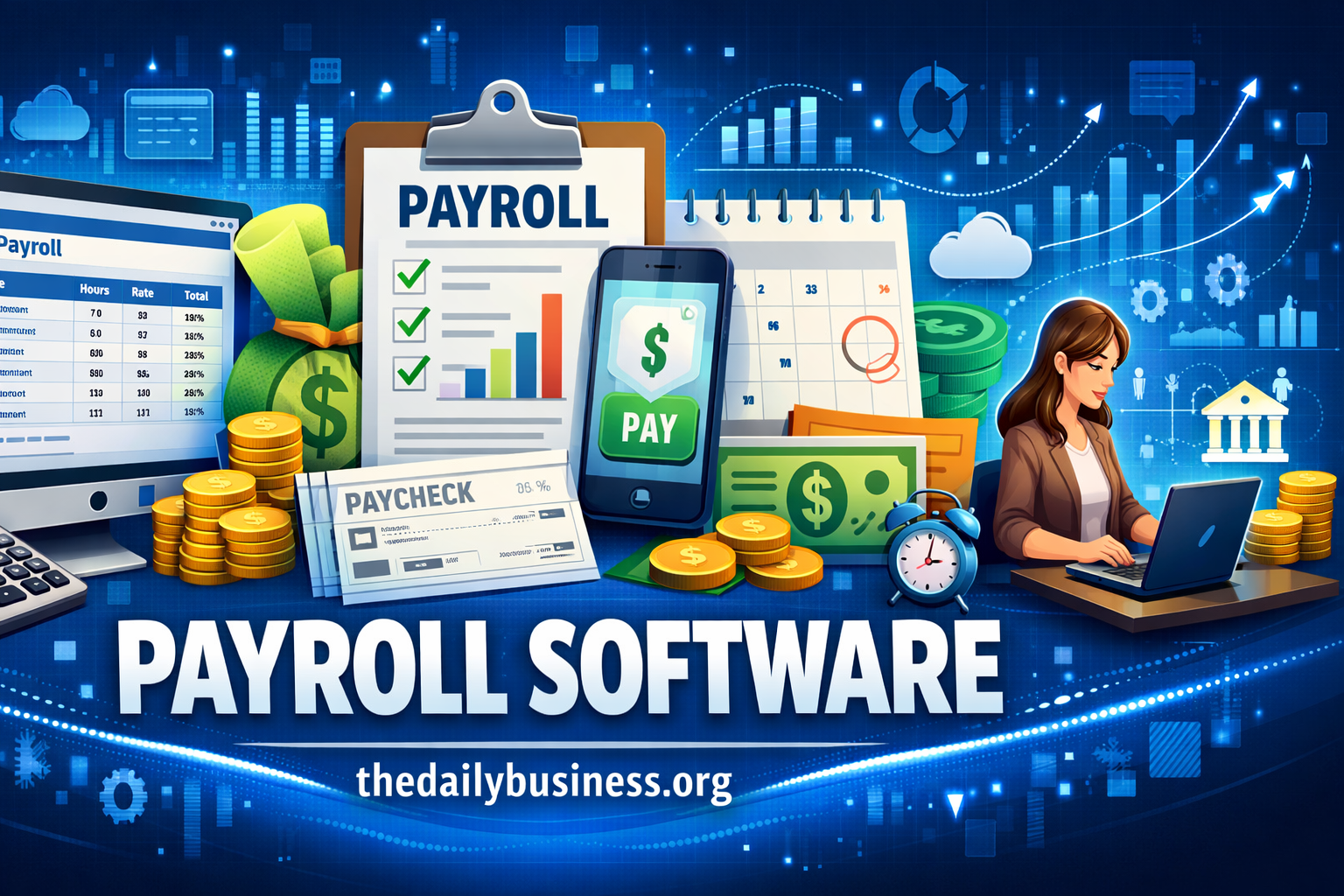
Managing employee payments, taxes, and compliance can be overwhelming for businesses of any size. This is where payroll software becomes an essential tool. At The Daily Business, we explore how adopting the right payroll system can save time, reduce errors, and improve overall efficiency.
What Is Payroll Software?
Payroll software is a digital solution that automates the process of paying employees. It handles salary calculations, tax deductions, benefits, and compliance with labor laws. Instead of relying on manual spreadsheets, businesses can streamline operations with accurate and timely payroll processing.
Key Features of Payroll Software
Modern payroll software offers a range of powerful features, including:
1. Automated Salary Calculations
It calculates wages, overtime, bonuses, and deductions automatically, minimizing human error.
2. Tax Management
The software computes taxes and ensures compliance with local regulations, reducing the risk of penalties.
3. Employee Self-Service Portals
Employees can access payslips, tax forms, and leave balances without contacting HR.
4. Direct Deposit Integration
Salaries can be transferred directly to employees’ bank accounts quickly and securely.
5. Reporting and Analytics
Detailed reports help businesses track payroll expenses and make informed financial decisions.
Benefits of Using Payroll Software
1. Time-Saving Automation
Manual payroll processing can take hours. With payroll software, tasks are completed in minutes.
2. Improved Accuracy
Automation reduces calculation errors and ensures employees are paid correctly every time.
3. Compliance Assurance
Payroll systems stay updated with changing tax laws, helping businesses avoid legal issues.
4. Cost Efficiency
Although there’s an upfront cost, businesses save money in the long run by reducing administrative workload.
5. Enhanced Security
Sensitive employee data is protected through encryption and secure access controls.
How to Choose the Right Payroll Software
Selecting the best payroll software depends on your business needs. Consider these factors:
- Business Size: Small businesses may need basic features, while larger companies require advanced capabilities.
- Ease of Use: Look for user-friendly interfaces to reduce training time.
- Integration: Ensure compatibility with accounting and HR systems.
- Customer Support: Reliable support is crucial for resolving issues quickly.
- Scalability: Choose software that grows with your business.
Common Challenges and Solutions
Even with payroll software, businesses may face challenges:
- Data Migration Issues: Ensure proper setup and data transfer when switching systems.
- Training Requirements: Provide adequate training to staff for smooth adoption.
- Software Costs: Compare pricing plans to find the best value.
Future of Payroll Software
The future of payroll software lies in automation and artificial intelligence. Features like predictive analytics, real-time payroll processing, and mobile accessibility are becoming standard. Cloud-based solutions are also gaining popularity, allowing businesses to manage payroll from anywhere.
Conclusion
Investing in the right payroll software can transform how businesses handle employee payments and compliance. By automating complex processes, companies can focus more on growth and less on administrative tasks.
At The Daily Business, we recommend evaluating your needs carefully and choosing a solution that aligns with your long-term goals.